///////////
Mind & Habits

Wonder Instead Of Worry
Wonder Instead Of Worry

Curiosity is not only for the naturally inquisitive. Cultivating it keeps the brain growing, helps you learn and turns worry into wonder.
Wonder Instead Of Worry

Even if you do not think of yourself as naturally curious, curiosity can be cultivated, and it pays off in a happier, healthier mind. Some of history’s greatest thinkers, including Edison, Einstein and Richard Feynman, were famously curious. Curiosity also builds stronger relationships, because it makes us want to know others; a solid work ethic, because it makes us dig deeper; and self-awareness, because it makes us want to understand ourselves.

A brain that keeps growing

Curiosity keeps you engaged with the world and open to learning, and it stirs the same parts of the brain linked with well-being and reward. For a long time it was believed that the brain’s wiring became fixed with age. We now know the brain can keep growing and changing with learning throughout life, and curiosity is the key that keeps that process going.

Wonder removes barriers

Worry raises stress hormones, which can affect blood pressure and long-term health. It is far better to wonder why you do what you do than to worry about it. Wondering opens doors; worrying builds walls.

How to wonder

Copy children, who constantly want to know why. Keep asking it, five times over, and you will find your mind opening, even if you started with something quite ordinary.

Curiosity helps you learn

Learning sparks curiosity, but curiosity also sparks learning. Studies suggest that when people are genuinely curious about something, they remember more of what they learn, because curiosity links the brain’s reward system with the region that forms new memories.

Small changes, new pathways

New experiences help the brain form fresh connections. You do not need to travel the world for this. Simple changes to your routine, like taking a different route to work and noticing what is different, are enough to get started.

Keep an open mind

The adult brain likes order and is quick to label things and put them in boxes. When something new comes along, try to resist labelling it straight away. Look instead for what you can learn. Give yourself permission to be a student of something you do not yet understand; not knowing a topic says nothing bad about you. One easy way to practise is to watch a documentary with a truly open mind, holding back judgment until it has finished.
Mind & Habits

Keep Trying Until You Get There

Keep Trying Until You Get There

Expect your first attempt to work, and be ready for the next one if it does not. Much of what looks like genius is simply persistence.

Keep Trying Until You Get There

Begin every first try fully believing it will succeed, while keeping a second attempt ready in case it does not.

No time for self-pity

When your first try brings the result you wanted, wonderful. When it does not, do not spend a moment sulking or pitying yourself. Believe it will work out, and keep at it until it does.

Round up more options

If one option fails, or two, or a dozen, gather a few more and carry on. Success that does not come at once is not success that is out of reach. Trust that there is a way, and persist until you find it.

Genius is often persistence

Much of what looks like brilliance from the outside is, more often than not, simple persistence. Be willing to make enough attempts, and almost anything becomes possible.

Think of soft drops of water falling on the hardest stone. Each drop seems to do nothing at all, yet over time they wear the stone away. Now imagine what you could achieve with that same quiet power of persistence.

Relationships

Why Good Friendships End

Why Good Friendships End

Friends give us moments to cherish, yet some friendships quietly fall apart. Five familiar reasons explain most of the endings.

Why Good Friendships End

Friendships end, and friends move on with their lives. Going through it is never easy. Being with friends gives us so many moments to cherish over the years, so why do good friendships sometimes fade? Here are some of the most common reasons.

Betrayal

This may be the biggest reason of all. When a friend betrays you without cause, it becomes very hard to carry on. The betrayal could be anything, from revealing your secrets to speaking ill of you behind your back. A friendship that suffers this rarely survives for long.

No support

Friendship rests on love and support without conditions. But it has to run both ways. If you stand by your friend through hard times and crises, and they never do the same for you, the friendship cannot last.

Jealousy

There is no room for jealousy in a true friendship. Real friends are not envious of each other; they are glad for each other. If a friend resents your achievements or anything good that happens to you, the friendship loses its meaning.

Constant arguments

What is a friendship worth when two people keep arguing for no reason? Friendship is about the ease and comfort you share. There needs to be some kind of compatibility. Where arguments become constant, the friendship will end sooner or later. If you are the one who keeps arguing, stop. Be good to your friend, and make memories worth keeping.

Negativity and conflict

If you sense a persistently negative feeling from a friend, it may be a sign they are not being true to you. A friend who picks fights or creates needless conflict will wear the friendship down. Where negativity takes hold, a friendship struggles to survive.

Knowing these patterns can help in two ways: to recognise when a friendship has run its course, and, more importantly, to make sure you are never the reason a good one ends.

Relationships

Seek Open Hearts

Seek Open Hearts

We pour time and energy into winning over people who will never change their minds. What if we nurtured the ones who already understand us?

Seek Open Hearts

Much of our time, effort and money goes into persuading others that we are worth noticing. We do it in our jobs, our businesses and our private lives alike.

If only we could attract more people, more customers, more friends who think like us. If only they realised how much we have to offer. If only they could see why things should be done our way. If only they would listen, make room for us, and speak to us honestly. If only they would show us their love, tenderness and affection.

A different question

What if we stopped pouring our time, energy and money into persuading people who may never change their hearts and minds about us? What if, instead, we began to care for our bonds with the people who already feel close to us, and who already believe in what we believe?

What would that do to your world? What would it do to your sense of what is possible in your life? How would it affect your work, your business and your relationships?

Believe what people show you

When people treat you as though they do not care, or are not interested, believe them. Most of us receive the bulk of our love and affection from a small circle of family and friends, and most of our business from a small group of loyal customers. Those are the relationships doing the real work in our lives.

Water what already grows

So why not put your effort into watering the grass that is already green: the clients, friends and family members who already understand you and see the world as you do? An open heart is far easier to find than a closed one is to change.

Mind & Habits

Tell The Truth When Your Voice Trembles

Tell The Truth When Your Voice Trembles

Amid all the noise and gossip, honest people have more to offer. Truth costs a moment of courage and repays it with an easier heart.

Tell The Truth When Your Voice Trembles

We are surrounded by gossip, noise and endless messages about how we ought to live. No wonder so many of us feel overwhelmed and unsure of what we actually mean to tell one another. Yet people who speak the truth have more to offer than those who do not. Here are a few reasons to stay honest, even when saying the true thing makes your voice tremble.

It opens your heart

Honesty is one of the ways love shows itself. Whether you are talking with a friend, a partner or a colleague, begin by being honest with them. You will show what genuinely interests and drives you, and your own heart will feel lighter, because honesty feels better from the inside and looks better from the outside.

It frees you from fear

Think back to the last time you lied to someone’s face. How did it feel? Did your stomach knot? Did your chest tighten? Did you walk around afraid that they might find out? Honesty sheds all of that. The more honest you are, the less room fear has to live in you.

It shows on your face

It is often said that becoming a better person makes you look better too. Think about it: a lie puts you under strain, whether from guilt or from fear of being found out. That strain wears on the body. It can even stop you from smiling freely. Speaking the truth lets your face relax, and keeps you looking well for longer.

A power we all have

Telling the truth when you are tempted to lie can genuinely improve both your mental and physical health. And when you value your own truth over convenient untruths, others will take care to really listen to what you have to say. Speaking the truth is a power every one of us possesses. Learn to use it.

Life Lessons

Different Paddles, Same Boat

Different Paddles, Same Boat

We all travel in the same boat, just with different paddles and on different waters. Knowing that changes how we see ourselves and each other.

Different Paddles, Same Boat

We are all in the same boat. We simply have different paddles, and perhaps we find ourselves on different rivers. All of us live in human bodies, the vessels that carry us through the world. We are all made of flesh, blood and bone, with brains, hearts and lungs to power us. What differs are our paddles, the tools we use to move through life, and the waters, the circumstances we find ourselves in.

Our many paddles

Some of us use a sharp mind to get where we want to go. Some use a smile, others kindness, a gift with words, or physical ability. Some of these qualities we were born with; others are skills we have learned along the way.

Looking at your own life through this picture can be revealing. What tools are you using to get from where you are to where you want to be? Chances are that you, and the people you know, have used many different tools in different combinations over the years.

Why balance matters

Just as with oars, a balanced approach works best. If you rely too heavily on a single quality, say good looks, to open every door, you never become well-rounded, and you may eventually lose your balance. If that one quality fades, you are left with no paddle at all. That is a good reason to develop several tools for finding your way.

Never really alone

Some of us travel paths that feel like rushing rivers; others drift across a wide, still lake. And at one time or another, all of us have felt tossed about on a stormy sea.

Through all of it, we are never truly alone, even when it feels that way. There is inspiration all around us, in the people paddling their way through the very same world, in the very same boat. Look around you for role models, for company and for encouragement. They are closer than you think.

Work & Career

Six Traps That Stall Your Dreams

Six Traps That Stall Your Dreams

Learning, better ideas, big plans and hard work all sound like virtues. Taken too far, each becomes a trap that keeps your dream on hold.

Six Traps That Stall Your Dreams

We often make things harder for ourselves by falling into a few common traps. Recognise them and you can step around them. Life is meant to be enjoyed, and few things honour it more than by doing the work you truly believe in. See which of these traps you have fallen into, and challenge yourself to change the habit.

The learn-more trap

Much of the advice industry thrives on making you feel lost without its next lesson. Reading is a smart way to learn from other people’s experience and mistakes. But you must also dare to make some mistakes of your own. Study and action belong together. If you keep learning but never seem to get anywhere, this may be your trap.

The better-idea trap

After long days of thinking, you finally land on a good idea for your dream. You take a short break and come back bursting with even better ones. That is healthy once or twice. But when it keeps happening, you become unable to commit to any plan. It is like searching an enormous rose farm for the single perfect rose. You end up with many projects on hold and nothing ever finished. Know when perfection is worth chasing, and when excellent is good enough.

The think-big trap

We are taught from childhood to dream big, and so we wait for the grand opening or the big break, and put things off. We forget that every mountain is moved one small stone at a time. The cure is to think small: what is the smallest step you can take in the right direction today?

The work-hard trap

Working hard may feed our pride, but it does not always move us forward. We can work so hard that we are exhausted and foggy before the real struggle even begins. Like a buffalo pulling the same load all day, we mistake effort for progress. This is the age of working wisely, not only working long.

The take-risk trap

Leaping into the sea to swim a vast channel, with a real chance of drowning, is brave, and also foolish. “Just do it” looks good on a screen, but in real life it can be a trap. You do need courage, but take calculated risks: know the pros and cons, prepare for the worst falls, and have a plan for dealing with them. Make research a habit. Taking risks blindly is about as useful as not acting at all.

The think-ahead trap

We are encouraged to fix our eyes on the end result and race towards it. Weighed down by all that expectation, we forget to enjoy the present. Beneath all the striving, remember something important: you are meant to enjoy the work you do.

Mind & Habits

Road Signs For The Inner Journey

Road Signs For The Inner Journey

Life often feels like a crowded expressway. A few familiar road signs, read differently, can guide a calmer and wiser drive.

Road Signs For The Inner Journey

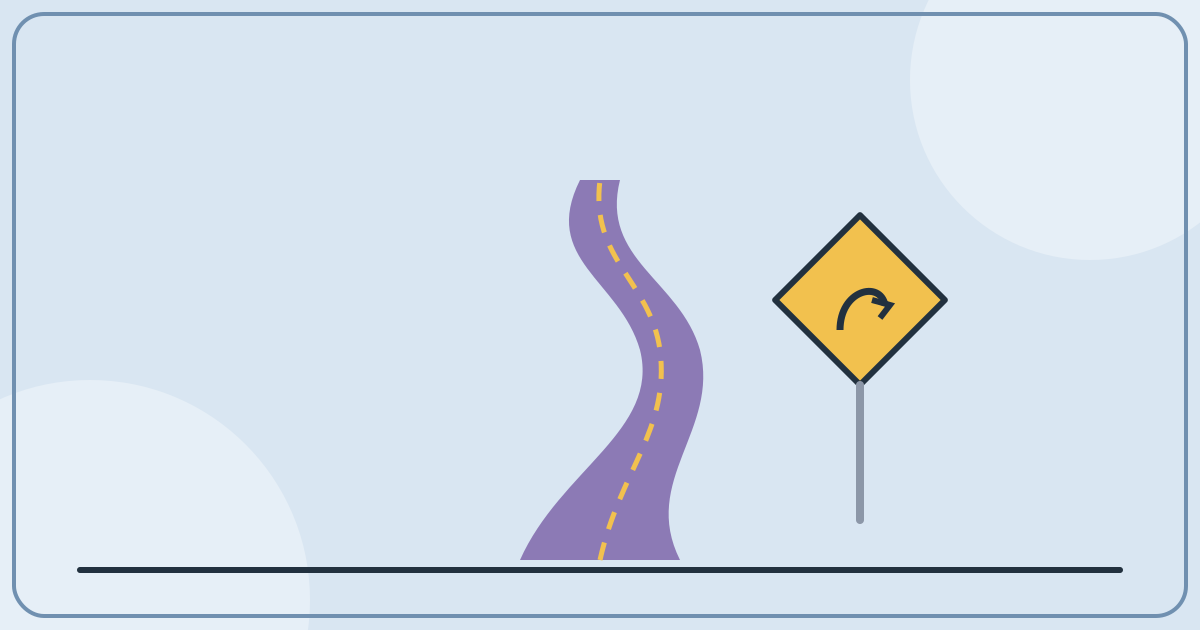
Life is like a road. Some days it feels like a five-lane expressway, full of horns, lights, sudden swerves, speed and braking. A few familiar road signs, read in a new way, can help you steer towards an easier, brighter day.

T for timeout

The T sign stands for timeout. Give yourself a small window every day, however short, to gather yourself. It might be making a cup of herbal tea, closing your eyes for a few minutes, or simply pausing for a breath of calm in the middle of a frantic day. It is simple, and surprisingly powerful.

Bypass

Skip what no longer serves you. As you grow, you will naturally outgrow some relationships and meet new people who are changing in the same direction. When you feel a nagging urge to cancel on someone, or find you no longer make time for them, listen to it. It can save you a long detour later.

U-turn

Learn to turn around. That means being able to admit that something you said, thought or did may not have been right. Acknowledging a mistake, owning it, forgiving and letting yourself be vulnerable are the fast lanes of personal growth. Being able to say “oops, I got that wrong” is a mark of real wisdom.

Traffic jam

Some see the glass as half full, others as half empty. Why not see it simply as a beautiful glass? Even a traffic jam has its gifts. Use the stops to smile at a stranger, to notice your emotions before they boil over, to play music that lifts you, or to daydream about the good you hope to bring into your days. Look for the blessing in whatever makes you pause.

Stop for pedestrians

As you become more awake to daily life, you will grow more grateful for the people you meet, and more curious about why they crossed your path. Ask yourself what you can learn from them, and what you might teach them.

Give way

On this road there are no fixed rules, only questions to check against. Is this right? Does it serve me, and does it serve others too? Does it serve the world around us? If unsure, give way. Respect other people’s journeys, and be gentle with drivers who are tired.

Enjoy the view, and whenever your heart asks for it, choose the longer, prettier road. Drive with care, live fully, keep wondering and keep exploring. Above all, enjoy the journey.

Life Lessons

The Minister’s Old Coat

The Minister’s Old Coat

A wise beggar becomes the king’s chief minister, on one strange condition: a locked room no one may enter. What he kept inside is the whole lesson.

The Minister's Old Coat

Once there was a beggar who owned almost nothing. All his life he wore a single, tattered coat. Yet over time he earned a quiet reputation, and people began coming to him with all kinds of problems. Before long, he had a name for great wisdom. Word reached the king, who soon started visiting him for advice too.

One condition

One day the king told him, “A man like you belongs in my court, not on the street. Be my minister.”

“Your offer means nothing to me,” answered the beggar. “But if it lets me be useful to the people, I will accept, on one condition. I must have a room in the palace that nobody may ever enter or inspect, not even you. If anyone does, I will no longer be your minister.”

“Agreed,” said the king. “The room is yours. Keep it however you like.”

Envy and rumour

Years passed. As Chief Minister, he could no longer walk about in his beggar’s coat, so he dressed as his position required. In time he won deep admiration, and both the king and the public held him dear. Watching his fame and his unmatched wisdom grow, the other ministers grew jealous. “He must be hiding something in that room,” they whispered. “That is why no one is allowed in.”

The rumour grew until it reached the king. Knowing the man’s worth, the king held back for a long while. But the doubt kept gnawing at him, until one day he insisted, “I must see that room.” The minister agreed, and the king went in.

What the room held

The room was completely bare. On the wall hung only that old, tattered coat.

“Why keep this a secret?” asked the king. “There is nothing here.”

The minister answered, “By day, I am a minister. At night, I put on that coat and sleep on the floor. That way, I never get carried away by my position. But now that you have broken our agreement, it is over.”

He put on his old coat and walked away.

Whatever title we carry, it helps to keep our own old coat somewhere close, a daily reminder of who we really are beneath the role.

Relationships

Becoming Someone People Can Trust

Becoming Someone People Can Trust

A trustworthy person never cheats, keeps their word and owns their mistakes. Four habits build that kind of trust.

A trustworthy person is someone who will never cheat you or let you down, who does what they promised, and who will not abandon you when things get hard. They take responsibility for their actions and admit their mistakes, without trying to shift the blame onto anyone else. Here is how to become that person.

Be honest

Being truthful and direct is not always easy, yet without it, trust cannot grow. When someone holds back information, or never says how they really feel, others find it hard to rely on them. Everyone wants to deal with trustworthy people, in friendships and in business alike.

Value every promise

An agreement may seem small and unimportant to you, yet mean a great deal to the other person. Break it, and it can become a big disappointment for them. Before you decide a promise does not matter, pause and think about what it is worth to the one you made it to.

Express yourself with care

People who deal only in bare facts often meet a cold response. If you recount what happened purely from your own point of view, with no empathy or understanding, the listener may even feel you are enjoying someone else’s misfortune. We are both thinking and feeling creatures, and we need to keep the two in balance so that neither crowds out the other.

Show loyalty

Show that you will protect people and stand on their side, whether they are in the room or not. Trust grows stronger when someone is confident in your loyalty. Loyalty may be a rare quality these days, but it seldom goes unnoticed, and it is rarely left unrewarded.