Tag: Everyone

Mind & Habits

Where Our Beliefs Come From

Where Our Beliefs Come From

Most of what we believe about ourselves is settled by the age of twelve, much of it borrowed from others. Knowing that is the first step to changing it.

Where Our Beliefs Come From

We learn a great many things over a lifetime. Would it surprise you to know that most of your beliefs about yourself, about what is expected of you in life and in your career, are in place by the time you are twelve?

Of course, things happen along the way that add to those beliefs or even change them. But our core beliefs are set deep in us before we have even become young adults.

How they take root

Beliefs take shape from what other people say and do around us. When a child overhears adults talking about politics, for instance, the child begins to form views about certain politicians and about politics in general. Those views are not the child’s own truth. They are opinions built from what others said.

The voice that says you are not enough

The same goes for the negative refrain many of us play in our heads, the one that says we are not worthy or not good enough. We came to believe it because of what other people said and did. Perhaps an adult in our early years was too wrapped up in their own struggles to be there for us emotionally, and left us feeling unimportant.

We see what we believe

If you truly believe those words, you will pick out evidence for them everywhere you look, and so the belief grows stronger. We tend to see whatever we already believe. If we believe something negative, we notice the negative. Even when things are going perfectly, you expect something to go wrong, because somewhere inside you feel that is what you deserve. You end up unable to enjoy the rewards of your own hard work, simply because deep down you do not believe you have earned them.

Every decision you make is shaped by what your subconscious mind believes about you and your abilities. Recognising where those beliefs came from is the first step towards choosing better ones.


Mind & Habits

Stop Saying Sorry For Everything

Stop Saying Sorry For Everything

A sincere apology strengthens a relationship. An endless stream of them does the opposite, and quietly signals a lack of confidence.

Stop Saying Sorry For Everything

Do you apologise too often? In principle, saying sorry is one of the social glues that holds relationships together. Over-apologising, however, works against you. An apology should carry weight, which means it cannot be a constant, compulsive habit. Saying sorry all the time signals a lack of confidence. If this sounds like you, consider the next point carefully.

How it looks to others

Think about how other people see you each time you apologise for something trivial. Many situations need no apology at all, and the moments that genuinely call for asking forgiveness are fairly few. Saying sorry does not automatically prove that you are humble, polite or respectful.

Things you never need to apologise for

Do not apologise for asking a question, for walking past someone, for taking a seat, for dropping a pencil, for asking for help, or simply for existing. Letting go of these needless apologies will lift your self-esteem and your confidence.

Keep sorry meaningful

If you spend the whole day asking forgiveness for small things, forgiveness loses its meaning and its value. Save your apologies for when they matter, and they will mean far more when you offer them.

Relationships

Winning Back A Lost Friend

Winning Back A Lost Friend

You miss a friend you fell out with and long to break the silence, but do not know where to begin. Three ways to make up and win back what you lost.

Winning Back A Lost Friend

A good friendship is worth the effort. Perhaps you have realised there is nobody else in the world quite like your old friend. You long to break the silence, call a truce and have your friendship back, but you do not know where to begin. If that is you, here are a few ways to go about making up and recovering what you lost.

Let go of grudges

Going back over the past to work through a problem is one thing. Clinging to the past so that you never have to trust again is quite another. Try not to keep reopening old wounds every time you remember how angry you were when things fell apart. Remember that you are both human, and that people make mistakes that are not only forgivable but also avoidable next time.

Take criticism and use it to grow

The person closest to you often sees the worst in you and loves you anyway. That does not mean you should not hear about it when you do something wrong. Be open to advice and let the friendship help you become better. The finest thing in life is a friend who helps you be the best you can be. That is what friendship is really about.

Look at the situation again

Sometimes people simply outgrow each other. A friendship can seem deep when it was really a season of shared interests. One person may have grown more attached than the other, and there may have been a misunderstanding about how close the two of you really were. Seeing that clearly helps you decide whether to rebuild, and on what footing.

Mind & Habits

Moving Past Bad Experiences

Moving Past Bad Experiences

Most of us know the loop of replaying a painful event and being unable to shake the thoughts it leaves. Six practical ways to break that loop.

Moving Past Bad Experiences

Nearly everyone knows the feeling. After something painful, a break-up for instance, you keep reliving what happened and cannot clear certain destructive thoughts from your mind. Here are a few ways to get past bad experiences.

Learn something new, or play a sport

When your brain switches over to learning something new, the unwelcome thoughts in your head slowly fade away. Each time we absorb a new process into our ideas and experiences, we focus on it so fully that there is far less room for brooding. The same thing happens when we exert ourselves physically.

Say less, and pause

When you are talking with someone who stirs your emotions, leave pauses. You need time to cool down and think about what you have said. That way you say fewer things you later regret, and in time your anger and irritation run out of fuel.

Stop hunting for someone to blame

Endlessly picking over the past to find who was at fault, including ways of blaming yourself, rarely leads anywhere good. Usually a whole chain of factors produced the situation you are in now, each one leading to the next like dominoes. Make peace with it. The event is over; the task now is to look for a solution.

Remember that thoughts are not facts

What is real and what your mind tells you are two different things. Our emotions also act on the body, showing up as stress, worry, tension and fear that we feel from head to toe.

Deal with the biggest problem first

Whatever the event, the hardest thing most people then wrestle with is anger. Try to calm it through quiet reflection, long walks or exercise, or indeed any activity that settles you down.

Life Lessons

Good Luck, Bad Luck, Who Knows?

Good Luck, Bad Luck, Who Knows?

An old farmer answered every turn of fortune with one word: perhaps. His calm holds a lesson for anyone riding life's ups and downs.

Good Luck, Bad Luck, Who Knows?

There was once an old farmer who had worked his fields for many years. One day his horse ran off. Hearing the news, his neighbours came round. “What bad luck,” they said, full of sympathy.

“Perhaps,” said the farmer.

The next morning the horse came back, and three wild horses came with it. “What wonderful luck!” the neighbours cried.

“Perhaps,” said the old man.

The day after that, his son climbed onto one of the wild horses, was thrown off and broke his leg. Once again the neighbours came to share their sympathy over his misfortune.

“Perhaps,” the farmer replied.

A day later, army officials arrived in the village to draft young men into service. Seeing the son’s broken leg, they left him alone. The neighbours came to congratulate the farmer on how well things had worked out.

“Perhaps,” said the farmer.

Curses that turn into blessings

Most of us have lived through something like this: a setback that later proved to be a blessing, a rejection that steered us somewhere better, or a wish that went ungranted and turned out to be the best thing that could have happened.

Life is a surprise gift

Life really is like a wrapped present. You never know what you are going to get. The wise course is neither to fool ourselves nor to stop caring, but to stay balanced through the ups and downs. There is also a quiet tendency for good fortune to follow bad, and bad to follow good.

So it helps to have solid beliefs that keep you steady: to enjoy and celebrate the good when it comes, and to work through hard times knowing they too will pass.

Relationships

Why Listening Matters So Much

Why Listening Matters So Much

Most of us are poor listeners most of the time, and nobody ever taught us otherwise. Here is why listening is worth learning, and what it gives to others.

Why Listening Matters So Much

Listening is a craft, every bit as much as speaking. People who listen well tend to be well liked, and their friends seek them out.

How well do you listen? You may be one of the good ones, but the odds say otherwise. We like to think we pay attention, yet most of us, most of the time, listen badly. The reasons are easy to see. What is harder to understand is why we put up with it.

Why we do not listen

For one thing, listening takes real effort. Studies suggest the mind cannot truly do two things at once, so attention to the speaker competes with everything else clamouring for attention, including rehearsing our own reply. For another, our culture quietly lets us off the hook. Schools teach public speaking, not listening. Job adverts never ask for it. When employers say they want good communicators, they usually mean people who write well, run meetings and present. Real listening asks us to set our own thoughts aside and hand over control of the conversation.

So most of us listen poorly. Why should that matter? Here are three reasons.

Listening is a form of love

If you want someone to feel cared for, to feel they belong, that they matter and that they are accepted, giving them your undivided attention may be the most reliable way to do it.

Listening is how we learn

While you listen, there is every chance you will pick up something new. While you talk, there is almost none. And when you are talking, whose needs are you really meeting? Usually your own.

Listening builds trust

When you truly listen, you put your ego to one side, and that sends a clear message: this moment is about you. It tells the other person you mean to do right by them.

Mind & Habits

Break Out Of Your Jug

Break Out Of Your Jug

A pumpkin grown inside a jug can only grow as big as the jug. Limiting beliefs work the same way, protecting us at first and holding us back later.

Break Out Of Your Jug

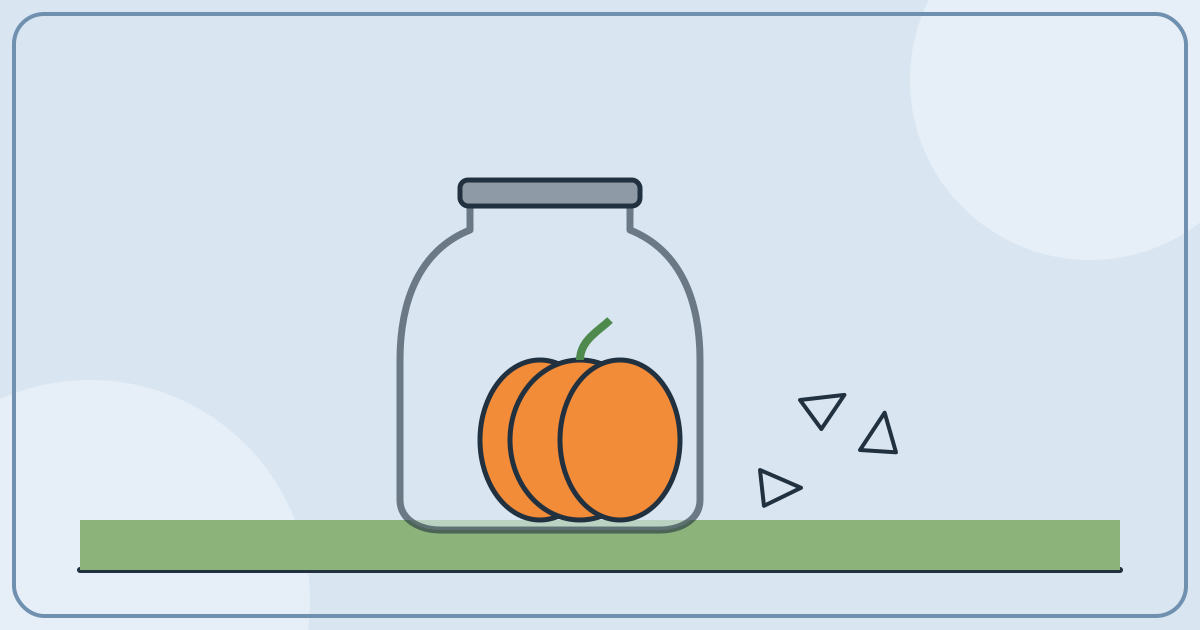
A farmer finds a pumpkin that has only just started to grow. To protect it from the weather, he slips it inside a jug, then carries on with his work and the pumpkin slips his mind. By harvest, the pumpkin has grown only as large as the jug. The very thing that once protected it ended up limiting its growth.

The beliefs that become our jug

Many people are in the same position as that pumpkin. Looking for protection, they take on sheltering beliefs about who they are, what they can do and what they can become. For a while those beliefs give comfort and safety. But beliefs, especially limiting ones, soon outlive their usefulness. Limiting beliefs form a jug. It is a person’s own assumptions that limit his or her potential.

Life inside the comfort zone

Being inside the jug is really being in our comfort zone. How we see things takes no effort at all, because we are running on autopilot. It is telling that we call it a comfort zone. The only comfortable thing about it is that everything is familiar. It looks like a safe place to rest, but life is always moving on. So while we stay inside our jugs, we are actually growing in the wrong direction. As one writer on the subject put it, when we stay there, we essentially begin to rot.

Comfort that costs us

The jug may feel more comfortable in the moment, but its effects are anything but. It is like junk food: we enjoy the first few bites, but that comfort food often leaves us with results we do not want. When we stay inside our jug, we trade the fear of stretching into the unknown for the comfort of stagnating in our old default patterns. When we stretch towards something that inspires us, on the other hand, we feel alive and empowered, gain a fresh perspective and move towards greater joy and success.

Change the belief, not just the action

Many people try to change by taking action without changing their beliefs. That is when we feel we are doing everything we can yet see no results. The old beliefs keep reasserting themselves, and we end up building a variation of the same limiting pattern despite all our effort. Breaking the jug means questioning the belief itself.

Mind & Habits

Curiosity Is A Key To Happiness

Curiosity Is A Key To Happiness

Most of us say we want to be happy. One of the most overlooked keys to happiness is the simple urge to know more, and it can be grown.

Curiosity Is A Key To Happiness

Ask most people what they want above all, and they will say happiness. Yet if you are willing to rethink how you go about it, one of the most overlooked keys to happiness is cultivating your natural sense of curiosity. Curiosity, the state of really wanting to know more about something, creates openness to unfamiliar experiences. That lays the ground for more chances to discover, to enjoy and to be delighted. Here is how an inquiring mind can help you live a happier life.

Why curiosity matters

Psychologists see curiosity as a life force, vital to happiness, intellectual growth and wellbeing. It is linked with other abilities such as sociability, resilience, self-awareness, integrity, resourcefulness, creativity and empathy. At its heart, curiosity is about seizing the pleasures that new experiences offer and finding meaning even in familiar ones. When we are curious, we see things differently and use our powers of observation more fully. We feel more engaged and better able to take up opportunities, all of which make for a satisfying life. It all starts with wanting to know more. The biggest advantage of curiosity is its power to drive learning in areas of life and work that matter to the learner.

Health

In one study published in the journal Psychology and Aging, more than 1,000 adults aged 60 to 86 were followed over five years. Those rated as more curious at the start were more likely to be alive at the end, even after allowing for age, smoking, heart disease and similar factors. There are also promising signs that greater curiosity lowers the risk of such illnesses and may even slow some of the natural decline that comes with age. Studies suggest that older women who regularly take on small puzzles and new experiences that break their routine keep their mental abilities better in later life.

Intelligence

Curiosity is also linked to learning and intelligence. The clipping continues this thought on another page, which we do not have, but the point is clear: a curious mind keeps learning.

A daily curiosity practice

  • On waking, look with fresh eyes. Choose to notice things in your home, your partner or your family that you may have overlooked.
  • When talking, try to stay open to whatever comes up, without judging or reacting. Ask questions and listen carefully.
  • When driving, instead of switching off on your daily commute, try to anticipate what the drivers around you will do next. Stay aware.
  • When working, look for ways to do things that turn out really well. Ask yourself what is interesting about the task and how you could make it more enjoyable.

Encouraging curiosity in students

  • Value and reward curiosity.
  • Let them tinker, fiddle and play.
  • Teach them to be sceptics, with the habit of asking questions.
  • Let them explore a variety of cultures and societies.
  • Encourage curiosity at home too.
Relationships

Getting On With Other People

Getting On With Other People

If too many of your relationships feel difficult, do not despair. A few simple habits help you work through the friction and build real friendships.

Getting On With Other People

Keeping good relationships with other people is something everyone struggles with. The mind seems to find countless reasons why getting on with others is hard. If you find yourself with many difficult relationships, do not despair. Work through the problems and learn the art of building real friendships. These are some of the simplest ways to get on better with people.

Smile

A smile offers goodwill to the other person. A sincere smile can say more than a hundred words. It tells the other person you are happy to see them, and it is the best way to begin any conversation. A gloomy face, on the other hand, signals that you are not happy to be speaking with them. We can smile at everyone, not only the people we like. If we can smile even at those we count as enemies, we may be surprised by how much our dealings with them improve.

Appreciate good qualities

This is a powerful way to help any relationship. We tend to be drawn to the negative. When we appreciate the good qualities of others, we do two things. First, we make the other person feel better, which encourages and inspires them to bring more of those qualities forward. Sincere appreciation boosts their confidence, and they will value our kind words. Second, it helps us too. It is usually people’s mistakes and wrongdoings that stick in our minds. When we make the effort to notice their good points, we build a more positive picture of them, and we become more tolerant of their irritating habits.

Do not hold grudges

This is one of the most important factors, and perhaps the hardest. At some point in a relationship, something always happens that makes it difficult to forget and forgive. Letting go of grudges is essential for healthy relationships. If we cling to a long-standing grievance, we only make ourselves miserable.

Talk

When problems come up, it is important to talk in a positive way. If we keep up a frosty silence, we just brood on the problem, and the mind can easily blow it out of proportion. Avoid raising the issue in a confrontational way. It is better simply to start a normal conversation and find topics of shared interest. Sometimes sharing a joke or enjoying something together is enough for the problem to fade away on its own.

Give without keeping score

When we expect other people to behave in a certain way, we put avoidable strain on the relationship. The expectation may not be spoken, but we often quietly expect others to treat us a certain way. In any relationship, it helps to give freely: do the right thing without expecting a reward or anything in return. A relationship built on that principle is much stronger, and even when people let us down, we will not let it make us miserable.

Life Lessons

An Enlightened Life Is A Simple One

An Enlightened Life Is A Simple One

Enlightenment is not a feat reserved for a few. It is found in daily actions and deeds: living simply, finding peace, enjoying life and showing gratitude.

An Enlightened Life Is A Simple One

Enlightenment is built a little each day, out of what you do and how you treat others.

Whatever you choose to change should come from you, fitted to your own hopes and your own situation. Life stays simple when you simply live it; it turns complicated when you make it so. Aim to live well on less.

Let life flow

Life moves on whether you welcome it or resist it, so throw yourself into each moment. Like a river, it keeps running until it reaches its end. It never stands still, and along its course you will meet change, setbacks and obstacles.

We were meant to live at an easy pace: eat modestly, rest, work, and share the world with animals, trees and the rest of nature. That is not how things turned out. What was simple has grown tangled. We pour energy into things of no real use, crave what we could easily do without, and then go hunting for enlightenment.

No grand feats needed

There is no need for heroic effort. Enlightenment is really just your own contentment, the quiet satisfaction you feel in whatever you do. Others help bring it about, but you are the one who matters most, through kind acts that express your thankfulness. Here is the path.

Find peace within

Perhaps your work, your home, your money, your partner or your children leave you dissatisfied, along with plenty else. That stirs up inner turmoil and keeps the calm you want out of reach. Turning things around is hard, so either work steadily to shape them as you wish or, often wiser still, make peace with them as they are. Look for calm inside yourself.

Relax and enjoy

The world can be frantic. Step back now and then and simply enjoy life. Go to the places you love and, better still, spend time with people and lend them a hand, so your visits become something they look forward to. Feeling loved is wonderful, and it comes when your thoughts turn towards others and you step out of your own shell. Put the self-centred “me” well behind you.

Show gratitude

Thankfulness matters more than anything else on this path. Offer it to everyone you meet, from the people who help in your home to the lad who delivers the paper to your own parents. It keeps you humble and lifts off the shallow airs we drag around and feel weighed down by.

Build self-confidence

Confidence is visible in your work, your talk, your outlook and your deeds, and greater confidence brings greater achievement. Knowing clearly what you want gives life direction and meaning, and gives you the strength and courage to pursue it while seeing things in a calmer, more reasoned light.