Tag: Young Adults

Life Lessons

An Enlightened Life Is A Simple One
An Enlightened Life Is A Simple One

Enlightenment is not a feat reserved for a few. It is found in daily actions and deeds: living simply, finding peace, enjoying life and showing gratitude.
An Enlightened Life Is A Simple One

Enlightenment is built a little each day, out of what you do and how you treat others.

Whatever you choose to change should come from you, fitted to your own hopes and your own situation. Life stays simple when you simply live it; it turns complicated when you make it so. Aim to live well on less.

Let life flow

Life moves on whether you welcome it or resist it, so throw yourself into each moment. Like a river, it keeps running until it reaches its end. It never stands still, and along its course you will meet change, setbacks and obstacles.

We were meant to live at an easy pace: eat modestly, rest, work, and share the world with animals, trees and the rest of nature. That is not how things turned out. What was simple has grown tangled. We pour energy into things of no real use, crave what we could easily do without, and then go hunting for enlightenment.

No grand feats needed

There is no need for heroic effort. Enlightenment is really just your own contentment, the quiet satisfaction you feel in whatever you do. Others help bring it about, but you are the one who matters most, through kind acts that express your thankfulness. Here is the path.

Find peace within

Perhaps your work, your home, your money, your partner or your children leave you dissatisfied, along with plenty else. That stirs up inner turmoil and keeps the calm you want out of reach. Turning things around is hard, so either work steadily to shape them as you wish or, often wiser still, make peace with them as they are. Look for calm inside yourself.

Relax and enjoy

The world can be frantic. Step back now and then and simply enjoy life. Go to the places you love and, better still, spend time with people and lend them a hand, so your visits become something they look forward to. Feeling loved is wonderful, and it comes when your thoughts turn towards others and you step out of your own shell. Put the self-centred “me” well behind you.

Show gratitude

Thankfulness matters more than anything else on this path. Offer it to everyone you meet, from the people who help in your home to the lad who delivers the paper to your own parents. It keeps you humble and lifts off the shallow airs we drag around and feel weighed down by.

Build self-confidence

Confidence is visible in your work, your talk, your outlook and your deeds, and greater confidence brings greater achievement. Knowing clearly what you want gives life direction and meaning, and gives you the strength and courage to pursue it while seeing things in a calmer, more reasoned light.


Relationships

How To Accept A Compliment

How To Accept A Compliment

Most people love to be noticed, yet few know how to receive praise well. Brushing it off hurts the giver more than you might think.

How To Accept A Compliment

Most people love to be noticed, but few know how to accept a compliment gracefully.

Do you wave away praise with “it was nothing” or “no big deal” the moment it arrives? Plenty of people find praise awkward to receive. Here is a guide to receiving kind words with grace.

Think about how it feels

How do you feel when you compliment someone and they shrug it off? It may make you sad that they do not see their own worth, or even a little annoyed, as if they do not trust what you said. Either way, it does not feel good. That is exactly what you do to someone else when you brush off their praise. The last thing you want is to make the person sorry they complimented you. Gratitude is the only fitting way to acknowledge someone’s kind words.

Smile

It often happens without thinking, but the first thing to do when someone compliments you is to smile. It does not matter whether it is a shy little grin or a big beam, as long as the corners of your mouth turn up. A compliment tells someone they did well, and it is also meant to brighten their day.

Say thank you

Once you are smiling, stop yourself from playing down what you did or scolding yourself for not doing better, and simply say thank you. Those two words are enough to let the other person know you value their kindness. Make sure your response is sincere and honest, just like their compliment.

Accept a toast with grace

When someone raises a glass to you, the proper response is to nod and smile. Do not pick up your own glass and drink with everyone else; that is like patting yourself on the back. After the others have drunk, you are welcome to rise and propose a toast of your own.

Share the credit

If someone compliments you and your team, acknowledge it and say you will pass it on to the people who helped you do the work. That makes everyone feel good.

Believe it

This can be the hardest part, especially if you find praise difficult to accept. People praise you because they mean it, so give their words the same belief they do. You have probably seen talented people who amaze you even though they feel quite ordinary themselves. That may be how others see you as well. Your own opinion may not match theirs, but that does not make them wrong.

Work & Career

Always Keep A Plan B

Always Keep A Plan B

A backup plan gives you an escape route when things go wrong. Successful people never skip it, and the reason is simple.

Always Keep A Plan B

A backup plan prepares you for whatever trouble may come your way and gives you some kind of escape route from any mishap.

Why Plan A is not enough

If something goes wrong with your Plan A, or an accident forces you to change course, there is a good chance you will panic, especially if you have not prepared for the unexpected. You probably will not be able to think clearly enough to come up with the answer you need in that moment, and you will not know what to do. Worse still, until the situation is back under control, things cannot return to normal. You will have to fix the problem and make new plans on the spot.

A plan worth having

What if the backup plan itself is a poor one? Do not imagine that making one is a simple task. A good contingency plan should be thorough, which takes careful thought. Otherwise it will not help. You might, for instance, prepare for the wrong kinds of problems, and when your plan does not work out as expected, you will not be organised enough to handle the crisis. In other words, you will panic all the same.

What it does for you

A sound fallback lets you respond to mishaps fast and well. In business it can even save time and money in putting things right. It also helps limit the damage or losses an unexpected event causes. It guides you to start handling the situation the moment something goes wrong, and keeps you safe. And having a plan ready is reassuring in itself, because you will not have to scramble to make new plans in a rush.

The future is uncertain

You may think accidents are unlikely. You may think your Plan A is perfect. Remember, though, that nothing about tomorrow is settled until it arrives, and that as human beings we cannot control everything that happens. You do not want to find yourself regretting the lack of a backup plan when it is too late.

Life Lessons

The Gift Of Not Knowing The Future

The Gift Of Not Knowing The Future

We often wish we could see what lies ahead. Not knowing is what keeps us fully present, and it brings out the very qualities we need to grow.

The Gift Of Not Knowing The Future

Being in the dark about tomorrow is exactly what holds us to today, the only place we can give ourselves completely.

Now and then most of us long for a preview of our lives. We wonder what blessings and difficulties the next months or years will hand us, whether a relationship will last, whether our plans will come good. Facing a choice, we wish we could see which path ends well, and some people chase answers from all sorts of sources in the hope of a peek ahead. The most anyone ever gets is a fleeting glimpse.

Why the whole story would be too much

We imagine we would welcome the full script of our lives. In reality, seeing everything in advance would almost certainly leave us drained and swamped.

Look back at the road you have already travelled. Chances are you have achieved more, and endured more, than you once thought possible. Had someone listed for you, as a child, every job and every relationship ahead, with all the highs and lows of each, it would have been crushing. Carrying all that knowledge around, you would have struggled to be present at all, and the present is the only place life ever really takes place.

What uncertainty gives us

Not knowing what comes next calls up the very strengths we need to grow. Reflect honestly on your past and you will find it hard to point to anything that ought to have been erased. Very often the toughest chapters, and the lessons they forced on us, turn out to have brought the richest rewards of all.

Life Lessons

Keep Your Eyes On Your Own Glass

Keep Your Eyes On Your Own Glass

A boy wanted to leave school because of everything wrong he saw there. His principal set him a simple task with a glass of water, and it changed how he saw things.

Keep Your Eyes On Your Own Glass

A boy went to his school principal and told her he would not be coming back to school any more.

“Why not?” she asked.

“I saw one teacher speaking badly about another,” he said. “There is a teacher who cannot read well. The staff are not good. Students look down on each other. So many things are wrong in this school.”

A simple task

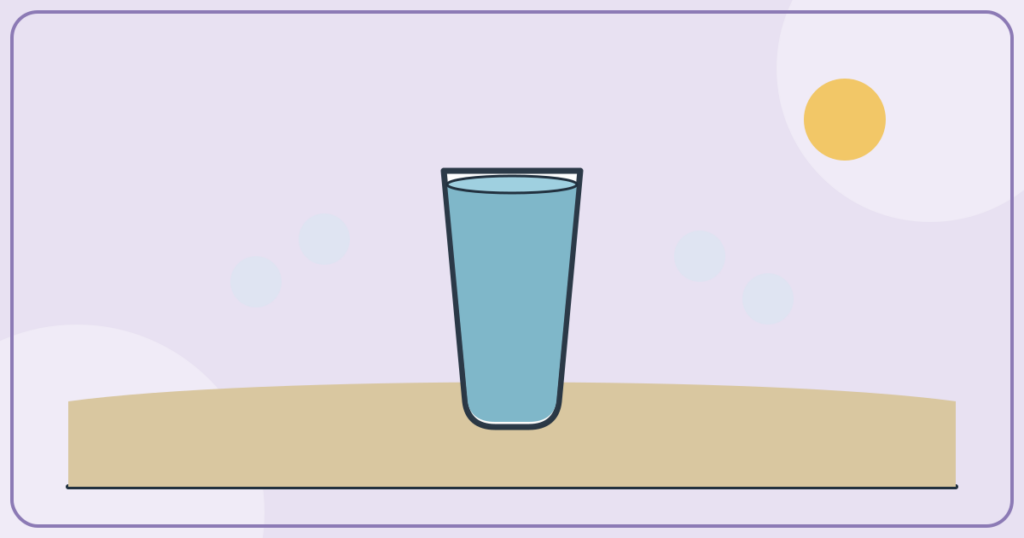
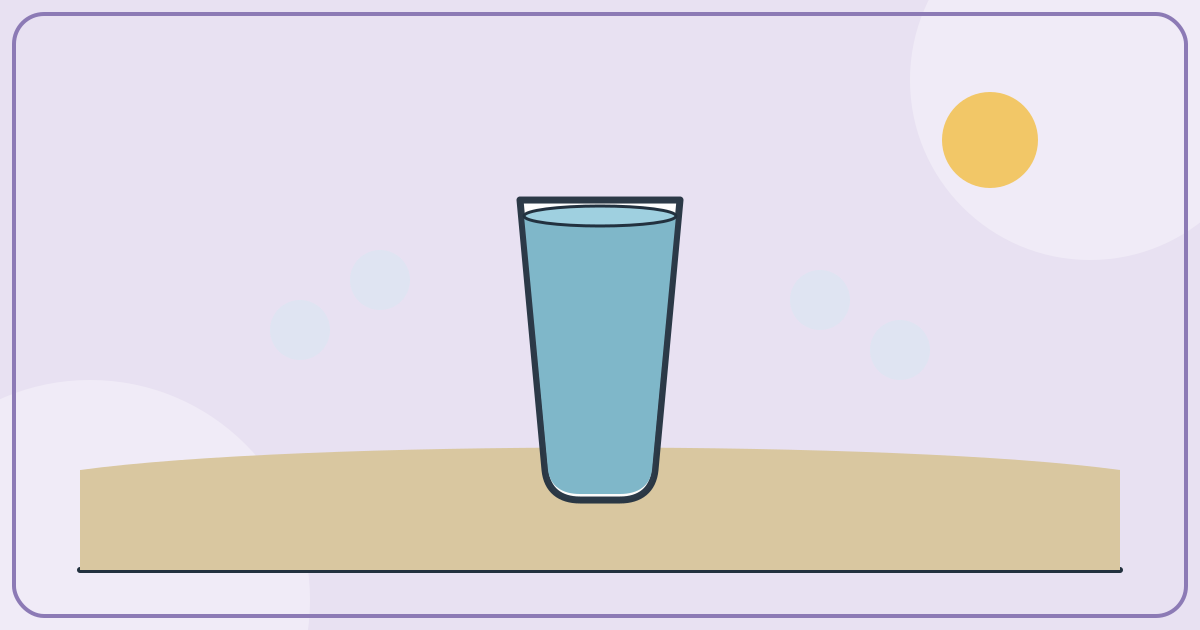
“All right,” said the principal. “But before you go, do me one favour. Take a glass filled to the brim with water and walk around the school three times without spilling a single drop. After that, you may leave if you still want to.”

The boy thought this would be easy. He walked around the school three times, exactly as asked, and then reported back to her.

What he did not see

“As you walked around the school,” she asked, “did you see a teacher speaking badly about another teacher?”

“No,” said the boy.

“Did you see any students looking down on others?”

“No.”

“Do you know why?”

“No.”

“Because you were focused on the glass, making sure it did not tip and spill. Life is the same. When our attention is on our priorities, we do not have time to see other people’s mistakes.”

The lesson

Every place has its faults, and every person has their flaws. We can spend our energy cataloguing what others do wrong, or we can put it into carrying our own glass carefully. The second choice leaves us calmer, more productive and far less inclined to walk away. Concentrate on your own priorities, not on other people’s mistakes.

Work & Career

What Truly Motivates Students

What Truly Motivates Students

A student who is not motivated will not learn well. Knowing what lights the spark, from relevance to caring teachers, helps students take charge of their own learning.

What Truly Motivates Students

If you are not motivated, you will not learn well. You will not hold on to information, you will not take part, and some students may even become disruptive. A student can lose motivation for many reasons: no interest in the subject, a teacher whose methods do not engage, or distractions from outside. Knowing what encourages you is the first step to fixing that.

Learning that feels relevant

Projects can run for weeks, so you need motivation to stay engaged and to dig deeply into a topic. Having a real say in what you study is one part of that. You may also need teachers to show you why each learning goal matters. Above all, projects need to connect with you, because too often they are built around things you simply do not relate to.

Learning by doing, together

Working well with others is a leadership skill. It can be hard, but it is also very rewarding, because it lets you see a project through the eyes of your classmates. Group work tends to run more smoothly when one member agrees to keep everyone on track, and it gets easier as students come to understand one another’s needs and motivations and begin to work as a team.

Knowing teachers care

The single biggest thing that makes students want to try hard and succeed is knowing that their teachers care about them. You may have disliked mathematics for years until a good teacher showed you what strong maths skills could open up for you later. That can be enough to make you want to learn more and discover potential you never knew you had. High expectations and strong support from teachers go a long way, and students feel motivated because teachers make them feel worth the effort.

Learning from failure

Most students have a story of a big failure on an important project. When a school’s culture encourages learning from mistakes, students can explain clearly what they would do differently next time, and even laugh about it. Thinking about a mistake in order to correct it helps you move forward. One student described presenting a group project while trusting that his teammates had prepared properly, only to discover that one person’s research was wrong. The lesson he took away was simple: check all of your work, always revise, and make sure everything is accurate.

Taking feedback

Students who give and receive critique every day, from classmates and teachers alike, grow comfortable with it through practice. They learn that feedback is not the end of the process. It is part of improving the work, and it pushes you to get better.

Two quick tips

  • Match the challenge to your skill. You learn best when a task is neither so easy that it bores you nor so hard that it frustrates you.
  • Start with the question, not the answer. Memorising facts is dull; working out the solution to a puzzle is exciting.
Life Lessons

Listen To Your Inner Child

Listen To Your Inner Child

Think back to playing outside without a care in the world. How much of that child is still with you? More than you might think, and it has lessons to offer.

Listen To Your Inner Child

Take a moment to let your mind travel back to when you were small, playing outside among the leaves and trees without a care in the world. How much of that child is still with you today?

Our inner child never really leaves us. We simply forget about them as we grow older. It is worth tuning in to what that inner child is telling us, because they can help us a great deal on our inner journey.

Do not be afraid to love

Children do not build walls around themselves. They love freely, openly and honestly, with their whole hearts. As we grow up, we go through break-ups, heartache and betrayal, and we start shutting ourselves off from other people. However many times you have been hurt, keep loving others anyway. Unconditional love means loving people whatever they can give you, and whether or not they return your feelings, and children are the best examples of that selfless love. The next time you feel like closing yourself off, think about what your inner child would do. They would want you to keep love alive and give it another chance.

Keep things simple

Life was simple when you were a child. You let your imagination run free and did not worry about tomorrow or yesterday. Why should that change now that you are an adult? It need not. You can still live a fairly simple life by owning less, getting outdoors as much as you can and doing work you love. Your inner child longs for simplicity and wants you to uncomplicate your life so you can enjoy it fully.

Let go of your pain

Turning the page in your own story means releasing what is behind you. Learn from it, forgive everyone who hurt you and move on. When you clear out the negative weight of the past, you make room for good events and good people. You cannot finish your story if you stay stuck on the same page, so find the strength within you to accept your past as a valuable lesson and open your heart to the future.

Make time to play

Children spend most of their time playing, while adults spend most of theirs working. If you never set aside time to let loose and have fun, life soon becomes dull. Try to cut back on a few obligations so you can enjoy life while you have it. Contrary to what many believe, you were not put here just to pay bills and taxes. You deserve to enjoy life for all it is worth, so get outside and play hide and seek once in a while. It will do your heart good.

See beauty the way a child does

Children do not instinctively know what ugly means, because there is no ugliness in their hearts. They do not see it in themselves or in the world around them, because they arrive knowing only love and beauty. Stand before a mirror and remind yourself that you are beautiful; repeat it often enough and you will begin to believe it, and then to see it. Let your inner child show you the world through their eyes, free of prejudice, self-hate and negative labels.

Relationships

When Someone Is Hooked On Negativity

When Someone Is Hooked On Negativity

Some people cannot see the bright side, and their gloom affects everyone near them. Understanding the pattern makes them easier to deal with.

When Someone Is Hooked On Negativity

Most of us know someone who always seems to see things from the darkest angle. You may not be able to say why, but whenever you are near them your mood shifts, and you might even feel an urge to get away. That is probably because you have met someone who is addicted to negativity. Some people simply cannot see the bright side, and it affects the people around them too.

They worry about trifles

People hooked on negativity tend to make a mountain out of a molehill. A cracked plate becomes a major drama. A couple of hours later, they will have swapped that drama for a new one. Instead of enjoying ordinary days, they brood about the future, which only makes them gloomier.

They overlook the good

It does not matter whether they have just had a great day at work, received a gift or heard some good news. They fix their attention only on what they dislike about their lives and completely miss the good moments they experience. Because they ignore the positives, they are hardly aware those positives exist. When they think things over, they reach a conclusion that fits their view of the world: that they are deeply unlucky, or that their lives are worth little.

They avoid risks

They care far too much about what others think of them. A single unkind remark can shake them badly. Because they build their view of themselves on other people’s opinions, they lack objectivity, which leaves them very insecure and dependent on others.

Handling them with patience

Their behaviour can be hard to cope with, and at times almost unbearable. We need a good deal of patience, and a real effort to understand why they act this way. More often than not, their behaviour comes from a string of bad experiences. What they need most is for someone to understand them.

Mind & Habits

The Five P’s Of A Successful Life

The Five P’s Of A Successful Life

Purpose, power, presence, potential and positivity. Five simple tools that improve the odds for anyone setting goals.

The Five P's Of A Successful Life

Everyone who sets goals can improve their chances of success with five basic tools: purpose, power, presence, potential and positivity.

Each of us carries a store of natural wisdom and joy we can draw on. Still, plenty of people sink into negative thinking and drift without direction or a goal in sight, cut off from their sense of purpose, their inner strength, their potential, their optimism and the ability to live in the moment. If you want to feel livelier, enjoy life more and spend more time on what you love, these are the ideas to start weaving into your days.

Live with purpose

Why are you here, really? Where is your life pointed? We all have something that gives us a sense of purpose, and discovering it is how we live a fuller, more meaningful life. Without it, we feel lost and flat. The Buddha’s teaching on this is often summed up simply: discover what you are here for, then pour everything you have into it.

Find your power

Inner strength is what lets you practise self-control and discipline day after day. Without it, we feel stuck. Each day we choose how we respond to our challenges. Power means acting, and sensing that you are gathering speed towards the life you have in mind. Doing the very thing you fear most is often what proves you can do almost anything.

Cultivate more positivity

Emotional wellbeing has many sources, but the key thing to understand is that we are responsible for growing our own positive feelings. Gratitude, passion and joy are a few that lift wellbeing. Appreciate what you have now while you build towards what you want later. Nurture these feelings and begin living more positively. As the novelist George Eliot observed, it will never rain roses; if we want more roses, we must plant more.

Practise mindful presence

So many people are wrapped up in longing for the future or regretting past mistakes. Yet today is truly all you have. Make the most of it and live something meaningful right now. Relax and enjoy what each day brings while you work towards the life you want. A line often credited to the philosopher Lao Tzu puts it neatly: low spirits dwell on yesterday, worry dwells on tomorrow, and peace is found only in today.

Keep expanding your potential

We are meant to grow. Our potential has no fixed ceiling, yet most people never discover how much they are capable of. When we stretch ourselves and push past our comfort zone, we feel more alive and become fuller, stronger people. You are meant to keep growing. Robert Louis Stevenson held that being ourselves, and growing into everything we are able to become, is the whole point of living.

Relationships

Why Kindness Is Undervalued

Why Kindness Is Undervalued

Kindness is often dismissed as weakness or even as hidden selfishness. The evidence points the other way: kind people tend to be happier people.

Why Kindness Is Undervalued

Kindness can be described as a way of acting out of compassion, and doing so selflessly. It is a frame of mind that puts concern for others ahead of one’s own interests. When we do something truly selfless, we may even go against what would serve us best.

Why it gets overlooked

Kindness is a value that is often brushed aside. Why is it so underrated? Partly because some people see kind people as enablers, and the cynical go further and call kindness a form of selfishness.

That cynical view rests on a belief that success only comes from trampling on others or ignoring them. Yet living that way seldom brings real happiness: the feeling of being loved, the sense that your life is fulfilling its purpose, and the knowledge that what you do truly matters.

Kindness and happiness go together

In fact, kindness is tied to happiness and contentment, both in the mind and at a deeper, inner level. Observations show that happy people tend to be kinder than unhappy ones.

A simple exercise points the same way. When people counted the number of kind things they did, their sense of happiness rose. Counting their acts of kindness also made happy people kinder still, and more grateful.

A fair caution

Being too nice certainly has its pitfalls. But practising kindness brings so many good feelings with it that it is well worth the effort.