Tag: Adults

Life Lessons

An Enlightened Life Is A Simple One
An Enlightened Life Is A Simple One

Enlightenment is not a feat reserved for a few. It is found in daily actions and deeds: living simply, finding peace, enjoying life and showing gratitude.
An Enlightened Life Is A Simple One

Enlightenment is built a little each day, out of what you do and how you treat others.

Whatever you choose to change should come from you, fitted to your own hopes and your own situation. Life stays simple when you simply live it; it turns complicated when you make it so. Aim to live well on less.

Let life flow

Life moves on whether you welcome it or resist it, so throw yourself into each moment. Like a river, it keeps running until it reaches its end. It never stands still, and along its course you will meet change, setbacks and obstacles.

We were meant to live at an easy pace: eat modestly, rest, work, and share the world with animals, trees and the rest of nature. That is not how things turned out. What was simple has grown tangled. We pour energy into things of no real use, crave what we could easily do without, and then go hunting for enlightenment.

No grand feats needed

There is no need for heroic effort. Enlightenment is really just your own contentment, the quiet satisfaction you feel in whatever you do. Others help bring it about, but you are the one who matters most, through kind acts that express your thankfulness. Here is the path.

Find peace within

Perhaps your work, your home, your money, your partner or your children leave you dissatisfied, along with plenty else. That stirs up inner turmoil and keeps the calm you want out of reach. Turning things around is hard, so either work steadily to shape them as you wish or, often wiser still, make peace with them as they are. Look for calm inside yourself.

Relax and enjoy

The world can be frantic. Step back now and then and simply enjoy life. Go to the places you love and, better still, spend time with people and lend them a hand, so your visits become something they look forward to. Feeling loved is wonderful, and it comes when your thoughts turn towards others and you step out of your own shell. Put the self-centred “me” well behind you.

Show gratitude

Thankfulness matters more than anything else on this path. Offer it to everyone you meet, from the people who help in your home to the lad who delivers the paper to your own parents. It keeps you humble and lifts off the shallow airs we drag around and feel weighed down by.

Build self-confidence

Confidence is visible in your work, your talk, your outlook and your deeds, and greater confidence brings greater achievement. Knowing clearly what you want gives life direction and meaning, and gives you the strength and courage to pursue it while seeing things in a calmer, more reasoned light.
Work & Career

Bring Out The Best In Others

Bring Out The Best In Others

When you help others succeed, you help yourself. Four habits make you the kind of person who draws out talent in the people around you.

Bring Out The Best In Others

Helping others thrive is also a way of helping yourself. The goodwill and thankfulness that flow from lifting people up to their best cannot be measured.

Give your own best and you may build a comfortable career. Draw the best out of other people and you can make a real difference in the world. Nothing large is ever achieved alone. Four habits will set you on the way.

Be generous

Offer people your time, your effort and, above all, your trust. Keep faith in them when they trip up or lose faith in themselves. Backing someone who is already a star is easy. The real skill lies in noticing ability hidden so deeply that its owner has no idea it exists.

Be open-minded

Ability shows up in many shapes and in surprising places. Some of the most gifted people you will ever work with will be nothing like you. Their thinking, behaviour and way of speaking may differ sharply from yours. They might be noisy when you crave calm, or silent just when you need their ideas.

Be persistent

Growing someone’s talent is slow and rarely smooth. People lose heart and lose focus. Some start leaning on you to carry the load rather than thinking for themselves. That is understandable, since discovering what you can do, and owning your own results, both take time. Support them, but do not do their work for them. Keep at it and you can teach two essential truths: that their results belong to them, and that real ability lies within them, waiting to be drawn out by honest effort.

Be present

If your attention is fixed on your own skills and ambitions, the gifts in the people around you will pass you by. Spotting potential means noticing small signs, staying curious, and helping others discover what they are capable of.

Work & Career

What Kills Creativity At Work

What Kills Creativity At Work

Creativity is not something you can buy. It is a quality most of us already have. These are the things that quietly smother it at work.

What Kills Creativity At Work

Nobody can purchase creativity. Nearly all of us are born with it. What follows are the things that smother it at work, and how to push back. Becoming more inventive starts with changing something.

Stress

A dose of pressure can help. It raises your energy and drives you to perform. Too much, though, saps your output and blocks your best thinking. When you feel tension climbing, do whatever steadies you, even if that means stopping for the day and heading home.

The daily grind

Shake up your routine. Take a short design course, for instance. Small shifts work too: adjust your hours, try a different computer, or trade desks with a colleague.

Thinking inside the box

Sitting in a cubicle all day is a little like living in a box. Get out of those four walls from time to time and leave the comfortable office furniture behind.

Fear

Many people hold back a bold idea because they dread being mocked if it flops. Yet risking a failed experiment is far better than standing still and never changing at all.

Relationships

How To Accept A Compliment

How To Accept A Compliment

Most people love to be noticed, yet few know how to receive praise well. Brushing it off hurts the giver more than you might think.

How To Accept A Compliment

Most people love to be noticed, but few know how to accept a compliment gracefully.

Do you wave away praise with “it was nothing” or “no big deal” the moment it arrives? Plenty of people find praise awkward to receive. Here is a guide to receiving kind words with grace.

Think about how it feels

How do you feel when you compliment someone and they shrug it off? It may make you sad that they do not see their own worth, or even a little annoyed, as if they do not trust what you said. Either way, it does not feel good. That is exactly what you do to someone else when you brush off their praise. The last thing you want is to make the person sorry they complimented you. Gratitude is the only fitting way to acknowledge someone’s kind words.

Smile

It often happens without thinking, but the first thing to do when someone compliments you is to smile. It does not matter whether it is a shy little grin or a big beam, as long as the corners of your mouth turn up. A compliment tells someone they did well, and it is also meant to brighten their day.

Say thank you

Once you are smiling, stop yourself from playing down what you did or scolding yourself for not doing better, and simply say thank you. Those two words are enough to let the other person know you value their kindness. Make sure your response is sincere and honest, just like their compliment.

Accept a toast with grace

When someone raises a glass to you, the proper response is to nod and smile. Do not pick up your own glass and drink with everyone else; that is like patting yourself on the back. After the others have drunk, you are welcome to rise and propose a toast of your own.

Share the credit

If someone compliments you and your team, acknowledge it and say you will pass it on to the people who helped you do the work. That makes everyone feel good.

Believe it

This can be the hardest part, especially if you find praise difficult to accept. People praise you because they mean it, so give their words the same belief they do. You have probably seen talented people who amaze you even though they feel quite ordinary themselves. That may be how others see you as well. Your own opinion may not match theirs, but that does not make them wrong.

Relationships

When Our Parents Grow Old

When Our Parents Grow Old

Caring for an ageing parent is one of life's great turning points. It brings challenges and blessings both, and it is easier with support.

When Our Parents Grow Old

Looking after an ageing parent is part of the challenges, and the blessings, that make up the cycle of life.

When the roles reverse

For most of us, a natural part of life’s cycle comes when our role as children begins to shift into one of caring for our parents. The shift might be a big one, such as moving a parent into a retirement home. Or it might simply be realising that we need to check in on them more often than before. Either way, the change is a momentous one.

The feelings it brings

This stage can bring us face to face with our own mortality as we confront that of our parents. We may also find ourselves gripped by fear at the thought of losing them, even if we have lived independently for a very long time.

Finding support

Talking with friends and family who are going through something similar can be a great source of support. They can help us look at both the unresolved past and the unfolding present. With them, we are also free to talk only about ourselves. Sometimes we need the kind of undivided attention a good friend can give in order to work through everything that surfaces at this point in our lives.

Looking at our own lives

As our parents’ lives move towards their close, we have a chance to see what they did with their time on earth, what we have done with ours so far, and what we might want to do with the time we have left. The challenges and the blessings alike are part of the cycle of life.

Life Lessons

The Gift Of Not Knowing The Future

The Gift Of Not Knowing The Future

We often wish we could see what lies ahead. Not knowing is what keeps us fully present, and it brings out the very qualities we need to grow.

The Gift Of Not Knowing The Future

Being in the dark about tomorrow is exactly what holds us to today, the only place we can give ourselves completely.

Now and then most of us long for a preview of our lives. We wonder what blessings and difficulties the next months or years will hand us, whether a relationship will last, whether our plans will come good. Facing a choice, we wish we could see which path ends well, and some people chase answers from all sorts of sources in the hope of a peek ahead. The most anyone ever gets is a fleeting glimpse.

Why the whole story would be too much

We imagine we would welcome the full script of our lives. In reality, seeing everything in advance would almost certainly leave us drained and swamped.

Look back at the road you have already travelled. Chances are you have achieved more, and endured more, than you once thought possible. Had someone listed for you, as a child, every job and every relationship ahead, with all the highs and lows of each, it would have been crushing. Carrying all that knowledge around, you would have struggled to be present at all, and the present is the only place life ever really takes place.

What uncertainty gives us

Not knowing what comes next calls up the very strengths we need to grow. Reflect honestly on your past and you will find it hard to point to anything that ought to have been erased. Very often the toughest chapters, and the lessons they forced on us, turn out to have brought the richest rewards of all.

Life Lessons

Keep Your Eyes On Your Own Glass

Keep Your Eyes On Your Own Glass

A boy wanted to leave school because of everything wrong he saw there. His principal set him a simple task with a glass of water, and it changed how he saw things.

Keep Your Eyes On Your Own Glass

A boy went to his school principal and told her he would not be coming back to school any more.

“Why not?” she asked.

“I saw one teacher speaking badly about another,” he said. “There is a teacher who cannot read well. The staff are not good. Students look down on each other. So many things are wrong in this school.”

A simple task

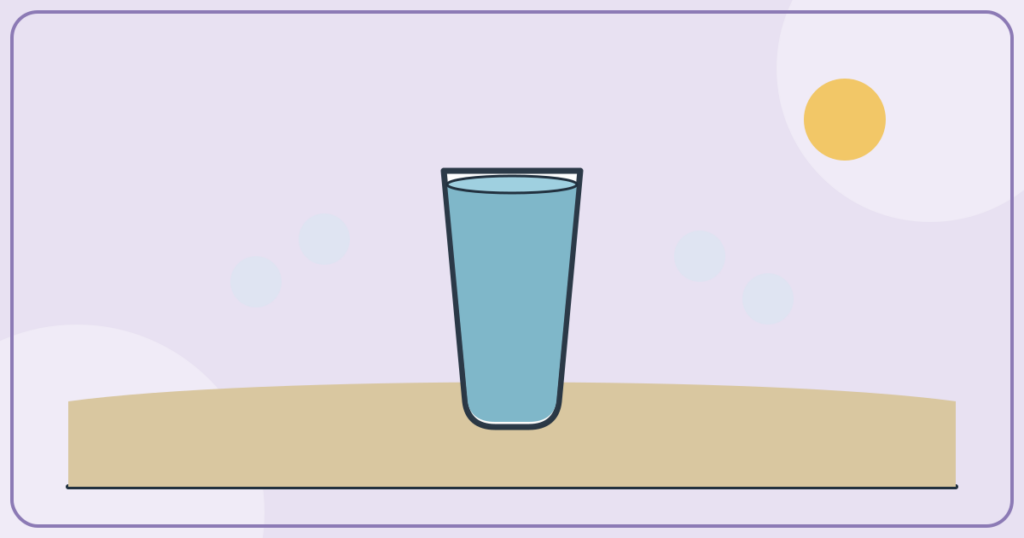
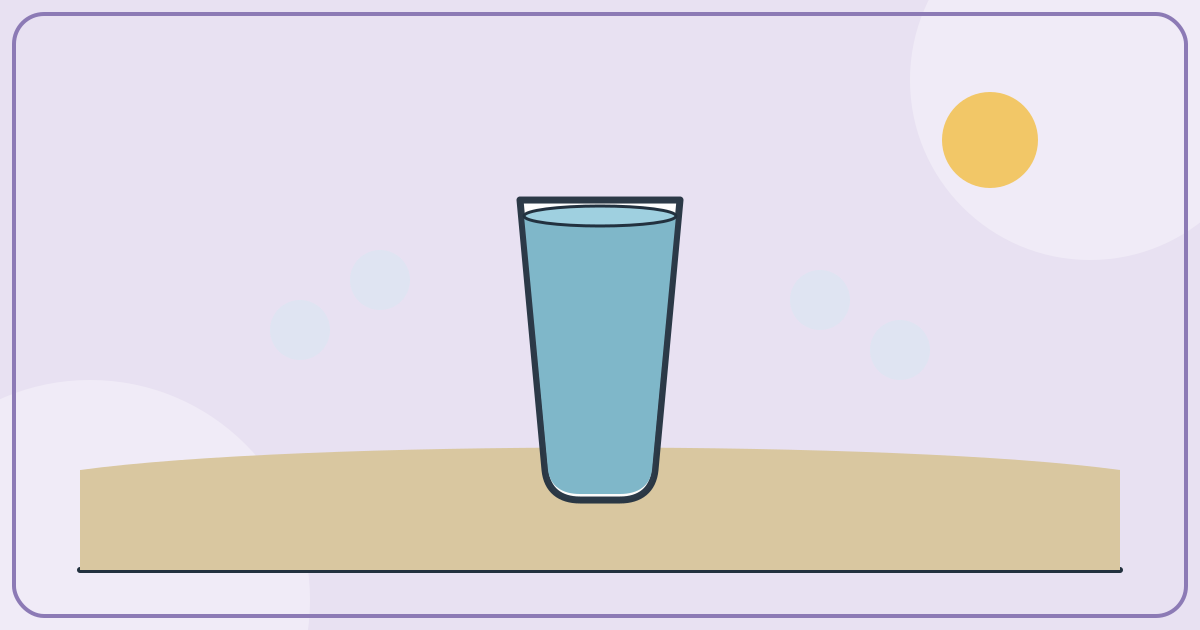
“All right,” said the principal. “But before you go, do me one favour. Take a glass filled to the brim with water and walk around the school three times without spilling a single drop. After that, you may leave if you still want to.”

The boy thought this would be easy. He walked around the school three times, exactly as asked, and then reported back to her.

What he did not see

“As you walked around the school,” she asked, “did you see a teacher speaking badly about another teacher?”

“No,” said the boy.

“Did you see any students looking down on others?”

“No.”

“Do you know why?”

“No.”

“Because you were focused on the glass, making sure it did not tip and spill. Life is the same. When our attention is on our priorities, we do not have time to see other people’s mistakes.”

The lesson

Every place has its faults, and every person has their flaws. We can spend our energy cataloguing what others do wrong, or we can put it into carrying our own glass carefully. The second choice leaves us calmer, more productive and far less inclined to walk away. Concentrate on your own priorities, not on other people’s mistakes.

Relationships

Small Boosts For A Strong Relationship

Small Boosts For A Strong Relationship

Relationships take years to build but can fall apart overnight. If yours could use a lift, three simple habits go a long way.

Small Boosts For A Strong Relationship

Relationships are not built overnight, yet they can fall apart overnight. If you feel yours could use a little lift, here is how to give it one.

Appreciate what you have

Especially before you start a big argument or drag out an ongoing one, stop and appreciate everything your relationship is at this very moment. Stop living for what it might become. This person chooses to be in your life every day, and it is your job to make sure they are happy now. Look after the present well, and the future will largely look after itself.

Stay alert

It is very easy to grow complacent in a relationship, so do not fall into that trap. Ask a few questions at the start and come back to them often. Where is this relationship heading? What do you hope to achieve together over the next year? What are you afraid of? The answers change over time, which is exactly why the questions are worth asking again and again.

Learn from experience

Do not keep making the same mistakes. If you know couples who have been happily married into their late sixties and beyond, talk to them about what they have learnt. Ask for their advice and see what you can take from it into your own relationship.

Mind & Habits

Face Your Inner Conflicts In Time

Face Your Inner Conflicts In Time

Shining a light on the conflicts inside us is rarely comfortable. Distracting ourselves and hoping they fade feels easier, but awareness is what actually dissolves them.

Face Your Inner Conflicts In Time

It is seldom comfortable or pleasant to bring awareness to the conflicts inside us. It feels far easier to distract ourselves and hope the conflict will melt away on its own.

Thoughts shape how we feel

Our beliefs and attitudes, shaped in large part by whatever we hold to be true, play a big role in our patterns of thinking. Day to day, our thinking affects our emotions and feelings, and those in turn have a major effect on how we behave. How we act and react has a large impact on our lives. Seen this way, our thought patterns matter a great deal for both our emotional and our physical health.

Stress, and the ways we run from it

Many of us are shaped by how we handle the stress life brings. Left unchecked, chronic stress takes a toll on the body over time. A strong faith or set of convictions can help us cope with the stress we meet and soften its impact. Without that, we have to fall back on our own resources. Too often we try to cope through addictions and other forms of escape. Yet the more we run from the conflicts within us, the more we are at the mercy of a restless, shifting mind.

Awareness starts the healing

If you want a calm, steady mind, it is essential to dissolve the conflicting feelings inside you. Nothing truly changes until you bring it into conscious awareness. Simply becoming deeply aware of the conflicts within is enough to begin dissolving them, because awareness brings its own clear intelligence to bear. Be willing to let your attention rest on these inner conflicts without shrinking from them or fearing them.

It can feel unpleasant to sense the tension of those conflicted feelings. Do not let that passing discomfort make you turn away. It helps to sit quietly on your own while you do this, so that your mind is not pulled away by outside distractions.

Follow what you love, not what you lack

You do not have to force anything to bring about the life you want. Follow your joy, your inspiration and your passion, and you will find yourself on the way towards it. When you live with a mindset of needing to do things, which is really a thought rooted in lack, you will always feel at odds with your true self.

Mind & Habits

Mark Your Mood Every Day

Mark Your Mood Every Day

Emotions shift every minute and quietly shape our work and relationships. A simple daily note of your mood can help you understand them, and yourself.

Mark Your Mood Every Day

Emotions affect us every minute of every day. When you feel anxious at work, you are more likely to make mistakes, and good ideas are harder to come by. To get on top of this, it helps to keep track of how you feel. Here is what that does for you.

You understand your emotions better

It matters a great deal to understand how your emotions work and what you need to do to stay on top of them. Being in a bad mood for no apparent reason is frustrating, both for you and for the people around you. Keeping a record of your moods gives you a much clearer sense of what is actually wrong and what is affecting how you feel.

You spot your problems more easily

Chances are, something underneath is causing the bad moods. By keeping a record of them, you are far better placed to work out what is behind those feelings. That way you can bring more positivity into your life and handle stress more easily.

Your performance improves

Emotional intelligence helps you find your way through the social side of the workplace, lead and motivate others, and do well in your career. In fact, many employers now treat emotional intelligence as being as important as technical ability when they assess job candidates, and some even test for it before hiring.

The habit itself is simple: a quick note each day of how you felt and what may have caused it. Over a few weeks, patterns appear, and with them, the chance to change them.