Tag: Adults

Relationships

What True Generosity Means

What True Generosity Means

Generosity is not only about gifts. It is a way of seeing the world through what we have to give, rather than what we lack.

What True Generosity Means

Real generosity grows out of caring for another person without conditions. Each of us depends on others for the good things in our lives. We thrive or struggle together through a web of generous acts, coming from the kindness and integrity of people, many of whom we will never meet. That is the power of generosity, and when we practise it with awareness, we come into contact with its joyful, healing strength.

Letting go through giving

Practising generosity means setting out to free ourselves from the need to feed our ego, by giving freely of whatever we have that is of value. What we give may be material, or it may be our time, our energy or our wisdom.

We practise generosity to loosen the attachments that come from feeling that there is never enough and that we stand apart from others. It lets us see the world in terms of what we have and what we can give, instead of what we do not have and badly want.

Generosity all year round

Seasons of gift giving are a good time to ask how you might practise generosity through the rest of the year. There are many ways to build a generous attitude into daily life. A few are especially powerful:

  • Be generous with your attention when someone is speaking to you.
  • Be generous in celebrating another person’s happiness.
  • Be generous with your sympathy for someone who has suffered a loss.
  • Be generous with compliments and praise for others.
  • Be generous with respect for others, without conditions.
  • Be generous with your willingness to help.

None of these costs money. Each of them is something only you can give.

Life Lessons

Sent To Finish The Race

Sent To Finish The Race

Give nothing less than your best and do not get pulled off course. One marathon runner showed what finishing strong really means.

Sent To Finish The Race

Do not give less than your best, and do not let yourself get sidetracked. You either finish strong or you finish badly. There is no comfortable middle ground.

The last runner in the stadium

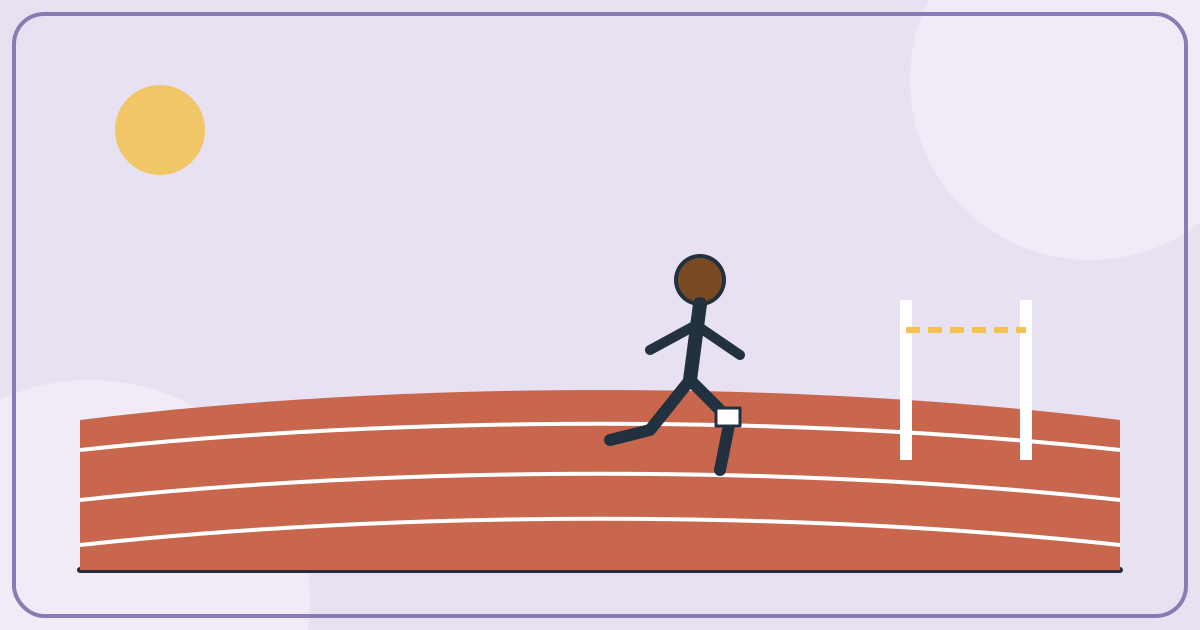
The setting was the 1968 Olympic Games in Mexico. The marathon was the final event, and the stadium was packed and buzzing as the first runner, an Ethiopian athlete, came in and crossed the line to a huge roar.

Far behind him was another runner, John Stephen Akhwari of Tanzania. The other runners had long since left him behind. After thirty kilometres his head was pounding, his muscles ached, and he fell to the ground. His leg injuries were serious, and officials wanted him to retire from the race. He refused.

With his knee bandaged, Akhwari got back up and hobbled the last twelve kilometres of the course.

About an hour after the winner had finished, Akhwari entered the stadium. Only a few thousand spectators were still in their seats. He circled the track at an agonisingly slow pace and finally collapsed over the finish line.

Why he kept going

It is remembered as one of the most heroic efforts in Olympic history. Afterwards a reporter asked him why he had not dropped out. Akhwari replied that his country had not sent him to start the race. They had sent him to finish it.

A question for each of us

Put yourself in Akhwari’s shoes. Would you have kept going to the end? Most of us are not running marathons, but we all start things: a course, a job, a promise, a plan. The story asks whether we are only there to begin, or whether we see it through to the end, even when no one is left in the stands to watch.

Work & Career

Being Yourself At Work Pays

Being Yourself At Work Pays

Many people hide parts of who they are once they walk into the office. Research suggests that showing your true self at work does more good than harm.

Being Yourself At Work Pays

Workplaces are far more diverse than they used to be, yet many people still struggle to embrace what makes them different, especially while they are on the job. A study by researchers at the University of Houston and George Mason University looked at whether hiding who you are at work actually helps.

What the researchers measured

The team surveyed 211 working adults online. They looked at each person’s sense of identity, the discrimination they felt they faced, how satisfied they were with their jobs, and whether they were thinking of leaving.

What they found

Contrary to what many people fear, expressing your true identity at work tended to improve relationships with colleagues. When people were open about their social identity, the people they worked with often became more thoughtful about how they behaved towards them and how they treated people like them.

As the study’s authors put it, what is good for the worker is very often good for the workplace too. People who can be open about themselves feel more welcome, get on better with the people around them, and help make the whole workplace a happier one.

The study also suggested that hiding one’s true identity may actually leave people more exposed to unfair treatment. When colleagues do not realise that someone belongs to a group they might look down on, they make less effort to keep their prejudices in check.

Why it matters

The researchers hope their work will encourage people to be more accepting of colleagues from different backgrounds, and will push employers to adopt policies that build a positive, inclusive culture. For the rest of us, the lesson is simple. You do your best work, and build your best working relationships, when you do not have to spend your energy pretending to be someone else.

Terms Explained

Three Faces Of Arrogance

Three Faces Of Arrogance

Arrogance is a sense of superiority built on an inflated view of oneself. Psychologists describe three kinds, and what usually lies beneath them.

Three Faces Of Arrogance

Arrogance is a belief that you are better than others, resting on an exaggerated and often artificially inflated sense of self-worth that shows itself in excessive, presumptuous claims. Arrogant people tend to act as though they are superior to everyone else and expect to be admired and respected for their special qualities and great achievements.

Psychologists describe three types.

Individual arrogance

This is an inflated opinion of your own abilities, qualities or achievements that does not match reality. It means talking up your results and overstating your skills, which leaves you with a distorted picture of yourself.

Comparative arrogance

Here a person rates their abilities, qualities or achievements far above those of other people. It goes beyond an exaggerated self-image. It also involves a warped view of others.

Antagonistic arrogance

This is arrogance at its peak. It means looking down on others because you assume you are superior. Such a person not only believes they are better, but also sees others as lesser and treats them that way, often by humiliating or ignoring them.

What lies beneath

When arrogance grows, it is usually a sign that the person is hiding a deep insecurity. It can work as a shield to protect a fragile sense of self-worth. In practice, such people fear being rejected, so they take on an arrogant manner. They push others away first, so as not to be rejected by them.

In other cases, arrogance grows out of real achievement. These are often people who succeeded where others failed. They begin to overrate their own skills, and before long develop a kind of superhero complex in which they believe they are simply the best.

Life Lessons

A Palace Or An Inn?

A Palace Or An Inn?

A wise teacher walked into a king's palace late one night and asked for a bed at the inn. The king's reply, and the teacher's answer, are worth remembering.

A Palace Or An Inn?

Late one night, a teacher known far and wide for his wisdom walked up to a king’s palace. The guards recognised him and let him pass, and he went all the way in to where the king was sitting on his throne. The king knew him at once.

“You are welcome here,” said the king. “What brings you?”

“I would like a bed in this inn for the night,” the teacher said.

The king bristled. “An inn? This is my palace!”

Quietly, the teacher asked whom the palace had belonged to before the king.

“To my father, naturally. He passed away.”

“And before him?”

“My grandfather. He too is gone.”

“A place where one person after another stays for a time and then leaves,” said the teacher. “Is that not exactly what an inn is?”

Why the story stays with us

We speak of our homes, our positions and our possessions as if they were ours for good. The teacher’s gentle questions remind us that we are all guests passing through. Nothing we hold stays with us forever, and remembering that makes it easier to hold things lightly and to treat the people who come after us with care.

Life Lessons

Do Not Run From The Truth

Do Not Run From The Truth

Most of us have held on to a truth we were afraid to face. Facing it bravely is what keeps life moving forward.

Do Not Run From The Truth

Look the truth in the eye, bravely, and your life keeps heading forward in a good direction.

Nearly everyone has held on to some fact they dreaded saying out loud, sure it would land badly. Just as often, we are the ones who cannot cope with a fact in front of us. Sometimes it is minor: ignoring the warning signs from the car because the repair bill scares us. Sometimes it is serious: refusing to admit that a person we love is slowly drifting away.

Why we look away

Most of the time the facts are plain enough, if we are willing to see them. Still, we come up with clever ways to keep them out of sight, however obvious they are. Fear, anger or plain helplessness is usually what makes us turn away. We tend to build our lives on a particular picture of how things are, and when that picture proves wrong, in whole or in part, it can feel as though the ground itself is shifting.

The truth always finds a way

Standing firm at such moments takes real strength, and many of us choose to hide instead. Yet hiding only works for a while. A truth that is ignored tends to come back, each time pressing harder until we cannot overlook it.

Since it cannot be dodged forever, however much it hurts, the earlier we drop our guard, the easier things become. Once we see clearly and accept that our lives may need to change to fit the facts, we are living in step with what is real.

Patience with others

We can also be gentle with those around us who are still struggling to see, because we remember how much it can hurt. Whatever the facts turn out to be, the aim is honest: to keep our eyes open, and to feel thankful that we are able to see them at all.

Relationships

Saying Sorry Without Words

Saying Sorry Without Words

The word sorry is meant to make the other person feel better, but it is so overused that it often falls flat. Here is how to apologise through what you do.

Saying Sorry Without Words

Saying “I am sorry” is supposed to help the other person feel better. Because the phrase has been used so carelessly for so long, it rarely does its job on its own. So here are ways to apologise without saying it at all.

Every relationship goes through rough patches. Handled the right way, a problem can actually bring two people closer. An apology expresses regret for something you did wrong and is a way to start putting things right.

Do their chores

If you live with the person you upset, let them walk into a spotless home with nothing left to do but kick back and rest. If you do not live together, find a fair and welcome way to help out anyway. After a big fight, when your friend or loved one is not taking your calls, you might wash their car or tidy their garden.

Write a poem

Write one, or find one, that shows how you feel about the person beyond this one disagreement. Keep it simple, and give it to the person you wronged.

Cook for them

Cook their favourite dish, and if you are not sure what that is, find out. You could go further and bake an actual apology cake with the words “I am sorry” in the icing, because good food has a way of reaching anyone’s heart. Even a cup of coffee made with extra care and a smile can do it.

Make a collage

Put together a collage of photos from wonderful places you have been together, or happy times you have shared. Add a short message, something like: “Nothing matters more to me than the happy moments you have brought into my life.”

Take responsibility

Be as specific as you can when you own up to what you did. A specific apology means more to the other person, because it shows you have truly understood what hurt them.

Mind & Habits

Why A Hobby Is Worth Your Time

Why A Hobby Is Worth Your Time

Hobbies are food for the soul. If you think you have no time for one, you probably need one more than anyone else.

Why A Hobby Is Worth Your Time

Put your enthusiasm into a hobby and a whole new world of possibilities opens up. Hobbies feed the soul. They lift our spirits, restore our energy and refresh the mind. They can be so stimulating that they create moments of real delight. Anyone who calls hobbies a waste of time should reconsider. And if you believe you could never step away from work long enough for one, that is probably the best sign you need it. Here is why.

Recharge

When we do something we enjoy, we can step away from everyday worries and recharge. Leisure that gives us pleasure helps us recover from the demands of busy, even frantic, lives.

A creative spark

Hobbies can be healing, and they can rekindle our spark. They calm the mind and let us slip away from the outside world to reconnect with ourselves, leaving us refreshed and full of energy. Having a passionate interest that helps us unwind makes us happier, and that in turn makes us more successful in everything else we do.

Learn about yourself

Our hobbies say a lot about who we are. Doing something only because we enjoy it teaches us much about ourselves: our likes and dislikes, strengths and weaknesses, fears and beliefs. Take meditation: it shows you how restless your thoughts can get and how badly they need a quiet pause from time to time. A pastime can uncover parts of you and bring out talents you never knew you had.

Perspective

Hobbies give us a balanced view of life beyond work. They remind us how important it is to make time for ourselves and to refresh both mind and spirit. When responsibilities pile up, a hobby gives us something to look forward to. Putting energy into recovery matters just as much as putting it into work. Stepping back from life’s pressures does not only revive us. It also helps us see the bigger picture, the whole forest rather than just the trees. And you never know where a hobby might lead: to interesting new people, or even to a new career.

A boost to self-esteem

A hobby will challenge you, mentally or physically. As you rise to those challenges, your confidence grows. Solving problems and becoming good at something is both exciting and rewarding.

Keep it in balance

Overall, a hobby improves both the quality of your life and your success. But be sensible about it. A hobby should not swallow the rest of your life. Some people, for instance, pursue health and fitness to the point of cutting themselves off, giving up time with others to keep control over their food, workouts and routine. A hobby should bring balance to your life, not drive every choice you make.

Relationships

When Rumours Are About You

When Rumours Are About You

Anyone who has worked in an office or gone to school knows how much damage a rumour can do. You cannot always stop one, but you can handle it well.

When Rumours Are About You

Anyone who has worked in an office or been to school knows how much harm a rumour can cause. Avoiding rumours altogether would be ideal, but sometimes you simply cannot stop one from spreading about you. The best approach is to build habits that make future rumours less likely, and to deal with any rumour calmly and promptly.

Keep people informed

Rumours tend to grow around people who are very private about their lives or who rarely talk with those around them. There is no need to share every detail of your life with everyone. But letting a few people know how you are and what is happening helps. Then, if a rumour does start, it is harder for anyone to believe, because people already know the real story.

Treat people kindly

Not every rumour begins with close friends or family. Many start with people who do not know you well, which makes it easy for them to invent things. That is why it pays to be kind to everyone. The kinder you are, the less likely people are to act out of spite and try to damage your name. Even with people who are hard to get along with, aim at least to be kind.

If you harm someone else’s reputation, you are more likely to find a rumour spreading about you, and you will be in no position to blame anyone for it.

Do not spread rumours yourself

It really is that simple. Passing rumours along makes you part of the harm done to others. If you do it, you are no better than the person who spread one about you.

Do not take it personally

Some people carry bitterness or ill will and spread rumours because it makes them feel better about themselves. Others mishear something and pass it on without meaning any harm. Either way, a rumour is usually not a sign that you did anything wrong. Often the people spreading it are dealing with their own insecurities or simply with boredom. So do not let it get under your skin.

Life Lessons

The Boulder In The Road

The Boulder In The Road

A king hid a boulder in the middle of a road and waited to see who would move it. What happened next is a lesson about every obstacle we meet.

The Boulder In The Road

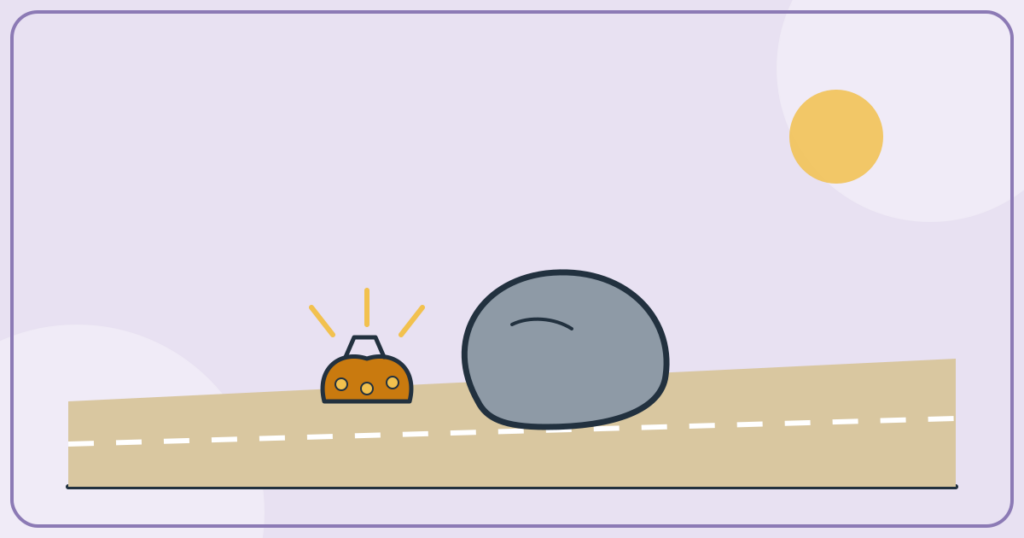
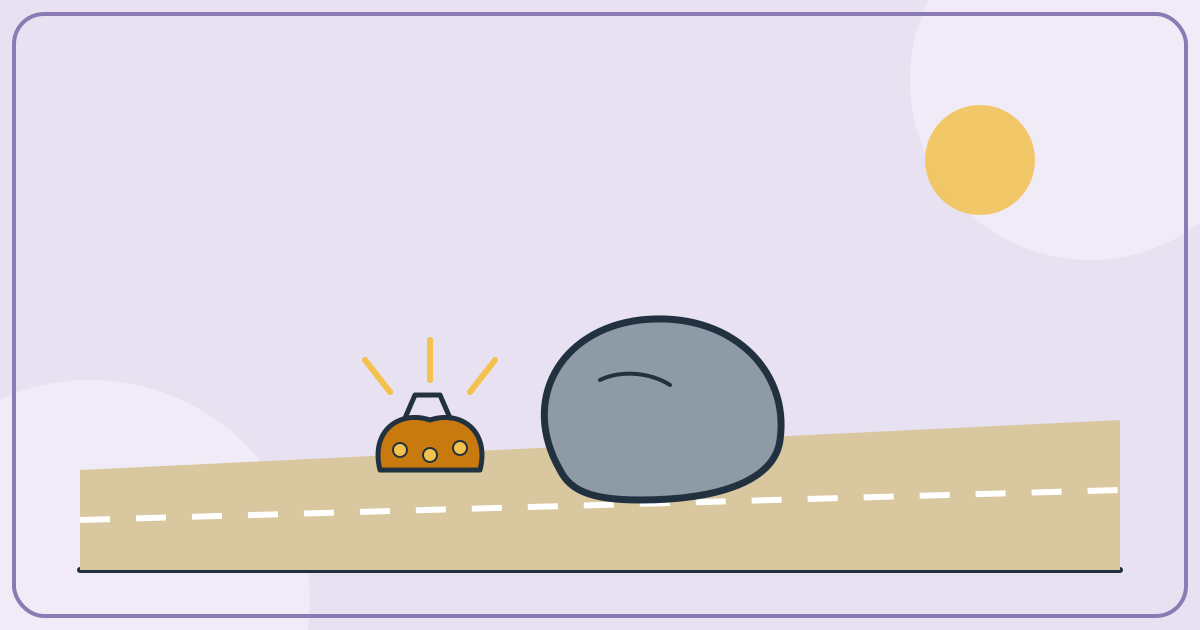
Long ago, a king had a large boulder placed in the middle of a road. Then he hid nearby and watched to see whether anyone would clear it away.

Some of the richest merchants and courtiers in the kingdom came along and simply walked around it. Plenty of people complained loudly that the king did not keep his roads clear. Not one of them did anything about the stone.

The man with the vegetables

Then a farmer came by, carrying a heavy load of vegetables. When he reached the boulder, he put his load down and tried to push the stone off the road. It took a great deal of pushing and straining, but in the end he managed it.

Returning to gather his load, he spotted a purse on the ground in the very spot the boulder had occupied. It held many gold coins, along with a note from the king. The gold, the note said, was for whoever moved the boulder out of the road.

What the story teaches

Every obstacle we meet in life carries a chance to make our situation better. While some people stand around complaining, others are creating opportunities through kindness, generosity and a willingness to simply get the job done.

The next time something blocks your path, it is worth asking whether you are walking around it, complaining about it, or putting down your load and pushing.