Tag: Adults

Life Lessons

Listen To Your Inner Child

Listen To Your Inner Child

Think back to playing outside without a care in the world. How much of that child is still with you? More than you might think, and it has lessons to offer.

Listen To Your Inner Child

Take a moment to let your mind travel back to when you were small, playing outside among the leaves and trees without a care in the world. How much of that child is still with you today?

Our inner child never really leaves us. We simply forget about them as we grow older. It is worth tuning in to what that inner child is telling us, because they can help us a great deal on our inner journey.

Do not be afraid to love

Children do not build walls around themselves. They love freely, openly and honestly, with their whole hearts. As we grow up, we go through break-ups, heartache and betrayal, and we start shutting ourselves off from other people. However many times you have been hurt, keep loving others anyway. Unconditional love means loving people whatever they can give you, and whether or not they return your feelings, and children are the best examples of that selfless love. The next time you feel like closing yourself off, think about what your inner child would do. They would want you to keep love alive and give it another chance.

Keep things simple

Life was simple when you were a child. You let your imagination run free and did not worry about tomorrow or yesterday. Why should that change now that you are an adult? It need not. You can still live a fairly simple life by owning less, getting outdoors as much as you can and doing work you love. Your inner child longs for simplicity and wants you to uncomplicate your life so you can enjoy it fully.

Let go of your pain

Turning the page in your own story means releasing what is behind you. Learn from it, forgive everyone who hurt you and move on. When you clear out the negative weight of the past, you make room for good events and good people. You cannot finish your story if you stay stuck on the same page, so find the strength within you to accept your past as a valuable lesson and open your heart to the future.

Make time to play

Children spend most of their time playing, while adults spend most of theirs working. If you never set aside time to let loose and have fun, life soon becomes dull. Try to cut back on a few obligations so you can enjoy life while you have it. Contrary to what many believe, you were not put here just to pay bills and taxes. You deserve to enjoy life for all it is worth, so get outside and play hide and seek once in a while. It will do your heart good.

See beauty the way a child does

Children do not instinctively know what ugly means, because there is no ugliness in their hearts. They do not see it in themselves or in the world around them, because they arrive knowing only love and beauty. Stand before a mirror and remind yourself that you are beautiful; repeat it often enough and you will begin to believe it, and then to see it. Let your inner child show you the world through their eyes, free of prejudice, self-hate and negative labels.
Relationships

When Someone Is Hooked On Negativity

When Someone Is Hooked On Negativity

Some people cannot see the bright side, and their gloom affects everyone near them. Understanding the pattern makes them easier to deal with.

When Someone Is Hooked On Negativity

Most of us know someone who always seems to see things from the darkest angle. You may not be able to say why, but whenever you are near them your mood shifts, and you might even feel an urge to get away. That is probably because you have met someone who is addicted to negativity. Some people simply cannot see the bright side, and it affects the people around them too.

They worry about trifles

People hooked on negativity tend to make a mountain out of a molehill. A cracked plate becomes a major drama. A couple of hours later, they will have swapped that drama for a new one. Instead of enjoying ordinary days, they brood about the future, which only makes them gloomier.

They overlook the good

It does not matter whether they have just had a great day at work, received a gift or heard some good news. They fix their attention only on what they dislike about their lives and completely miss the good moments they experience. Because they ignore the positives, they are hardly aware those positives exist. When they think things over, they reach a conclusion that fits their view of the world: that they are deeply unlucky, or that their lives are worth little.

They avoid risks

They care far too much about what others think of them. A single unkind remark can shake them badly. Because they build their view of themselves on other people’s opinions, they lack objectivity, which leaves them very insecure and dependent on others.

Handling them with patience

Their behaviour can be hard to cope with, and at times almost unbearable. We need a good deal of patience, and a real effort to understand why they act this way. More often than not, their behaviour comes from a string of bad experiences. What they need most is for someone to understand them.

Work & Career

Handling Humiliation At Work

Handling Humiliation At Work

Being shamed or belittled at work cuts deep. A few steady responses help you protect both your dignity and your standing.

Handling Humiliation At Work

Humiliation means being dishonoured, embarrassed or made to feel ashamed. Being humiliated hurts deeply and can affect a person’s state of mind for a long time. Here are a few ways to handle bullying and harassment at work.

Face it to solve it

Steering clear of humiliating situations is one way to keep the workplace healthy. But when things go too far, avoiding the problem is no answer. Shying away when a line has clearly been crossed does not solve anything, so be ready to face it when you must.

Confront the problem calmly

Stand your ground and state your view in a composed way instead of running from the situation. Doing so makes you less likely to become a repeated target, and it also strengthens how you see yourself.

Listen first, then speak

When someone draws you into an argument, think twice before you answer. Pausing to think helps you keep your standing, especially when the other person is senior to you. Keep your gaze steady and calm so that you do not lose your patience. Letting the words pour out is easier, and blowing up may even feel like a relief in the moment. But the moment you lose your temper, you have lost the exchange, and you are the one left looking humiliated.

Work & Career

Habits Of Charismatic People

Habits Of Charismatic People

Charisma is less a gift than a set of habits. Four of them stand out, and every one can be practised.

Habits Of Charismatic People

Charisma can seem like something people are simply born with. In practice it rests on a handful of habits, and anyone who wants more charisma and confidence can start building them today.

They are confident

Charismatic people carry a certain quiet confidence. Researchers have found that confidence does more to win people’s trust than a record of past results. A charismatic person seems to brighten a room just by walking into it.

They are attentive

Charismatic people know how to make others feel valued, and people enjoy being around them for that reason. They have trained themselves to pay real attention to whoever they are talking with.

They are approachable

People with charisma usually come across as warm and easy to talk to. Most of us would much rather trust someone, and get closer to them, if we sense they are warm.

They motivate people

People drawn to a charismatic person value their praise, but they value even more the fact that this person notices what they are doing. That attention gives them a sense of achievement, and they come away feeling a little more accomplished and a little more important.

Confidence, attention, warmth and encouragement. None of them requires a special personality. Each is a choice you can make in your next conversation.

Relationships

Why Kindness Is Undervalued

Why Kindness Is Undervalued

Kindness is often dismissed as weakness or even as hidden selfishness. The evidence points the other way: kind people tend to be happier people.

Why Kindness Is Undervalued

Kindness can be described as a way of acting out of compassion, and doing so selflessly. It is a frame of mind that puts concern for others ahead of one’s own interests. When we do something truly selfless, we may even go against what would serve us best.

Why it gets overlooked

Kindness is a value that is often brushed aside. Why is it so underrated? Partly because some people see kind people as enablers, and the cynical go further and call kindness a form of selfishness.

That cynical view rests on a belief that success only comes from trampling on others or ignoring them. Yet living that way seldom brings real happiness: the feeling of being loved, the sense that your life is fulfilling its purpose, and the knowledge that what you do truly matters.

Kindness and happiness go together

In fact, kindness is tied to happiness and contentment, both in the mind and at a deeper, inner level. Observations show that happy people tend to be kinder than unhappy ones.

A simple exercise points the same way. When people counted the number of kind things they did, their sense of happiness rose. Counting their acts of kindness also made happy people kinder still, and more grateful.

A fair caution

Being too nice certainly has its pitfalls. But practising kindness brings so many good feelings with it that it is well worth the effort.

Life Lessons

What Is In Your Cup?

What Is In Your Cup?

When someone jolts your arm and the coffee spills, the bump is not the reason. What spills is whatever was in the cup. Life works the same way.

What Is In Your Cup?

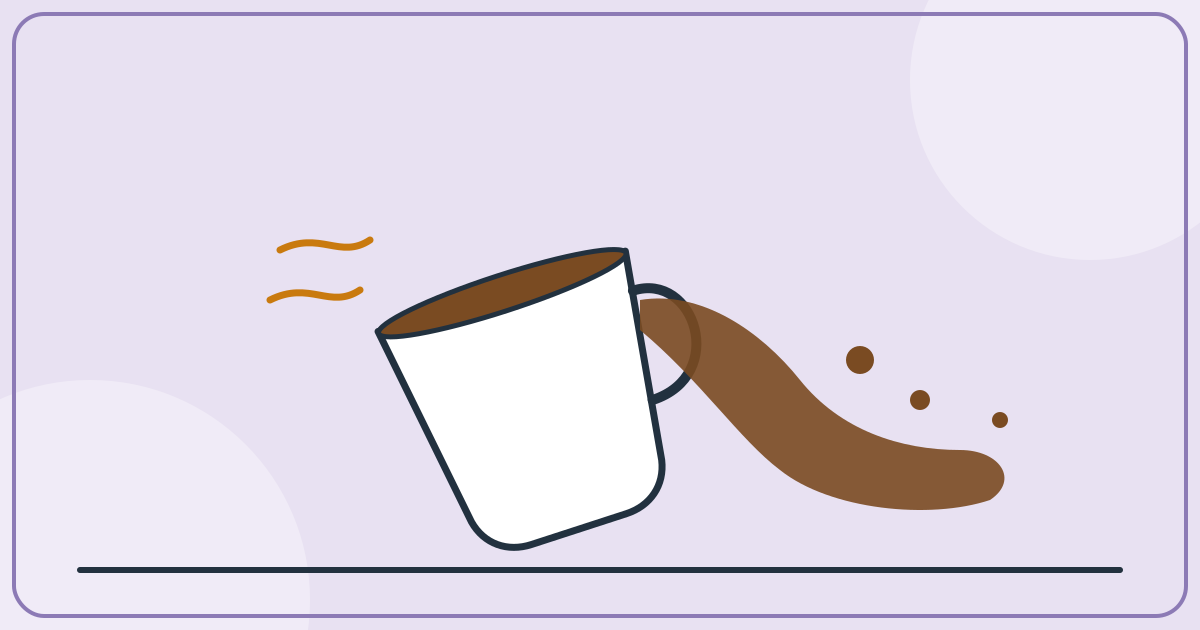
Picture yourself holding a cup of coffee. Someone walks past, knocks into you or jogs your arm, and coffee goes everywhere. Why did it spill?

The obvious answer is that someone bumped into you. That is not quite right.

What was inside

Coffee spilled because the cup held coffee. Had it held tea, tea would have spilled. Whatever is inside the cup is exactly what comes out when it is shaken.

Life does the same thing to us. Sooner or later it will come along and shake us, and when it does, whatever we are carrying inside will pour out. Keeping up appearances is easy while things are calm. It is the jolt that shows what is really there.

A question worth asking

So each of us has to ask: what is in my cup? When life gets hard, what spills over? Is it joy, gratitude, peace and humility? Or is it anger, bitterness, harsh words and harsh actions?

That part is up to us.

Filling the cup

Today is a good day to start filling our cups with the things we would be glad to see spill: gratitude, forgiveness, joy, kind and encouraging words for ourselves and others, gentleness and love. Then, when the next bump comes, that is what the people around us will receive.

Relationships

Staying Calm When Others Are Angry

Staying Calm When Others Are Angry

Other people's tempers are not yours to manage. Your own response is, and that is where your real strength sits.

Staying Calm When Others Are Angry

Think how often you have faced someone furious: a customer upset over a late delivery, a colleague resentful that a project went to you, a supplier angry about a payment that was overdue. Being confronted like that easily rattles us, and a clumsy reply can quickly make matters worse.

Anger is a strong force. Recall the last time a friend, manager or co-worker flared up over something you said or did. Most of us defend ourselves and strike back. The quarrel drags on until somebody storms off, promising never to speak to the other again. In worse cases, the angry person may even threaten you or someone close to you.

Here is the reality. Other people’s behaviour is outside your control, and so is much of what happens to you. Your reaction, however, is entirely yours, and that is where your strength lies. Below are tried and tested ways to handle angry people without losing your own composure.

Stop and breathe

Do not leap to the worst conclusion at the first hint of trouble. When someone is acting unreasonably, do not match them with a hasty judgement of your own. Take a breath instead. Decent people sometimes behave poorly when they are under strain. A short pause lets you collect yourself and lets the other person settle too. More often than not, that breathing space is enough.

Allow for differences

Give other people’s views their due. Doing something another way is not the same as doing it wrongly, and there is more than one route to a right answer. Everyone is entitled to an opinion. Pick your battles with care and, when it helps, simply accept that you see things differently. If you stay neutral on matters of little weight, or discuss disagreements with respect, both of you can keep your cool and move on on good terms.

It is seldom about you

Even when an attack feels personal, people mostly act out of their own state, not because of you. You cannot govern what others say or do, but you can refuse to let it shrink you. Decide that now, and let it go. Stepping back from other people’s views and conduct brings a great sense of freedom. Their treatment of you reflects them; your reaction reflects you. Steady yourself from within and handle things from there, because that inner steadiness is your real strength.

Let silence work for you

Do not get dragged into a needless row just because a quiet moment feels awkward, and do not blurt out something you will soon regret simply to break the silence. Since anger and frustration rise from within, you get to choose how you answer a passing flash of irritation. Holding your tongue for a moment can spare you a long regret. Very often, the quietest person in a quarrel carries the most weight.

Lead with compassion

Life today leaves many people anxious, scared, hurt and scattered. Compassion literally means suffering alongside someone. Seeing things from the other person’s side gives them room to recover without piling on more pressure. We rarely know what someone is carrying. In tense moments, choose to be supportive, and set aside your expectations, judgements and demands before you walk in.

Picture the asteroid

Suppose an asteroid were heading for Earth and the end was near. Would you spend the final days fretting over things beyond your control, or enjoying the people you love while you could? Learn to spot what lies outside your control, accept it wholeheartedly, and turn your energy to the constructive steps that are within reach.

Small habits that help

  • Breathe deeply and often.
  • Remind yourself that you cannot control others.
  • Do not take their behaviour personally.
  • Look for the good in them.
Life Lessons

Hard Truths That Help You Grow

Hard Truths That Help You Grow

Nothing stings more than the truth, so we tend to ignore it. Facing a few hard truths is often what gets us back on track.

Hard Truths That Help You Grow

Each of us, somewhere inside, shrinks from reality. Truth hurts more than almost anything, so we look away from the plain facts of life. Yet nobody escapes struggle and pain. Some of it is unavoidable. Some follows our own mistakes, which we can learn from. Some is caused by other people’s neglect or wrongdoing. And some of the hardest struggles are self-made, the product of unhelpful thinking habits. Here, as elsewhere, the cure begins with noticing.

The world brims with chances and adventures, but it is also crowded with poor choices, fears, doubts and diversions that stop us reaching our best selves. Often it takes an uncomfortable truth to wake us from comfortable illusions and point us back in the right direction. These truths sting, yet they need saying. You shape your own life, and in the end no one can rescue you but you. Reaching your dreams means growing into a better person, and that begins with accepting a few hard facts that may be quietly blocking your potential.

You may be your own obstacle

Plenty of people never chase their dreams at all, because they feel trapped. They talk themselves out of it or hold themselves back before taking a single step. Usually fear is at the root, or a shortage of self-belief. Whatever story you keep repeating to yourself, drop it. It is stopping you before you have even started.

Perfect conditions never arrive

Waiting for the ideal moment to launch a business, start exercising or relocate to a new city means waiting for good. That moment does not exist.

More bitter truths worth accepting

  • Being busy does not mean you are achieving anything.
  • Everyone believes they are doing the right thing; only the definition of right differs from person to person.
  • We judge others by their actions and ourselves by our intentions.
  • No one will ever understand you completely.
  • Many people do not want you to be yourself. They want you to be the person they like.
  • Social media is more about how people think and behave than about technology.

Each of these is uncomfortable to hear. Each is also a small key to living more honestly with yourself and with others.

Mind & Habits

How Creative Minds Work

How Creative Minds Work

Most minds run in fairly predictable ways, so creative people can be hard to understand. A few traits explain what is going on inside.

How Creative Minds Work

Most people’s thinking follows a fairly predictable, textbook pattern, which is why most of us have recognisable character traits. Because of that, an average person may find it hard to follow how a creative person’s mind works. There are several things about creative people that others may never quite understand.

Creativity makes noise

Someone with a more ordinary turn of mind tends to sleep easily at night. A creative person, on the other hand, will often tell you their head is constantly busy with sound and chatter. In most people that might be a cause for worry. In creative people it is simply what a crowded, idea-filled mind feels like.

A creative mind never slows down

Creative people have even been known to complain about it. An average person’s mind eventually stops turning over ideas, unknown scenarios and possible outcomes. A creative mind keeps going.

There is always another solution

Creative people are not easily bound by what everyone else accepts. Instead of taking something as it is, they challenge an outcome, a theory or a rule. While others accept a situation, a creative person offers different ways to solve the problem. They are always asking questions, where others simply accept whatever they are told.

Creativity comes in waves

People with more average minds are likely to work more steadily than creative people. Believe it or not, creativity arrives whenever it chooses. There are stretches when nothing happens at all, and other times when ideas pour out with ease. Successful creative people have learnt to accept this rhythm for what it is. Great ideas do not arrive on command, so creative people can seem rather inconsistent.

If you live or work with a creative person, these traits are worth remembering. What looks like restlessness, argument or unreliability is often the price of the ideas they bring.

Relationships

Why You Need People Who Disagree

Why You Need People Who Disagree

We enjoy people who think like us. But the people who disagree with us help us decide better, see further and know who to trust.

Why You Need People Who Disagree

We all enjoy meeting people who share our interests and beliefs. Yet we also need people who can disagree with us, because they sharpen our choices and deepen our understanding of each other. Here is why disagreement matters so much, and why the people who often disagree with you deserve to be valued.

They are the ones talking to you

Like it or not, disagreement is one thing everyone can agree on. It means someone is listening to you and trying to engage with you. It shows when someone takes the trouble to explain their feelings and their reasons for differing. You may bristle at first, yet in the end this is someone who values your relationship enough to be honest with you. People take a risk when they tell you they disagree, because they believe you are worth talking to.

You see the world more clearly

You are not always right, however unwelcome that thought may be. If you only ever look at the world through your own eyes, you may miss the things you cannot see or do not know about. When people disagree with you, they bring experience, knowledge and views you may never have come across or understood.

You learn who you can trust

A disagreement is one of the best ways to see a person’s true self. Anyone can act kind and pleasant, but when there is a disagreement, the pretence falls away and the real person shows. When you disagree with someone, you find out whether this is a person you want to be with and whether you can truly enjoy their company.