///////////
Money Matters

The Magic Note: A Two-Minute Gratitude Habit for Money

The Magic Note: A Two-Minute Gratitude Habit for Money

A single labelled banknote, read twice a day, to change how you meet money.

This is a mindset practice, not a money-making scheme — a way to loosen the grip of anxiety and resentment around money so you handle it from a steadier place.

The note

Take one currency note and stick a small label on it that reads, in your own words, a thank-you for all the money you have been given across your life. Carry it with you every day, in your purse or pocket. At least once in the morning and once in the afternoon, take it out, hold it, read your words, and actually feel the gratitude rather than just reciting it. The feeling is the whole point.

Extend it to every rupee

Then carry the same attitude into ordinary transactions. When a bill arrives, meet it without resentment — resentment only tightens the sense of lack. Some people write a small “thank you, paid” on a bill, or picture it as a service they genuinely benefited from. When your salary lands, pause and be grateful for it rather than immediately worrying it away. The habit is simple: touch money with appreciation instead of fear.

A word of care

Gratitude changes your relationship with money; it does not replace a plan. For real decisions — saving, debt, tax, investing — talk to a qualified adviser. Use this practice for your state of mind, and let sound advice handle the numbers.

Terms Explained

The RAS: Your Brain’s Filter, and How to Aim It

The RAS: Your Brain’s Filter, and How to Aim It

A small bundle of nerves decides what you notice all day. You can point it on purpose.

Your senses take in far more than your mind could ever handle, so something has to decide what reaches your attention and what gets ignored. That something has a name.

What it is

The reticular activating system, or RAS, is a bundle of nerves at the base of the brainstem. Its job is to filter the flood of incoming information and let only what seems important through to your conscious mind. It is the reason that the day you start thinking about a certain car, you suddenly see it on every road — the cars were always there; your filter simply started flagging them.

Why it matters

Because the RAS decides what counts as important, it shapes what you notice — the opportunities, the people, the small openings that move you toward what you want, or the threats and irritations that keep you stuck. Two people can walk through the same day and register completely different worlds.

How to aim it

The filter can be trained. Telling it clearly what matters — through a written intention, a spoken affirmation, or a vivid visualisation of what you are working toward — biases it to surface exactly those things. This is the quiet mechanism behind a morning routine: you are not just feeling good, you are programming what you will be alert to for the rest of the day.

Tips & Tricks

Small Talk That Actually Works

Small Talk That Actually Works

Nobody enjoys the weather conversation. There are better openings, and they are not clever ones.

Small Talk That Actually Works

Small talk has a bad reputation, mostly earned by how badly it is usually done. Two people exchange weather observations, both aware that neither cares, and the exchange ends with relief.

It exists for a reason though. It is how strangers establish that they are safe to talk to. Skipping it does not make you direct, it makes you difficult to approach.

Ask about the situation you are both in

The easiest opening is the thing you are sharing. The event, the queue, the venue, the reason you are both here. It requires no research, it is obviously genuine, and the other person has an answer ready because they are thinking about it too.

“How do you know the host” outperforms anything you could prepare in advance.

Open questions, then follow the interest

A question that can be answered with one word usually is. Ask what someone is working on rather than whether work is busy, and you get something to build on.

Then listen for the part they say with slightly more energy, and ask about that. Most conversations die because people ask a good question and then move to their next one instead of following the answer.

Offer something back

Questions alone become an interview. After two or three, give something of your own, at a similar depth. Conversation is a trade, and the person who only asks is as tiring as the person who only talks.

Have three or four things ready

Not scripts. Just things you would genuinely be happy to discuss. Something you read recently, something you are trying to learn, a place you went. Having them ready removes the panic, which is what makes people reach for the weather.

Leave properly

Most people dread starting and forget to plan the ending, so conversations run past their natural life. Say it was good to meet them and move. Ending well is what makes the next conversation easy.

Tips & Tricks

Studying For Long Hours, Effectively

Studying For Long Hours, Effectively

Sitting for six hours is not the same as studying for six hours. The difference is mostly in how the time is broken up.

Studying For Long Hours, Effectively

Anyone can sit at a desk for a long stretch. Whether anything stays afterwards is a separate question, and the honest answer for most long sessions is not much.

Rereading is the comfortable illusion

Going over notes again feels productive because the material becomes familiar, and familiarity feels like knowledge. It is not. Recognising something on a page is a much weaker state than being able to produce it without the page.

Close the book and write down what you remember. It is unpleasant and it is where the learning happens. What you cannot produce is what you have not learned yet, and finding that out early is the whole point.

Spacing beats cramming, reliably

The same total hours split across several days produce substantially better retention than the same hours in one sitting. Forgetting a little between sessions and retrieving it again is what makes the memory durable.

This means the calendar matters more than the stopwatch. Four sessions of ninety minutes across a week beats one six hour Sunday, every time.

Work in blocks with real breaks

Attention degrades after roughly forty five minutes to an hour. Push through and you keep the chair time while losing the comprehension. Stop, move, look at something distant, and come back.

A break spent scrolling is not a break. The eyes and the attention are doing the same thing they were doing before.

One subject at a time, and somewhere quiet

Switching between subjects carries a cost each time. So does an open chat window. The person who studies four hours undistracted covers more than the person who sits for seven with a phone face up.

Sleep is part of the method

Consolidation happens overnight. A late night that costs two hours of sleep to gain two hours of revision is close to a straight trade, and often a losing one. Finish earlier and go to bed.

Terms Explained

What Is Psychology, Really?

What Is Psychology, Really?

The word covers far more ground than the therapist’s chair most people picture.

What Is Psychology, Really?

Ask most people what a psychologist does and they describe a consulting room. That is one branch of a much wider field, and not the largest one.

Psychology is the study of mind and behaviour. Why people think, feel and act as they do. Everything else is a matter of which slice you look at and by what method.

The main branches

Clinical psychology deals with distress and disorder, and is the part everyone pictures. Counselling psychology overlaps with it, generally with everyday difficulties rather than diagnosis.

Cognitive psychology studies attention, memory, language and decision making. Developmental psychology follows how those capacities change from infancy to old age. Social psychology looks at how behaviour shifts in the presence of other people, which turns out to be enormously.

Then the applied ends. Organisational psychology in workplaces, educational psychology in schools, forensic psychology in the legal system, sports psychology with performance.

Psychologist, psychiatrist, therapist

Worth separating, because the words get used interchangeably and they are not the same. A psychiatrist is a medical doctor and can prescribe medication. A clinical psychologist has a doctoral level qualification in psychology and works through assessment and talking therapies. Therapist and counsellor are broader terms, and in many places anyone may use them, which is exactly why credentials are worth asking about.

Why it is harder than it looks

The subject cannot be observed directly. You cannot see a memory or a motive, only what someone does and what they report, and both are unreliable. Which is why the field leans so heavily on controlled experiments, large samples and statistics, and why single striking findings should be treated with patience until they are replicated.

Health & Body

Money Time: Why 10pm–2am Is the Sleep That Counts

Money Time: Why 10pm–2am Is the Sleep That Counts

Eight hours can still leave you tired if you bank them at the wrong time of night.

Two people can sleep the same number of hours and wake feeling worlds apart. The difference is usually not how much they slept, but when.

Timing beats duration

The body does most of its repair, and releases the largest doses of its restorative hormones, in the window from about ten at night to two in the morning — call it money time. Sleep that lands inside it pays a bonus that sleep outside it does not. Someone asleep from one to nine still logs eight hours, yet misses most of the richest window and can wake up oddly unrefreshed.

Ride the 90-minute cycle

Sleep moves in cycles of roughly ninety minutes, so waking at the end of a cycle feels lighter than being dragged out of the middle of one. Aiming for whole multiples — six hours, or seven and a half — tends to land you on a natural surfacing point. Keeping the same bed and wake times each day lets the whole rhythm settle, so hormones fire on schedule.

Beware the second wind

When the light fades, that is nature’s cue to power down. Push past it and you catch a false “second wind” that feels productive and quietly robs you of money time. The fix is not willpower at midnight; it is protecting the front edge of the night: dim the screens well before bed, and let the body follow the darkness down.

Terms Explained

Blue Ocean Versus Red Ocean

Blue Ocean Versus Red Ocean

Two ways to compete. One fights for a share of what exists. The other builds a market where the fight has not started.

Blue Ocean Versus Red Ocean

The metaphor comes from a business book and it has outlived most of its generation because it captures something plainly.

A red ocean is an existing market with defined rules and known competitors. Everyone offers roughly the same thing, so the fight is over share and price. The water is red from the fighting. Margins compress, and the strongest balance sheet usually wins.

A blue ocean is demand that has not been served yet. There is no established competition because the space did not exist in its current shape. Growth comes from bringing in people who were not customers of anyone.

The part people miss

A blue ocean is not a better product for the same buyers. That is still a red ocean, just with a nicer entrant. The move is a change in what is offered, so the usual comparison no longer applies.

Budget airlines did not build better aircraft. They removed most of what a ticket included and priced against buses and trains rather than against other airlines. Different question, different customers.

It usually means giving things up

This is the uncomfortable half. Creating one of these positions almost always requires dropping features the industry treats as compulsory, because carrying them keeps you inside the old comparison. Removing them is what lets the price and the audience move.

Most attempts fail here. Adding is easy and adding is safe. Subtracting is what makes the position defensible.

And it does not last

Blue oceans turn red. Once the model is visible it gets copied, and within a few years the space has competitors, price pressure and the familiar fight. The advantage is a head start, not a permanent position.

Which is why the useful question is not whether you can find one. It is whether you can keep finding them.

Mind & Habits

Procrastination Is Not Laziness

Procrastination Is Not Laziness

We put off the things that matter most, not the things we care least about. That tells you what is really going on.

Procrastination Is Not Laziness

Notice which tasks you actually postpone. Rarely the trivial ones. It is the important email, the difficult conversation, the piece of work you will be judged on. A lazy person would avoid effort. Procrastinators reliably avoid the things they care about most.

That inverts the usual explanation. This is not a shortage of willpower. It is avoidance of a feeling.

The feeling being avoided

Usually one of a short list. Fear that the result will not be good enough. Confusion about where to start. Resentment at having to do it at all. Boredom, which is more painful than people admit.

Delay removes that feeling instantly. That relief is real, and it is what trains the habit. You are not failing to act. You are being rewarded, immediately, for not acting.

Which is why discipline does not fix it

Telling yourself to try harder addresses effort, and effort was never the problem. It also adds a fresh layer of self criticism, which makes the task feel worse, which makes avoiding it more attractive. The loop tightens.

Shrink the first move until it is not worth avoiding

Most of the discomfort sits at the start. Open the document. Write the subject line. Read the first page. Do that and nothing else, and give yourself permission to stop.

You usually do not stop. Starting is what dissolves the feeling, because most of the dread was anticipation rather than the work itself.

Name what you are avoiding

Before the next delay, ask which of the feelings above is actually present. Not to solve it, just to name it. A vague dread runs the day. A named one, “I do not know how to start this”, turns into a question you can answer in ten minutes.

Mind & Habits

Silence Your Inner Critic

Silence Your Inner Critic

The harshest voice most people hear all day is their own. It is also the one they never think to question.

Silence Your Inner Critic

Most criticism we experience is self inflicted. It arrives faster than any external comment, it repeats, and it never has to justify itself. We would not accept that tone from another person for a week, and we accept it from ourselves for decades.

It is not accuracy, it is habit

The inner critic presents itself as realism. That is its trick. Look closely and the pattern is not analytical at all. It generalises from single events, it predicts the worst, and it never revises when the prediction fails.

A useful test is whether the voice ever updates. Real judgement changes when the evidence changes. A habit just repeats.

Notice the wording

There is a difference between “that presentation went badly” and “I am hopeless at presenting”. The first is a fact you can work with. The second is a verdict about a person, and there is nothing to do with a verdict except carry it.

Most inner criticism smuggles the second in wearing the clothes of the first. Catching that swap, in the moment, does more than any amount of positive self talk.

Answer it the way you would answer a friend

Not with reassurance. With the same practical, slightly impatient fairness you would offer someone you respect. You would not tell a colleague they are hopeless. You would ask what specifically went wrong and what they would do differently.

That question is available to you too, and it is the only part of the exercise that leads anywhere.

Silence is not the goal

The voice does not disappear, and you would not want it to. Some of it is conscience and some of it is standards. What changes is its authority. It stops being the verdict and becomes one opinion in the room, which is roughly what it always was.

Money Matters

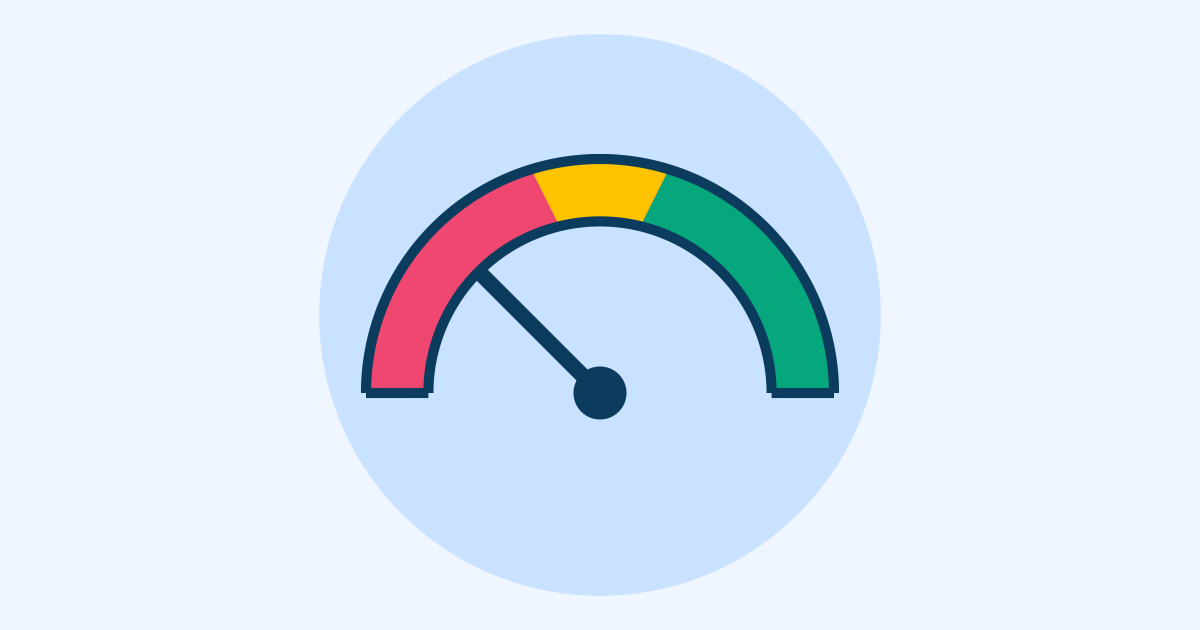
Beware A Poor Credit Score

Beware A Poor Credit Score

A number you never see decides what you can borrow and what it will cost. It is built from ordinary habits, most of them fixable.

Beware A Poor Credit Score

Somewhere there is a three digit number attached to your name, and you have probably never looked at it. Lenders look at it before they look at anything else. It shapes whether you are approved, how much, and at what rate.

What actually moves it

Repayment history is the largest part by a distance. A single missed instalment matters more than most people expect, and it stays on the record for years.

After that comes how much of your available credit you are using. Someone who consistently runs a card near its limit looks stretched, even if every payment is on time. Keeping usage well below the limit reads better than the same spending on a smaller limit.

Then the age of your accounts. A card you have held for a decade is an asset to the score. Closing it because you no longer use it removes that history.

The applications themselves count

Every formal application creates a hard enquiry. A few over years is unremarkable. Several within weeks looks like someone in trouble shopping desperately, and the score drops accordingly.

This catches people out when they apply to four lenders at once to compare offers. Ask about indicative rates first, and apply formally only where you intend to proceed.

Errors are common

Reports contain mistakes far more often than they should. A closed loan still showing as open, a payment recorded late that was not, an account belonging to someone with a similar name. You are entitled to your report, and disputes do get corrected.

Check it once a year, the way you would reconcile any other statement.

Repair is slow and it is ordinary

There is no trick. Pay on time, every time, keep balances low, do not close old accounts, do not apply for things you do not need. Twelve months of that moves a poor score meaningfully. Nothing moves it faster, and anyone offering to is selling something.