Tag: Adults

Life Lessons

Meaning Is Made, Not Found
Meaning Is Made, Not Found

Searching hard for the meaning of life can actually push it further away. Meaning tends to arrive when we stop hunting and start living.
Meaning Is Made, Not Found

The strange secret to finding meaning may be not to look for it at all. The most satisfying kinds of meaning seem to blossom not when we chase them directly, but when we look instead for beauty, love or a cause larger than ourselves.

Do good things because they are good

A meaningful life may come from reminding ourselves each day to do the right thing, to love fully, to seek out fascinating experiences and to take on worthwhile work. Not because we are trying to feel more meaningful, but because these things are good in themselves.

Meaning will not come when it is the target. It turns up as a by-product of other worthwhile pursuits. Ironically, the way to find it is to stop fretting about it. So put your energy into whatever ties you to something larger than yourself: learning, perhaps by working towards a degree; caring for others through volunteer work; or pouring your love into raising a family, among many other endeavours.

Not a riddle for experts

We tend to imagine the meaning of life as a deep mystery that takes a lifetime to solve. Scholars and monks devote whole decades to old writings and to meditation, hoping to grasp why we are here and what we are meant to do.

Yet simple things matter more than we think. Chatting with friends, getting to know your neighbours and helping out in your community all build your connections with others. The stronger those connections, the less likely you are to feel adrift or empty.

The quiet power of routine

Patterns matter too. Daily habits and small rituals keep life centred and balanced. They give you something to wake up for, and fixed points in the day that you can trust yourself to keep. There is a simple comfort in these little rituals, because they give life a sense of steadiness.

Stop searching, start living

There is no evidence that thinking very hard about the meaning of life brings more of it. If anything, constantly searching for meaning seems to go hand in hand with experiencing less of it.

Human life may not have arrived with a ready-made purpose, but that does not mean it cannot have one. The meaning of life is not something to puzzle over. It is something you create for yourself. Sit down, breathe, and live your life.
Life Lessons

The Best Things Take Time

The Best Things Take Time

Nothing worth doing happens in two minutes. Slow, steady progress, with patience and rest, is what produces real results.

The Best Things Take Time

Sometimes you simply cannot have what you want at this very moment. There is a time for everything.

Nothing worth having takes two minutes

When did you last do something truly worthwhile in two minutes? Have you ever had a deep, heartfelt conversation that lasted a single minute? Made something beautiful in ninety seconds? Even a song takes longer than that to listen to, and far, far longer to write. By now you know that two minutes is too short for almost anything that matters.

So instead of rushing to be first at something, wait, and give it time. Give it time to come to you, and give yourself time to reach it. Everything takes time, and it is often best not to hurry what you most want to be good at. Becoming skilled can take a great deal of time and practice. Making mistakes is another vital part of the process, because you learn so much from them.

Life is meant to be savoured

Life was made to be enjoyed. It is not meant to be rushed through or let slip by. It is meant to be savoured, just like the search for the right thing should be. Sometimes the trials and setbacks are simply part of the journey. Sometimes you have to learn a few things before you can achieve something great.

The power of slow

Slow down, and much of what you are chasing will catch up with you. In almost everything, thinking long term and making steady progress, day by day, is what produces real results. That is the power of slow. With patience, discipline and hard work, you will eventually stumble upon a breakthrough.

Do not force it

The most important thing is not to force it. When you are stuck and feel like banging your head against a wall, it is wise to step back and walk away for a while. Let the problem quietly settle in the back of your mind.

The same holds for anything you set out to do. Do not begin with enormous goals or expect instant results. All good things take time, and accepting this simple idea makes everything go more smoothly. The only real measure is whether you are getting a little closer to your goal each day. If you are searching for a breakthrough, give it a couple of hours of focused, deliberate thought, but do not exhaust yourself. Then take a break, and let your quieter mind take over.

Life Lessons

Lessons From Nobel Laureates

Lessons From Nobel Laureates

Six Nobel Prize winners, six very different lives. Each left a lesson simple enough to carry into an ordinary day.

Lessons From Nobel Laureates

Have you ever wondered what makes Nobel Prize winners exceptional? How do they arrive at original ideas and make breakthrough discoveries? Their work has changed the world for the better and laid foundations for progress and social change. Here are six of their lessons, each worth carrying into an ordinary day.

Malala Yousafzai: knowledge over violence

The young campaigner for girls’ education taught us to put knowledge before violence, and that education is what allows a society to live in peace and prosper. As she said when accepting her prize, books and pens are the most powerful weapons we have.

Nelson Mandela: conquering fear

He showed the difference between feeling fear and being ruled by it. In his words, the brave man is not the one who never feels afraid, but the one who conquers that fear. You cannot move towards your goals while fear is allowed to block the road.

George Bernard Shaw: make your circumstances

The playwright and critic, who won the prize for literature in 1925, believed that circumstances are made, not given. He observed that the people who get on in the world are the ones who look for the circumstances they want, and, if they cannot find them, make them. So take action and do everything in your power to reach your dreams.

Niels Bohr: learn from your mistakes

The physicist, honoured in 1922 for work that shaped our understanding of the atom, taught that it is fine to make mistakes, because none of us is perfect. What matters is learning from them so we do not repeat them. He described an expert as someone who has discovered, through painful experience, every mistake that can be made in a very narrow field.

Rudyard Kipling: the power of words

The author reminds us that words carry extraordinary power. They can open many doors, but they can also wound very easily. So think before you speak, and you will have nothing to regret later. He called words the most powerful drug humanity uses.

Martin Luther King Jr: the beauty of brotherhood

Among his many lessons is the value of true companionship. Good friends make life easier, motivate and inspire us, and stand beside us when we need them. As he put it, genuine brotherhood and peace are more precious than diamonds, silver or gold.

Mind & Habits

Choose Your Next Hour

Choose Your Next Hour

You cannot control everything that happens in your life. You can control what you give the next hour to, and that is enough to start.

Choose Your Next Hour

Much of what happens in your life is beyond your control. What is within your control is where your attention goes over the coming hour, and how you use that hour, which you can steer quite firmly.

The cost of autopilot

Running on autopilot all the time makes real success unlikely. It does have its uses: it moves you along, and it gets you through the dull stretches when you wish you were elsewhere. But living that way means quietly settling for a life of going through the motions, like a worker bee with no say in the matter.

When the work itself stirs no feeling in you, a kind of mindlessness creeps in. Over time it draws you away from your goals and from any hope of building a better life for yourself and the people you love. The fear comes true because the fear shaped the days.

A point of focus

At its simplest, mindfulness means picking one thing to rest your attention on right now. That small act helps you channel your energy, settle your thoughts, feel that the time is being used well, and pull yourself out of worry and distraction.

A practical way to do this is to pause and ask: which one thing, or two at most, deserve my energy for the next sixty minutes?

Living with what you cannot control

Some uncertainty, some surprise and some difficulty will always remain. That is simply how life works. And your list of things to do will probably always be one item longer than the day allows.

Plenty of life is made of ordinary chores that cannot be skipped, and learning to feel content and present while doing them is a skill that grows with practice. Routine can be quietly reassuring. Stay open, and let the day move as it will. When you give your attention to what you can actually influence right now, you get to enjoy the hour itself, and you raise your chances of doing well in the months and years that follow.

Relationships

Ask, Do Not Order

Ask, Do Not Order

A small change of words at a coffee shop turned an ordinary waiter into a warm host. Respect, it seems, comes back multiplied.

Ask, Do Not Order

A writer once arranged, over a few chat messages, to meet a couple at the coffee shop of a large hotel. He had never met them in person before. He arrived a little early and sat taking in the beautifully designed interior.

Any orders, sir?

An attentive waiter was hovering nearby, ready to serve. Their eyes met, the writer smiled, and the waiter bent down politely and asked, “What may I do for you, sir? Any orders, sir?” The writer glanced at the name plate on his uniform.

“I am waiting for two wonderful friends,” he replied, using the waiter’s name. “May I wait until they come? Then I will certainly request something from you. I will not order. I will request.”

The waiter was taken aback by such an unusual reply. Then he smiled, and stood up a little straighter.

Something that had never happened before

Soon the couple walked in, both wearing broad smiles. The next three quarters of an hour were full of laughter. As the three of them stood up to leave, something happened that the writer had never experienced before.

The waiter came over, smiling, and said, “You all look so happy together. Maybe you would like a photograph? I can take it on your phone.” He took several lovely pictures, the kind that are treasured for a long time.

The questions that stayed

They said goodbye, but a few questions refused to leave. Was it right to say, “I will not order, I will request”? What made the waiter step forward and offer to take that photograph? And do happy people make the world around them happier too?

Perhaps the answer to all three is the same. When we treat people as people, and not as functions, they stand a little taller, and the warmth we give tends to find its way back to us.

Relationships

The People Around You Are Mirrors

The People Around You Are Mirrors

What irritates us in others often points to something in ourselves, and so does what we admire. Every relationship can be a mirror.

The People Around You Are Mirrors

When we look at other people, we notice all kinds of qualities in endless combinations. Yet the qualities we pick out are often closely tied to traits that already exist within us. Like tends to attract like. The people we feel drawn to often reflect something of our inner selves back at us, and we do the same for them.

What we admire

Put simply, when you look at others, you are likely to see what is also in you. When you notice beauty, sweetness or a kind of inner light in someone, you may be recognising goodness that lives in you as well.

What irritates us

The same is true of the harder feelings. When someone stirs up anger, annoyance or even hatred in you, you may be seeing a reflection of parts of yourself that you have pushed away or do not like.

It is easy to spot the traits we dislike in others. It is much harder to admit that we carry those same traits. Often, the habits and attitudes in others that bother us most are linked to unresolved issues of our own that we have not yet looked at.

Learning from the mirror

Because we all act as mirrors for one another, the people in your life can teach you a great deal about yourself. Who you are can be laid bare by what you notice in them.

When you meet someone you admire, look within for the same admirable qualities. They may be there, waiting to grow. Seeing yourself through the way you see others can be humbling and eye opening. It also gives you a choice: you can deliberately grow the traits you do like.

Nurture compassion and empathy, and let the goodness you see in others become the mirror you live by.

Relationships

Kindness To All Is The Real Test

Kindness To All Is The Real Test

It is easy to expect patience and understanding from others. The truer measure of who we are is how much of it we give, and to whom.

Kindness To All Is The Real Test

Many people who think of themselves as wise or spiritual expect their friends, family and partners to support and understand them without conditions. Yet all too often they are blind to how little of that same support and understanding they offer in return.

The trap of feeling superior

Some become preoccupied with how unenlightened everyone around them seems. They slip into an arrogant, superior attitude, and in doing so they miss something important: they are nowhere near as wise as they would like to believe.

This is not only a trap for the spiritual. Anyone who has worked hard on themselves can fall into it, quietly keeping score of everyone else’s flaws while overlooking their own.

The real measure

The truest measure of wisdom is how kindly and how thoughtfully you treat other people. That means all people, not only those who back you exactly as you wish. Being gentle with the people who agree with you costs nothing. The test comes with everyone else.

Owning your own freedom

While you still believe another person is keeping you down, you have not yet taken full responsibility for your own freedom. Real freedom means no longer demanding that other people, or life itself, make you happy.

When you find that freedom, you stop drawing up conditions and requirements that the world must meet before you allow yourself to be content. And without those conditions, both you and the people around you breathe a little easier.

Mind & Habits

Three Things To Give Up For Happiness

Three Things To Give Up For Happiness

We cling to habits that cause us stress and pain, then wonder why happiness feels far away. Letting go of three of them makes life lighter.

Three Things To Give Up For Happiness

Some things, once we let them go, make life far easier and much happier. Yet we hold on to so much that causes us pain, stress and suffering. Instead of releasing it and allowing ourselves to feel lighter, we cling on tighter.

Starting today, decide to give up whatever no longer serves you, and welcome change for the better. Here are three places to begin.

Give up the need to always be right

Many of us cannot bear the idea of being wrong. We want to be right even if it means ending a good relationship, or causing a great deal of stress and pain for ourselves and others. It is simply not worth it.

The next time you feel the urgent pull to jump into an argument over who is right and who is wrong, ask yourself one question: is winning this worth more to me than being kind? Notice how much that question changes.

Give up complaining

Let go of the constant need to complain about the many people, situations and events that make you unhappy, sad or low. No person and no situation can make you miserable unless you allow it. It is not the situation itself that stirs up those feelings, but how you choose to see it and respond to it.

Never underestimate the power of staying calm and positive when trouble arrives. It changes what happens next.

Give up your excuses

Very often we hold ourselves back with the excuses we keep repeating. Instead of growing and working to improve ourselves and our lives, we get stuck, telling ourselves stories that are usually not even true.

Send those excuses packing, and tell them they are not welcome back. You no longer need them.

Life Lessons

Whose Fault Is It Anyway?

Whose Fault Is It Anyway?

A whole town happily trades in rotten fruit until one meal makes people ill. Then everyone knows exactly whom to blame. A sharp parable on scapegoats.

Whose Fault Is It Anyway?

Once there was a shopkeeper who charged a fortune for apples that had gone bad. When the people of his neighbourhood found out, they did not complain. Instead, they praised him, and asked him to sell the rotten potatoes and tomatoes growing on their own farms as well.

Everyone gets a share

Word soon reached the police. Their chief visited the shop and questioned the shopkeeper. The shopkeeper gave him a gift of cherries and promised to sell the rotten onions lying in the officers’ own kitchens. Everyone went home smiling.

When the government officials heard about it, they were furious. They told the shopkeeper to take on staff of their choosing, or face the consequences. He agreed.

Over the years, the little shop grew into a vast shopping mall, staffed by people recommended by the officials, by the police and by the neighbourhood. Everyone was content trading rotten fruit and vegetables.

Then someone falls ill

One day, a girl bought some rotten garlic. She used it in a meal for her guests. It was so rotten that every one of them fell sick. At the hospital, the doctors found rotten vegetables to blame.

As the news spread, the officials blamed the girl and decided to punish her. The police backed them, and called a large press conference to announce that they had caught the real culprit behind the rotten produce in the market. The neighbours threw stones at her house to show how angry they were about rotten fruit. She was punished, and the whole town hailed it as good triumphing over evil.

The story behind the story

The parable was written about a real scandal, in which a student who had topped an exam was exposed as a fraud and arrested, along with others like her. Meanwhile, the system that had sold such results for years, with the help of people in positions of trust, was hardly discussed at all. And many families stood ready to keep paying that system in the years ahead.

It is worth asking, whenever a single person is held up as the villain: who built the shop, who stocked it, and who kept buying? Whose fault is it, really?

Life Lessons

Find Your Own Tree House

Find Your Own Tree House

Rising above the ground, even for an hour, can bring the calm and the fresh view we cannot find down below. Everyone deserves such a place.

Find Your Own Tree House

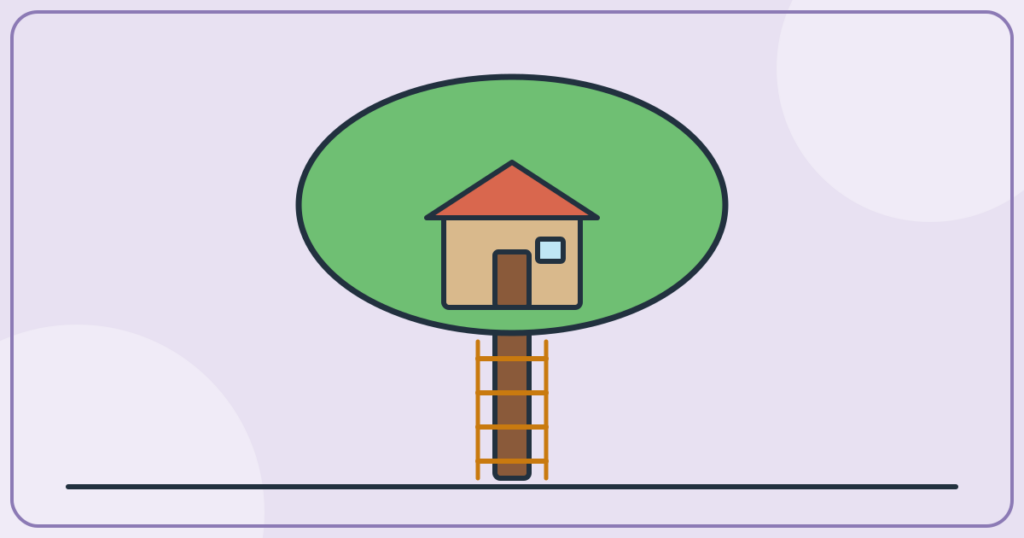
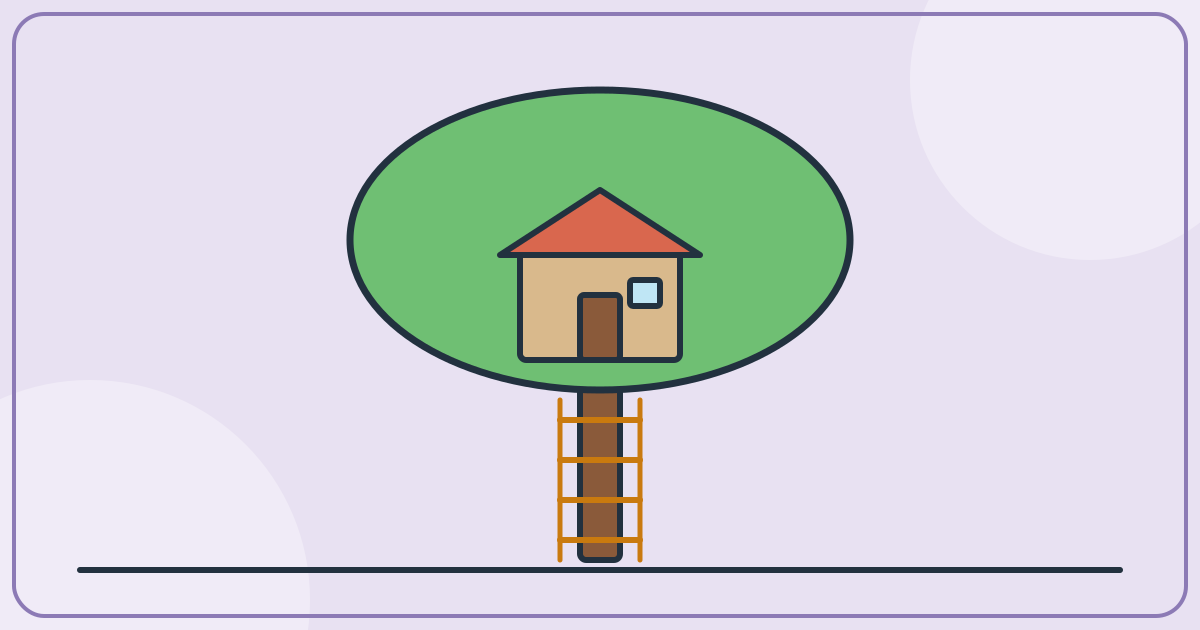
There are few better ways to escape the worries of everyday life than to climb up into the welcoming arms of a tree house. Nestled among the branches, screened by a wall of green, we feel as sheltered as a fledgling.

Above the everyday

At that height, breathing comes easier and thoughts run clearer, as the leaves around us refresh the air. We float above the busy world on the ground and enjoy a bird’s eye view of everything going on below.

We can climb up by ourselves, or bring along someone dear. Either way, it is our private world, where we decide who comes and who goes. It is a refuge where we can be completely ourselves, put down the masks the world below expects us to wear, and let out our most hidden secrets, dreams and wishes. It is also a perfect place from which to watch the life that carries on beneath the branches.

A new view

Often, a fresh view of a situation is exactly what we need to answer a hard question, solve a stubborn problem, or notice something we have been missing. Up high, it feels as if we can reach a wider kind of awareness. We can draw on that lightness to renew ourselves, to relax and to let new ideas arrive. When we climb back down, we return to the world clearer, calmer and often more inspired.

Your own piece of sky

If it has been a long time since you sat in a tree house, perhaps now is the time to build one, or to find one you can borrow. If a real tree house is out of reach, think of other places that could give you the same feeling: a rooftop corner, a quiet grove of trees on a hill, a sunny attic.

Or simply close your eyes, and picture yourself settled into your perfect home in the branches of your favourite tree. Even that small climb can lift you.