Tag: Adults

Life Lessons

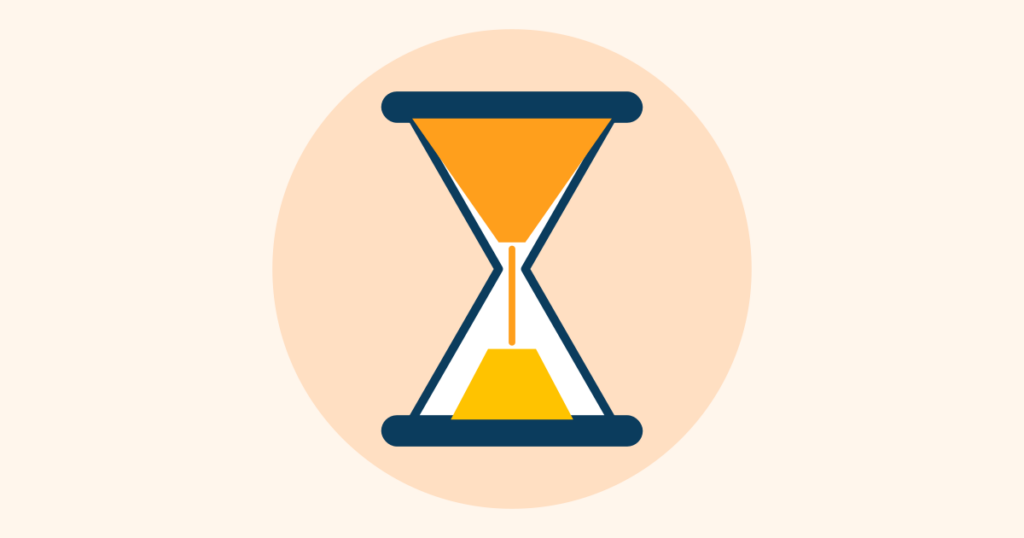
The Importance Of Time

The Importance Of Time

More demands on your attention arrive every year. The supply has not moved since you were twenty.

The Importance Of Time

Everything else in life can be increased. Money, knowledge, contacts, capability. Time is the one input that cannot be added to, borrowed against or recovered.

We treat it as the least valuable of the lot, largely because it arrives free and in apparently endless supply until quite suddenly it does not.

The demands multiply, the hours do not

At twenty most people have far more time than obligation. By forty the ratio has inverted, and by then the habits formed in the surplus years are still running.

That mismatch is most of what people describe as being busy. Not more work exactly. The same casual approach to hours applied to a life that no longer has spare ones.

Saying yes is spending

Every commitment is bought with a fixed and non-renewable currency, and unlike money you cannot see the balance. Which is why people who guard their money carefully will give away a Saturday without a thought.

A useful test before agreeing to anything: would I do this if it were happening tomorrow rather than in six weeks? Distance makes commitments feel free. They are not.

Fragments cost more than they look

An hour cut into six pieces is not an hour. Anything requiring real thought needs a run-up, and a day of interruptions can pass with nothing done despite every minute being occupied.

Protecting two unbroken hours is usually worth more than finding four scattered ones.

The part nobody says out loud

Time is the only thing you are spending whether or not you decide to. Every hour goes, used or not.

Which makes the absence of a decision a decision, and it is the one most of us make most days.

Life Lessons

Pursue Your True Calling

Pursue Your True Calling

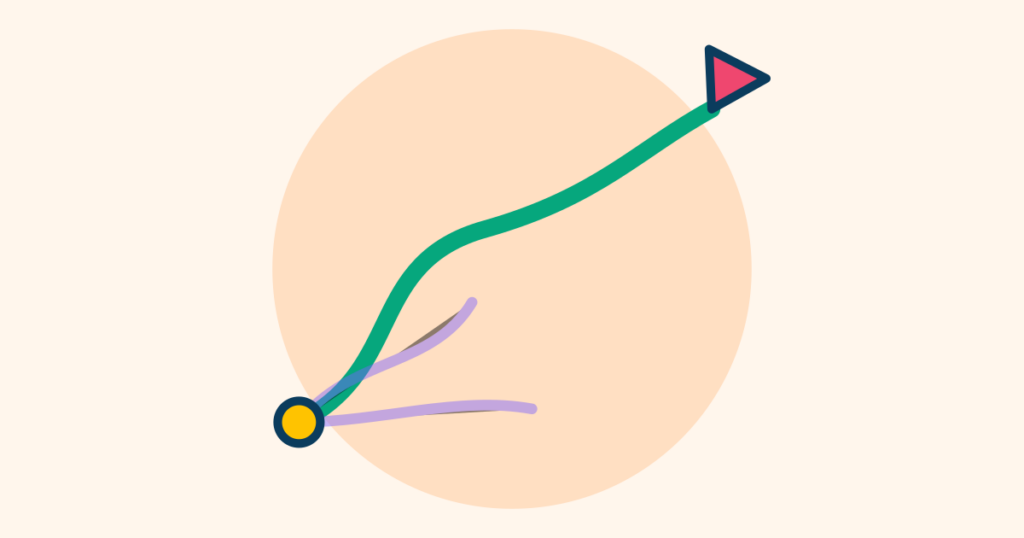
The advice assumes a calling exists, waiting to be discovered. For most people it is built rather than found.

Pursue Your True Calling

Find your calling is among the most repeated pieces of advice and among the least useful, because it smuggles in an assumption. That somewhere there is a right thing for you, already formed, and the task is to locate it.

Most people who love their work did not find it that way.

Interest usually follows competence

The order is the reverse of what we are told. People rarely become good at something because they loved it first. Far more often they became competent, found that being competent was satisfying, and the affection grew from there.

Which means waiting for passion before committing effort is waiting for the second thing to arrive before the first.

What actually predicts satisfaction

The research points at a short list, and none of it is the content of the work. Autonomy over how you do it. Visible progress. Colleagues you respect. Work that plainly helps someone. A sense that you are becoming better rather than repeating.

Those can be present in a dozen fields and absent in your supposed dream job, which is why so many people arrive at the thing they wanted and find it hollow.

Knowing what you want narrows everything

The practical version of this advice is much duller than the poetic one. Get clear on the conditions you need rather than the job title you want. Then every choice in front of you becomes easier to judge, because you finally have something to judge against.

And it can change

A calling is not a life sentence. People rebuild it in their forties and again in their sixties, and the ones who manage it are rarely the ones who were searching. They are the ones who kept getting good at things.

Life Lessons

We See The World The Way We Are

We See The World The Way We Are

An old story about two travellers arriving at the same town, asking the same question, and receiving two opposite answers.

We See The World The Way We Are

A traveller stops at the edge of a town and asks an old man sitting there what the people are like. The old man asks what they were like in the place he came from. Selfish, says the traveller, dishonest, impossible to trust. You will find them much the same here, says the old man.

Later a second traveller stops and asks the same question. The old man asks the same question back. Kind, says the second, generous, sorry to leave them. You will find them much the same here, says the old man.

Both answers were accurate

That is the part worth sitting with. The old man was not being clever. He had watched enough people arrive to know that what they found would match what they brought.

The town was the same town. The people in it were the ordinary mixture people always are. What differed was which half each traveller noticed, and how each interpreted anything ambiguous.

The mechanism is boringly well documented

We notice what confirms what we already hold, and we read unclear behaviour in line with our expectations. Someone who expects to be cheated finds evidence of it constantly, because most transactions contain something that could be read that way.

The expectation does not just filter. It changes how you behave, which changes how people respond, which supplies the evidence.

The useful question

Not whether the world is good or bad. That question has no stable answer.

The useful one is what you keep finding. If every workplace turned out political, every neighbour difficult, every friend eventually disappointing, the common element in that data set is not the world.

That is an uncomfortable thought and it is also the only one of the two that leaves you anything to do.

Life Lessons

Know Your Own Nature

Know Your Own Nature

Most self-improvement starts by deciding what to become. It works better the other way round, starting with an honest look at what you already are.

Know Your Own Nature

Almost every plan for self-improvement begins with a target. Become more disciplined. Become more outgoing. The target is chosen first and the person is expected to bend towards it.

It rarely holds, and the reason is usually that nobody looked honestly at the starting material.

The untrained mind chases and avoids

Left alone, attention runs on a simple loop. It wants what looks pleasant and it flinches from what looks costly, and it does this faster than you can notice. Most of what we call personality is the accumulated residue of that loop running for thirty years.

Seeing it happen, even occasionally, changes more than any resolution does. You cannot argue with a reflex. You can notice it, and noticing puts a gap where there was none.

Nature is not the same as habit

Worth separating, because people give up on the wrong things. Some of what you are is temperament, fairly fixed, and fighting it costs more than it returns. An introvert can learn to present well and will still need the evening alone afterwards.

Habit is the changeable part, and it is where effort actually pays. The mistake is spending years trying to change temperament and treating habits as fixed, which is precisely backwards.

Watch what you do when tired

Behaviour under load tells you more than behaviour at your best. Anyone can be patient on a good morning. What surfaces at the end of a hard week is the actual default, and that is the thing worth knowing about yourself.

Why this comes first

Goals set without this are borrowed from someone else’s life. Once you know your own grain, you can work along it rather than against it, and progress stops feeling like a fight you keep losing.

Money Matters

A Labelled Note, Read Twice A Day

A Labelled Note, Read Twice A Day

One currency note, one line written on it, and a steadier hand when the bills arrive.

This is a practice for your state of mind. It is not a money-making method, and it will not change your balance by itself.

The note

Take one currency note and stick a small label on it carrying, in your own words, a thank you for the money that has come to you across your life. Carry it with you. Once in the morning and once in the afternoon, take it out, hold it, read your own words, and let yourself actually mean them rather than reciting them. Two minutes.

Why a physical note and not a thought

A thought you intend to have every day is a thought you will forget by Thursday. An object in your pocket is a reminder that does not depend on your memory. That is the entire trick, and it is the same reason people keep a list on the refrigerator door.

Carrying it into ordinary transactions

Then take the same attitude into the payments themselves. When a bill arrives, meet it without resentment. Resentment does not change the amount. It only adds a second cost to a payment you were making anyway. Some people write a short thank you on the bill, or take a moment to recall what the service actually gave them. When your salary lands, stop long enough to register that it has landed, before the worrying starts.

What it is actually for

Money decisions taken in a state of panic are worse than money decisions taken calmly. That is the whole of the benefit and it is not a small one. Somebody who can open a bank statement without flinching reads it properly, and somebody who reads it properly notices things in time.

A word of care

This changes your relationship with money. It does not replace a plan. For the real decisions, on saving, debt, tax and investment, speak to a qualified adviser. Use the practice for your state of mind and let sound advice handle the numbers.

Terms Explained

The RAS: Your Brain’s Filter, and How to Aim It

The RAS: Your Brain’s Filter, and How to Aim It

A small bundle of nerves decides what you notice all day. You can point it on purpose.

Your senses take in far more than your mind could ever handle, so something has to decide what reaches your attention and what gets ignored. That something has a name.

What it is

The reticular activating system, or RAS, is a bundle of nerves at the base of the brainstem. Its job is to filter the flood of incoming information and let only what seems important through to your conscious mind. It is the reason that the day you start thinking about a certain car, you suddenly see it on every road — the cars were always there; your filter simply started flagging them.

Why it matters

Because the RAS decides what counts as important, it shapes what you notice — the opportunities, the people, the small openings that move you toward what you want, or the threats and irritations that keep you stuck. Two people can walk through the same day and register completely different worlds.

How to aim it

The filter can be trained. Telling it clearly what matters — through a written intention, a spoken affirmation, or a vivid visualisation of what you are working toward — biases it to surface exactly those things. This is the quiet mechanism behind a morning routine: you are not just feeling good, you are programming what you will be alert to for the rest of the day.

Tips & Tricks

Small Talk That Actually Works

Small Talk That Actually Works

Nobody enjoys the weather conversation. There are better openings, and they are not clever ones.

Small Talk That Actually Works

Small talk has a bad reputation, mostly earned by how badly it is usually done. Two people exchange weather observations, both aware that neither cares, and the exchange ends with relief.

It exists for a reason though. It is how strangers establish that they are safe to talk to. Skipping it does not make you direct, it makes you difficult to approach.

Ask about the situation you are both in

The easiest opening is the thing you are sharing. The event, the queue, the venue, the reason you are both here. It requires no research, it is obviously genuine, and the other person has an answer ready because they are thinking about it too.

“How do you know the host” outperforms anything you could prepare in advance.

Open questions, then follow the interest

A question that can be answered with one word usually is. Ask what someone is working on rather than whether work is busy, and you get something to build on.

Then listen for the part they say with slightly more energy, and ask about that. Most conversations die because people ask a good question and then move to their next one instead of following the answer.

Offer something back

Questions alone become an interview. After two or three, give something of your own, at a similar depth. Conversation is a trade, and the person who only asks is as tiring as the person who only talks.

Have three or four things ready

Not scripts. Just things you would genuinely be happy to discuss. Something you read recently, something you are trying to learn, a place you went. Having them ready removes the panic, which is what makes people reach for the weather.

Leave properly

Most people dread starting and forget to plan the ending, so conversations run past their natural life. Say it was good to meet them and move. Ending well is what makes the next conversation easy.

Health & Body

Money Time: Why 10pm–2am Is the Sleep That Counts

Money Time: Why 10pm–2am Is the Sleep That Counts

Eight hours can still leave you tired if you bank them at the wrong time of night.

Two people can sleep the same number of hours and wake feeling worlds apart. The difference is usually not how much they slept, but when.

Timing beats duration

The body does most of its repair, and releases the largest doses of its restorative hormones, in the window from about ten at night to two in the morning — call it money time. Sleep that lands inside it pays a bonus that sleep outside it does not. Someone asleep from one to nine still logs eight hours, yet misses most of the richest window and can wake up oddly unrefreshed.

Ride the 90-minute cycle

Sleep moves in cycles of roughly ninety minutes, so waking at the end of a cycle feels lighter than being dragged out of the middle of one. Aiming for whole multiples — six hours, or seven and a half — tends to land you on a natural surfacing point. Keeping the same bed and wake times each day lets the whole rhythm settle, so hormones fire on schedule.

Beware the second wind

When the light fades, that is nature’s cue to power down. Push past it and you catch a false “second wind” that feels productive and quietly robs you of money time. The fix is not willpower at midnight; it is protecting the front edge of the night: dim the screens well before bed, and let the body follow the darkness down.

Terms Explained

Blue Ocean Versus Red Ocean

Blue Ocean Versus Red Ocean

Two ways to compete. One fights for a share of what exists. The other builds a market where the fight has not started.

Blue Ocean Versus Red Ocean

The metaphor comes from a business book and it has outlived most of its generation because it captures something plainly.

A red ocean is an existing market with defined rules and known competitors. Everyone offers roughly the same thing, so the fight is over share and price. The water is red from the fighting. Margins compress, and the strongest balance sheet usually wins.

A blue ocean is demand that has not been served yet. There is no established competition because the space did not exist in its current shape. Growth comes from bringing in people who were not customers of anyone.

The part people miss

A blue ocean is not a better product for the same buyers. That is still a red ocean, just with a nicer entrant. The move is a change in what is offered, so the usual comparison no longer applies.

Budget airlines did not build better aircraft. They removed most of what a ticket included and priced against buses and trains rather than against other airlines. Different question, different customers.

It usually means giving things up

This is the uncomfortable half. Creating one of these positions almost always requires dropping features the industry treats as compulsory, because carrying them keeps you inside the old comparison. Removing them is what lets the price and the audience move.

Most attempts fail here. Adding is easy and adding is safe. Subtracting is what makes the position defensible.

And it does not last

Blue oceans turn red. Once the model is visible it gets copied, and within a few years the space has competitors, price pressure and the familiar fight. The advantage is a head start, not a permanent position.

Which is why the useful question is not whether you can find one. It is whether you can keep finding them.

Mind & Habits

Procrastination Is Not Laziness

Procrastination Is Not Laziness

We put off the things that matter most, not the things we care least about. That tells you what is really going on.

Procrastination Is Not Laziness

Notice which tasks you actually postpone. Rarely the trivial ones. It is the important email, the difficult conversation, the piece of work you will be judged on. A lazy person would avoid effort. Procrastinators reliably avoid the things they care about most.

That inverts the usual explanation. This is not a shortage of willpower. It is avoidance of a feeling.

The feeling being avoided

Usually one of a short list. Fear that the result will not be good enough. Confusion about where to start. Resentment at having to do it at all. Boredom, which is more painful than people admit.

Delay removes that feeling instantly. That relief is real, and it is what trains the habit. You are not failing to act. You are being rewarded, immediately, for not acting.

Which is why discipline does not fix it

Telling yourself to try harder addresses effort, and effort was never the problem. It also adds a fresh layer of self criticism, which makes the task feel worse, which makes avoiding it more attractive. The loop tightens.

Shrink the first move until it is not worth avoiding

Most of the discomfort sits at the start. Open the document. Write the subject line. Read the first page. Do that and nothing else, and give yourself permission to stop.

You usually do not stop. Starting is what dissolves the feeling, because most of the dread was anticipation rather than the work itself.

Name what you are avoiding

Before the next delay, ask which of the feelings above is actually present. Not to solve it, just to name it. A vague dread runs the day. A named one, “I do not know how to start this”, turns into a question you can answer in ten minutes.