Tag: Kids

Health & Body

How Your Breathing Actually Works
How Your Breathing Actually Works

A system you run twenty thousand times a day without instruction, and almost never think about until something interferes.
How Your Breathing Actually Works

Breathing is the one vital process you can take manual control of, which makes it unusual and useful. Most people know roughly nothing about how it operates.

The diaphragm does the work, not the chest

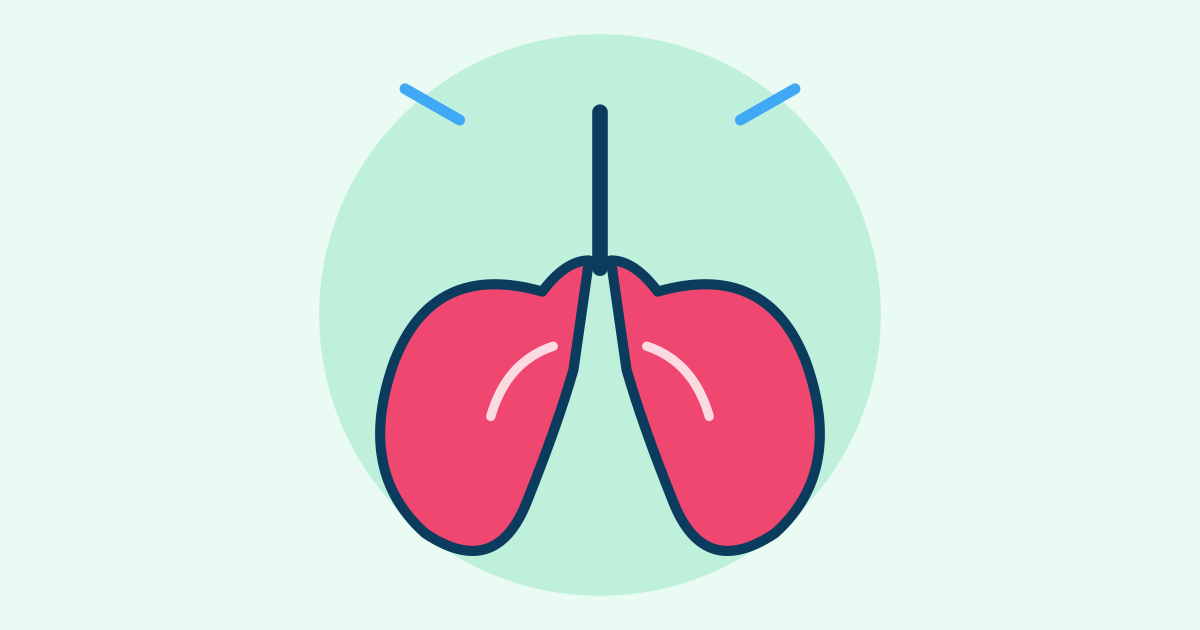
Air is not sucked in by the lungs. A sheet of muscle beneath them contracts and flattens, the chest cavity enlarges, pressure inside drops below the pressure outside, and air moves in to equalise.

Breathing out is mostly passive. The muscle relaxes, the elastic tissue recoils, and air leaves.

Where the exchange happens

The windpipe branches roughly twenty-three times, ending in several hundred million tiny sacs called alveoli. Their combined surface area is somewhere near that of a tennis court, folded into your chest.

Each is wrapped in capillaries one cell thick, and gas simply diffuses across that boundary. Oxygen in, carbon dioxide out, no pumping involved.

Carbon dioxide, not oxygen, sets the pace

This surprises people. The urge to breathe is triggered mainly by rising carbon dioxide rather than falling oxygen. Hold your breath and the discomfort you feel is the build-up, not the shortage.

It is also why breathing too fast when anxious makes things worse. You blow off carbon dioxide, blood chemistry shifts, and you get the tingling and light-headedness that feel like a worsening emergency.

The practical part

Slow breathing out, longer than breathing in, engages the calming branch of the nervous system fairly reliably. This is the mechanism behind most breathing exercises, stripped of the packaging.

Nothing exotic required. A slightly longer exhale, for a couple of minutes, works because of how the plumbing is built.
Wonders & Trivia

Is It Safe To Stand Near A Microwave?

Is It Safe To Stand Near A Microwave?

Most people step back when they press start. The instinct is understandable and the physics does not really support it.

Is It Safe To Stand Near A Microwave?

Almost everyone does it. Press start, take a step back, come forward when it beeps. Nobody taught us this. It just feels sensible.

The physics is less dramatic than the instinct.

It is not that kind of radiation

The word radiation is doing all the frightening work here, and it covers two very different things. Ionising radiation, such as X-rays and gamma rays, carries enough energy to knock electrons off atoms and damage DNA. Microwaves are non-ionising. They sit near radio waves on the spectrum and they simply make water molecules vibrate, which is heat.

A microwave oven cannot make your food radioactive, and it cannot do to you what an X-ray does.

The door is the actual engineering

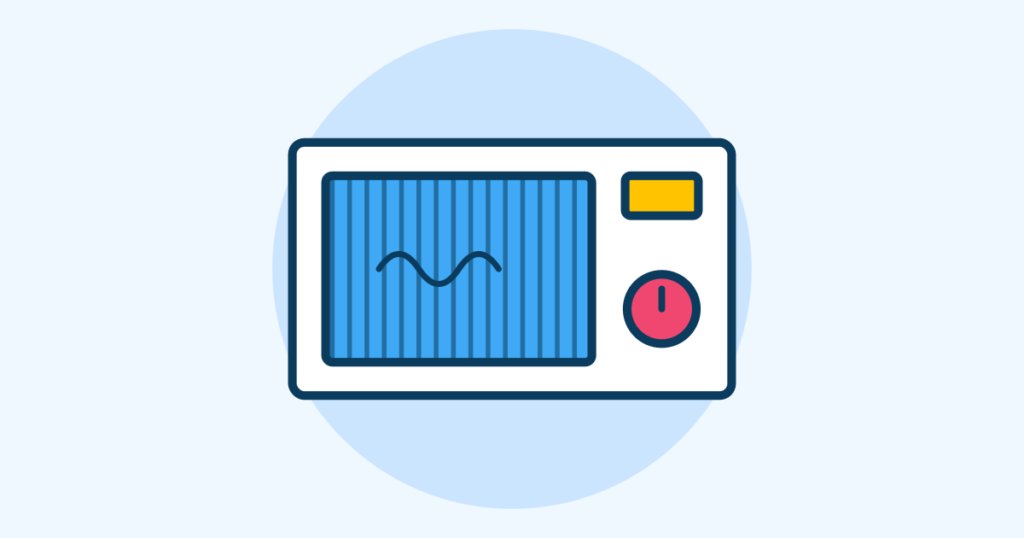
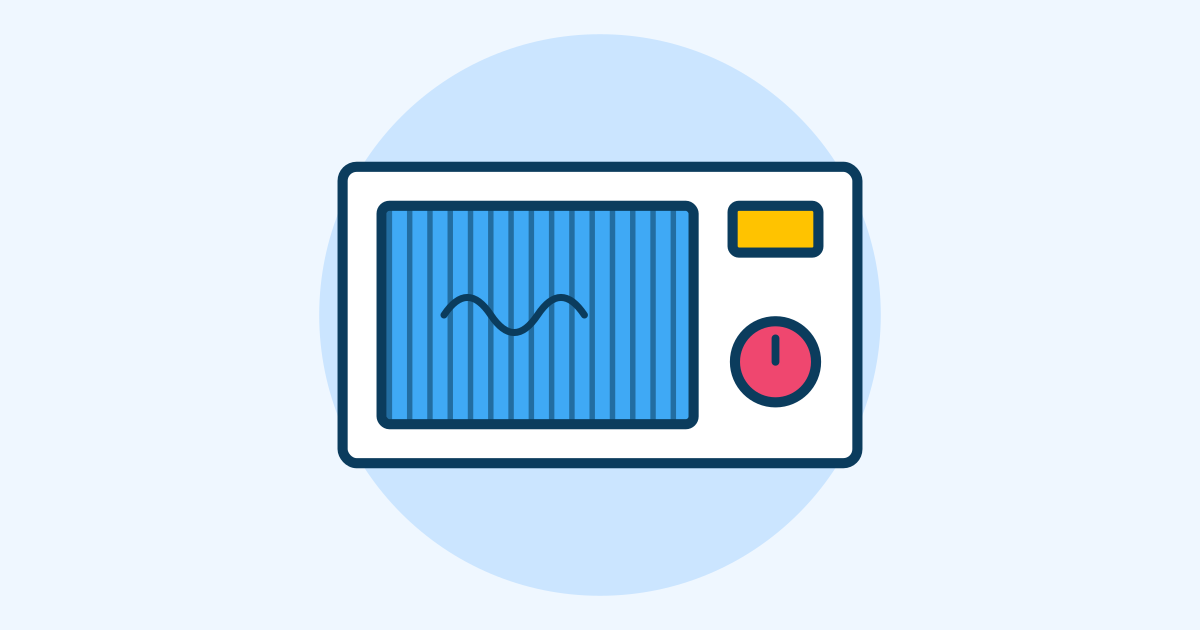
The metal mesh in the window is a Faraday shield. The holes are far smaller than the wavelength being used, so the waves cannot pass while visible light can, which is why you can watch your food and not be cooked by it.

Leakage is tightly regulated and the permitted amount falls off very quickly with distance. Stepping back a foot cuts your exposure by roughly three quarters, which is a large reduction of an already small number.

When to actually worry

The door is the thing to watch. A bent door, a damaged latch, a hinge that no longer closes flush, or a mesh with a hole in it. Those defeat the shield, and that is a genuine reason to stop using the oven rather than to stand further away.

Running it empty is also worth avoiding. With nothing to absorb the energy it reflects back into the magnetron and shortens its life.

So, the step back

Harmless, and unnecessary on an oven in good condition. Keep the habit if you like. Just check the door seal occasionally, because that is the part that actually matters.

Mind & Habits

Fixed Versus Growth Thinking

Fixed Versus Growth Thinking

Two beliefs about where ability comes from. They produce very different behaviour in front of something difficult.

Fixed Versus Growth Thinking

Ask someone whether intelligence is largely fixed or largely built and the answer predicts a surprising amount about how they will behave when something gets hard.

The two positions

One holds that ability is a quantity you have. Effort is then evidence of not having enough of it, because talented people find things easy.

The other holds that ability is mostly built. Effort is then simply the mechanism, and difficulty is the sensation of it working.

Neither is a personality. Most people hold one in some areas and the other elsewhere, which is worth noticing about yourself.

Where it shows

Not on easy tasks, where both look identical. It shows at the first real obstacle.

The fixed view reads a setback as information about the ceiling, so withdrawing is the rational response. The built view reads the same setback as information about the method, so adjusting is the rational response.

Same event, opposite conclusion, and over years the two accumulate into very different capability.

Praise pushes it either way

This is the practical part, especially with children and junior colleagues. Praising the person, you are so clever, attaches their identity to an outcome, which makes the next failure threatening.

Praising the approach, that was a good way to break the problem down, attaches it to something repeatable. The second holds up when things get difficult and the first does not.

The honest caveat

Belief is not unlimited. Effort will not make anyone anything, and the idea has been oversold in places where it turned into blaming people for structural problems.

The narrow claim is the defensible one. Within your actual range, what you believe about effort largely determines how much of that range you ever use.

Life Lessons

When You Should Stay Silent

When You Should Stay Silent

Some situations are made worse by anything you could say. Recognising them is a skill, and it is not the same as having no reply.

When You Should Stay Silent

There are moments when the difficult thing is not finding the right words. It is accepting that no words available would improve the situation.

Silence in those moments looks like weakness from the outside and is usually the harder choice.

When someone has just pushed your buttons

The reply that arrives instantly is the one you will regret. It is assembled by the part of you that wants to win, working faster than the part that has to live with the consequences.

Nothing is lost by answering an hour later. A great deal is often lost by answering immediately.

When you do not actually know

Speaking confidently about something you have half understood is common, and it is expensive in a specific way. It is remembered. The person who says I do not know and comes back with an answer is trusted more, not less.

When someone is grieving

The urge to say something helpful is strong, and most of what gets said in that state is for the speaker’s comfort rather than the listener’s. Everything happens for a reason. At least it was quick.

Sitting with someone without filling the air is harder and it is what people remember.

When the argument is already won

Once the other person has conceded, anything further is not persuasion. It is collecting, and it costs you the goodwill the concession just earned.

What silence is not

It is not avoidance, and the difference matters. Staying quiet about something that needs saying, indefinitely, is not restraint. That is the other failure, and it usually costs more in the end.

The skill is knowing which of the two you are doing, and being honest with yourself about the answer.

Life Lessons

We See The World The Way We Are

We See The World The Way We Are

An old story about two travellers arriving at the same town, asking the same question, and receiving two opposite answers.

We See The World The Way We Are

A traveller stops at the edge of a town and asks an old man sitting there what the people are like. The old man asks what they were like in the place he came from. Selfish, says the traveller, dishonest, impossible to trust. You will find them much the same here, says the old man.

Later a second traveller stops and asks the same question. The old man asks the same question back. Kind, says the second, generous, sorry to leave them. You will find them much the same here, says the old man.

Both answers were accurate

That is the part worth sitting with. The old man was not being clever. He had watched enough people arrive to know that what they found would match what they brought.

The town was the same town. The people in it were the ordinary mixture people always are. What differed was which half each traveller noticed, and how each interpreted anything ambiguous.

The mechanism is boringly well documented

We notice what confirms what we already hold, and we read unclear behaviour in line with our expectations. Someone who expects to be cheated finds evidence of it constantly, because most transactions contain something that could be read that way.

The expectation does not just filter. It changes how you behave, which changes how people respond, which supplies the evidence.

The useful question

Not whether the world is good or bad. That question has no stable answer.

The useful one is what you keep finding. If every workplace turned out political, every neighbour difficult, every friend eventually disappointing, the common element in that data set is not the world.

That is an uncomfortable thought and it is also the only one of the two that leaves you anything to do.

Life Lessons

Successful And Unsuccessful People

Successful And Unsuccessful People

The gap is rarely talent and almost never luck alone. It shows up in what each does with a thing they did not know yesterday.

Successful And Unsuccessful People

Put two people in the same role with the same background and wait five years. The distance between them will be considerable, and very little of it will trace back to ability.

One keeps learning, the other keeps explaining

This is the cleanest single difference. Confronted with something they do not know, one person treats it as a gap to close. The other treats it as a thing that was never their job.

Both responses feel reasonable in the moment. Over five years they compound into two very different people.

Credit and blame move in opposite directions

Watch where each puts the cause of an outcome. When something works, and when something fails, does the explanation point outward or inward?

Pointing outward protects the ego and costs the lesson. It is also the more comfortable habit, which is why it is the more common one.

One prepares, the other reacts

Not grand strategy. Small preparation. Reading the document before the meeting. Knowing the numbers before being asked. It looks like nothing and it is most of what people mean when they call someone impressive.

Attitude to other people’s success

The revealing tell. Someone who studies a peer’s win for what they can use is on a different trajectory to someone who explains it away. The second response is more natural and it closes a door every time.

What this is not

It is not a claim that circumstances do not matter. They matter enormously, and pretending otherwise is its own kind of dishonesty.

It is a narrower claim. Within whatever circumstances you have, these habits decide most of what happens next, and unlike the circumstances, they are yours to choose.

Life Lessons

Know Your Own Nature

Know Your Own Nature

Most self-improvement starts by deciding what to become. It works better the other way round, starting with an honest look at what you already are.

Know Your Own Nature

Almost every plan for self-improvement begins with a target. Become more disciplined. Become more outgoing. The target is chosen first and the person is expected to bend towards it.

It rarely holds, and the reason is usually that nobody looked honestly at the starting material.

The untrained mind chases and avoids

Left alone, attention runs on a simple loop. It wants what looks pleasant and it flinches from what looks costly, and it does this faster than you can notice. Most of what we call personality is the accumulated residue of that loop running for thirty years.

Seeing it happen, even occasionally, changes more than any resolution does. You cannot argue with a reflex. You can notice it, and noticing puts a gap where there was none.

Nature is not the same as habit

Worth separating, because people give up on the wrong things. Some of what you are is temperament, fairly fixed, and fighting it costs more than it returns. An introvert can learn to present well and will still need the evening alone afterwards.

Habit is the changeable part, and it is where effort actually pays. The mistake is spending years trying to change temperament and treating habits as fixed, which is precisely backwards.

Watch what you do when tired

Behaviour under load tells you more than behaviour at your best. Anyone can be patient on a good morning. What surfaces at the end of a hard week is the actual default, and that is the thing worth knowing about yourself.

Why this comes first

Goals set without this are borrowed from someone else’s life. Once you know your own grain, you can work along it rather than against it, and progress stops feeling like a fight you keep losing.

Tips & Tricks

Studying For Long Hours, Effectively

Studying For Long Hours, Effectively

Sitting for six hours is not the same as studying for six hours. The difference is mostly in how the time is broken up.

Studying For Long Hours, Effectively

Anyone can sit at a desk for a long stretch. Whether anything stays afterwards is a separate question, and the honest answer for most long sessions is not much.

Rereading is the comfortable illusion

Going over notes again feels productive because the material becomes familiar, and familiarity feels like knowledge. It is not. Recognising something on a page is a much weaker state than being able to produce it without the page.

Close the book and write down what you remember. It is unpleasant and it is where the learning happens. What you cannot produce is what you have not learned yet, and finding that out early is the whole point.

Spacing beats cramming, reliably

The same total hours split across several days produce substantially better retention than the same hours in one sitting. Forgetting a little between sessions and retrieving it again is what makes the memory durable.

This means the calendar matters more than the stopwatch. Four sessions of ninety minutes across a week beats one six hour Sunday, every time.

Work in blocks with real breaks

Attention degrades after roughly forty five minutes to an hour. Push through and you keep the chair time while losing the comprehension. Stop, move, look at something distant, and come back.

A break spent scrolling is not a break. The eyes and the attention are doing the same thing they were doing before.

One subject at a time, and somewhere quiet

Switching between subjects carries a cost each time. So does an open chat window. The person who studies four hours undistracted covers more than the person who sits for seven with a phone face up.

Sleep is part of the method

Consolidation happens overnight. A late night that costs two hours of sleep to gain two hours of revision is close to a straight trade, and often a losing one. Finish earlier and go to bed.

Health & Body

Money Time: Why 10pm–2am Is the Sleep That Counts

Money Time: Why 10pm–2am Is the Sleep That Counts

Eight hours can still leave you tired if you bank them at the wrong time of night.

Two people can sleep the same number of hours and wake feeling worlds apart. The difference is usually not how much they slept, but when.

Timing beats duration

The body does most of its repair, and releases the largest doses of its restorative hormones, in the window from about ten at night to two in the morning — call it money time. Sleep that lands inside it pays a bonus that sleep outside it does not. Someone asleep from one to nine still logs eight hours, yet misses most of the richest window and can wake up oddly unrefreshed.

Ride the 90-minute cycle

Sleep moves in cycles of roughly ninety minutes, so waking at the end of a cycle feels lighter than being dragged out of the middle of one. Aiming for whole multiples — six hours, or seven and a half — tends to land you on a natural surfacing point. Keeping the same bed and wake times each day lets the whole rhythm settle, so hormones fire on schedule.

Beware the second wind

When the light fades, that is nature’s cue to power down. Push past it and you catch a false “second wind” that feels productive and quietly robs you of money time. The fix is not willpower at midnight; it is protecting the front edge of the night: dim the screens well before bed, and let the body follow the darkness down.

Health & Body

Why Music Calms You Down

Why Music Calms You Down

People have used music to settle themselves for thousands of years. Only recently has anyone measured what it is doing.

Why Music Calms You Down

Every culture that has ever existed made music, and used it to steady people. Lullabies, work songs, marches, hymns. Long before anyone could explain it, the effect was obvious enough to build traditions around.

What is newer is the measurement. Slow music reliably lowers heart rate, drops blood pressure a little, and reduces circulating cortisol. The effect is modest and it is real.

Tempo does most of the work

The body has a mild tendency to fall in step with a steady external rhythm. Music at roughly sixty beats a minute, near a resting heart rate, encourages the breath to slow, and slower breathing is most of what calming down actually is.

Which is why the genre matters far less than people assume. A slow qawwali and a slow cello suite do much the same thing. Something frantic will not, however beautiful.

Familiarity beats novelty

A piece you know well demands nothing of you. There is no surprise to process, so attention can rest. Unfamiliar music, even calm unfamiliar music, keeps a small part of the mind working out where it is going.

For settling yourself, the album you have heard two hundred times will beat the well reviewed new one.

Use it deliberately

Music works best as a decision rather than as background. Chosen, at a set moment, for twenty minutes, it does something. Left running all day it becomes noise, and noise is the thing you were trying to get away from.

The commute, the half hour before sleep, the gap between finishing work and joining the family. Those are the moments where twenty deliberate minutes change the rest of the evening.