Tag: Kids

Mind & Habits

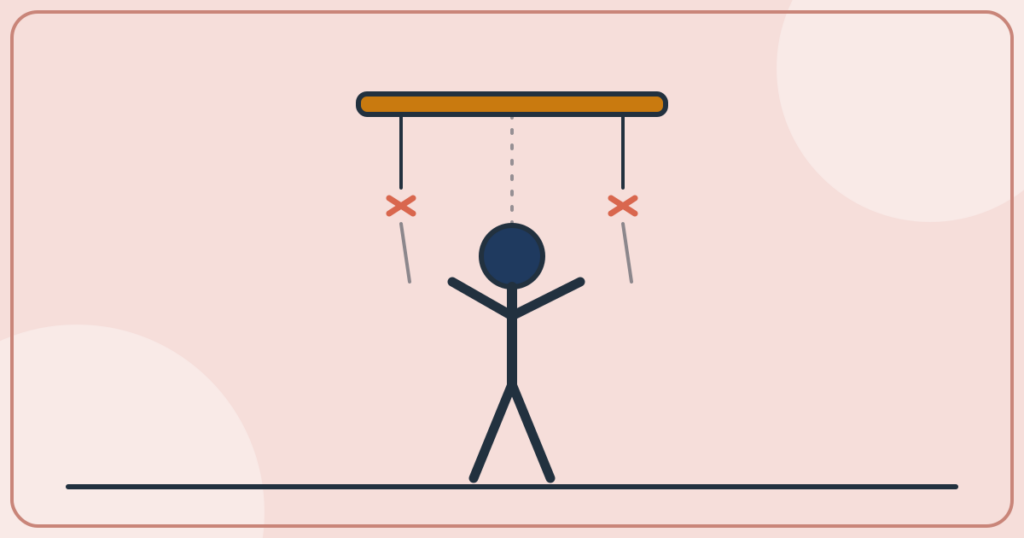
Stop Trying To Be Someone Else

Stop Trying To Be Someone Else

Admiring a role model is healthy. Spending years trying to turn into them is not. Five reasons to stop copying and start becoming yourself.

Stop Trying To Be Someone Else

Before you pour years into becoming a copy of the people you admire, weigh a few reasons not to. You may find that you are more remarkable than any of them.

Wanting to be a little more like someone you look up to is fine. Wanting all the time to be somebody else is not healthy. You are an original, not a photocopy. Put your effort into becoming the best version of yourself and you will find you are far happier.

It simply cannot be done

However closely you copy someone’s looks or behaviour, something about you will always be different. That is the plainest reason to stop. The attempt is bound to fail however hard you work at it. You can resemble someone, but you will always carry traits that set you apart. Why sign up for a failure you do not need?

It wears you down over time

Think about what happens when you fail at something again and again. Sooner or later your spirits sink. Many people who spend their lives trying to become another person end up under long-lasting emotional strain: low mood, anxiety, even a pulling away from other people. The result is an unhappy life. You have a good life of your own waiting. Live that one instead of somebody else’s.

You drive away the people who care

Focused on becoming someone else, you push away the people who love you for who you are. The harder you force the change on yourself, the more you shut them out, and you start chasing friendships with people you think will help you transform. In the end you lose the very people who would help you be yourself. Do not swap the people who matter most for a dream that cannot come true.

You lose your way

Eventually you realise you cannot become the other person. By then, the longer you have tried, the harder it is to find your way back to who you were. People fixated on becoming someone else often end up lost, with no idea what they want or who they want to be, and some never recover their direction. You have a path of your own. Follow it, and happiness follows.

You do not really know them

Whoever your idol is, you do not truly know them. You do not see their struggles, hopes, failures and wins. Their life may look perfect, but it is not; they have troubles like the rest of us. Their own particular experiences shaped them. Yours have been different, and they have made you a different person. So skip the pointless drama and concentrate on your own life.

Happiness only fits one way

Nobody else was ever meant to be you. Force yourself into another person’s shape and you will always feel out of place and ill at ease. You might look happy from the outside while feeling less than happy inside. Playing someone else can be fun for a while, but the shine wears off fast and leaves you unsure of your own identity. You deserve happiness, and the only happiness that fits is your own.
Relationships

How To Deepen Your Compassion

How To Deepen Your Compassion

Compassion is more than feeling sorry for someone. It is sharing their pain and wanting to ease it. Eight ways to make it a habit rather than a mood.

How To Deepen Your Compassion

Compassion is the feeling of sharing another person’s suffering, joined to a wish to ease it. It shows up as particular kindness towards people who are hurting.

It grows out of empathy and is usually visible in what we do. A compassionate person tries to help those they feel for. A compassionate act is one that takes someone else’s pain into account and tries to lighten it as though it were your own. That is what separates compassion from other kinds of helpfulness or decency: its aim is the relief of suffering.

Real compassion takes effort, and the effort is worth it. The writer Ralph Waldo Emerson saw one of life’s finest rewards in this: nobody can honestly try to help another person without also helping themselves.

Listen, and only listen

While someone talks, most of us are rehearsing our reply and waiting for a gap to jump in. Try simply listening. Drop every judgement and give the person all of your attention. There is great healing in telling someone your darkest secret, being properly heard, and still being loved.

Answer the feeling, not the words

Angry words can be covering fear. Blame can be hiding guilt. Argue with what someone literally said and they often dig in harder. Try to understand the emotion underneath and respond to that, and they start to trust you and open up.

Keep your own support around you

We can only give love without conditions when we are also receiving it. Go out, spend time with people you love, and keep living your own life. Refill yourself, or you will have nothing left to give.

See all of them

When a person you care about is sliding down a bad path, it is easy to forget everything good about them. At that moment, deliberately recall one strength they have, perhaps their loyalty, their humour or their patience. Look at the whole person, not the worst of them.

Put yourself in their place

Suffering is shared by everyone. Nearly all of us have known joy and pain. The details differ from person to person, but the themes do not. Recall a time you went through something similar. Dwell on it and remember each feeling and worry you had, and how badly you wanted understanding and kindness from someone walking the same road. Do this often, until it becomes second nature.

Assume there is pain you cannot see

We rarely know what another person is carrying inside. So when someone irritates or offends you, stop for a moment and allow for the possibility that they are struggling with something you know nothing about.

Forgive yourself as well

Turn the same compassion inward. Nobody is perfect. Go easy on yourself when you fall short, because you are as human as anyone else. If your intentions and efforts point the right way most of the time, things will come right in the end.

Make it a daily practice

Reflect on compassion in the morning, keep it in mind as you deal with people during the day, and look back on it at night. Done this way, it stops being an occasional feeling and becomes part of who you are. Love and compassion are not extras for good times; people cannot do without them. Kindness can be your whole philosophy, and it needs no complicated system to support it.

Life Lessons

Find The Talent You Did Not Know You Had

Find The Talent You Did Not Know You Had

Everyone has a natural gift, and many people never find theirs. Six practical ways to uncover what you are quietly good at.

Find The Talent You Did Not Know You Had

Natural abilities, skills and talents come to light when you test yourself, go looking for new experiences and take on obstacles and challenges. That is how you discover the gifts you may be sitting on.

Every person has something special. People differ not only in how they look but in what they can do, yet a great many never find out where their natural ability lies, and some never even wonder. Uncovering it is not complicated. It asks only for some time and honest effort. These steps help.

Drop the negative thinking

Negative thinking stops countless people from doing what they love. The real obstacle sits inside us, in how we think. Most people decide they cannot do something before they have even tried, or assume they would be better at something else. Set that aside and give it a go. You may find a hidden ability you enjoy, one you can do with more ease than other people.

Keep an open mind

An open mind leaves room to think and gives you the courage to try what you love. People have different strengths. One person is quiet and inward-looking, another outgoing. Whichever you are, stay open to everything life puts in front of you. That openness is what leads you to your talent and to the work you enjoy.

Look back at your past

Your own history teaches you better than anyone, and its lessons are ones nobody else can give you. It can point to the ability hidden in you. Recall what you enjoyed most, and what you loved doing even when there was little to gain from it. That shows you what you truly like, and it can lead you to a special gift.

Keep a record of what you enjoy

People do all kinds of things in their lives without realising that some of them could be hidden talents. Tracking what you enjoy helps reveal them. Most of us like many activities, and plenty of people turn out to have several hidden gifts. So the next time you do something, jot it down and note whether you liked it.

Count your small wins

Success mostly arrives as a string of small victories. Always take the chance to celebrate them, and keep count. They can be the doorway to your talent. Anything you succeed at again and again may well be the gift. Think creatively about how these small successes might link to bigger talents and abilities. Finding your talent is not hard; you only need to keep watch for it.

Try new things

New experiences open more fields to explore, which makes it easier to spot your particular gift. When you box yourself in, you shut the door on talent, because you never know what a new experience holds. New experiences also bring wisdom and knowledge, and both are precious. Never stop yourself from trying something new.

Mind & Habits

Stop Worrying And Start Living Well

Stop Worrying And Start Living Well

Worry keeps people awake at night and nibbles at their days. Six plain, workable ways to loosen its grip.

Stop Worrying And Start Living Well

Worry is the thing that keeps so many people staring at the ceiling at night. By day it nags at them while they try to work, enjoy themselves or simply unwind. Here are some simple ways that work for getting past it.

Rein in wandering thoughts

Thoughts need discipline. Do not let them wander wherever they please, drifting like an animal left to graze or a kite whose string has snapped. You are in charge of your thoughts. Keep them on a lead.

Choose optimism, the sensible kind

Be as hopeful as you can while staying reasonable. Optimism is not lying about all day imagining you will one day lead the world’s most powerful country. That kind of fantasy helps nobody. Call up every positive attitude you have and use it to push back against negativity. Life is not all comfort, but neither is it all pain. Steer clear of a gloomy, brooding outlook. Remind yourself that your worries are small when set against your ability to deal with them.

Do not sit alone with it

Try not to be on your own. Ring a friend and meet up, or start a conversation with someone close to you in the family. Keeping busy with jobs around the house also crowds out anxious thoughts.

Find a way to be still

Meditation is widely recommended these days for both physical and mental wellbeing. There are many methods. Pick the one that suits you best. It relaxes the mind and gives you a way out of anxious thinking. Simple breathing exercises often help too.

Face the problem directly

Do not let problems eat away at you. Meet them head on. Very often a problem turns out to be much milder than you feared. People who dread losing the fight tend to put it off, and while they delay, the problem quietly grows. Tackle problems early and remove them before they take root.

Measure yourself against yourself

In a crowded, competitive world, getting ahead of everyone else can look like the only route to success. Make time to take stock of what you are good at and set your ambitions to match. Do not chase what others have. Set your own goals and work towards them. Each person is different, and trying to keep pace with everyone else only adds to your worries and leaves you frustrated for life.

Relationships

How To Handle A Control Freak

How To Handle A Control Freak

Some people need to decide what everyone does and how. Four calm ways to live and work alongside a controller without being run by one.

How To Handle A Control Freak

A control freak is someone who wants to decide what everybody else does and exactly how it should be done. What marks them out is an unusually strong need to control other people.

Many are perfectionists underneath. Keeping everything around them under tight command is how they avoid showing their own weak spots. You will meet them in every walk of life, at home, at school and at work, so the useful question is not whether you will face one but how to deal with one. Four approaches help.

1. Smile and stay calm

When someone insists that you do things their way, smile, and then do what you had decided to do. Keep your composure and do not argue. A controller always needs the final word, so the argument drains you and robs you of your peace for nothing. Staying calm is hard at the start. Once you have the knack, their controlling habits slide off you the way water slides off a duck.

2. Do not try to take charge of them

Turning the tables gets you nowhere. In their own world they are in charge of everything and never in the wrong. They have probably never failed at anything, because they only attempt what they are sure they can succeed at; anything else would threaten their sense of control. There is no point trying to do things the way they would call right, since they will find a fault regardless. Do what makes you happy, and return to the first step: smile and stay calm.

3. Be kind, and praise them

Kindness is the most powerful tool here. People like this need more affection than most. They are not content inside, so they try to control everything they can in order to hold on to their idea of happiness. Kindness works surprisingly well. Fight them and they tighten their grip on you. Stay kind and they lose the power to make you lose control, which is often exactly what they were trying to achieve.

4. Choose to forgive

Forgiving the people who wrong you is a strong and freeing act. The person trying to control you may have had little love in their life. Quite likely they were controlled themselves and are simply repeating what they learned. They do not know another way. That is the situation, and you can decide to be the bigger person.

One last thought. When people resent you or envy you, it is often a sign that you are doing something right. Keep going, and do not let anyone pull you down.

Mind & Habits

The Pleasure And Payoff Of Reading

The Pleasure And Payoff Of Reading

A keen reader gets to live many lives. Ten ways a steady reading habit pays you back, from sharper arguments to calmer evenings.

The Pleasure And Payoff Of Reading

It is often said that a keen reader lives a thousand lives. Each finished book widens your world and your thinking, and over time it reshapes who you are.

Plenty of people wish they read more. Some even start well and then let the habit fade out of plain inertia. If that sounds familiar, here are the rewards that might persuade you to make reading permanent.

It makes you sharper

Reading builds real intelligence. It equips you to hold your ground in any argument and to impress people with how much you know.

Your conversations improve

The quality of what you say rises sharply. With everything you have read, you always have something worth talking about, and you do not run dry.

It feeds creativity

Think of whatever you create as the finished product. Reading is the best raw material you can feed into your mind to make it.

Your vocabulary grows

It is close to a law of nature that reading enlarges your word stock, which makes you more articulate and better spoken.

People enjoy your company

Everyone likes spending time with someone well read. The knowledge you pick up from the finest minds in history becomes part of what you bring to the table.

Knowledge travels with you

Books go anywhere; that is their great advantage. If a stack of them feels heavy, an e-reader holds thousands of titles at once and runs for about a month on one charge.

It deepens empathy

Reading lifts us out of hard reality into imagination, where sorrow can become gladness, defeat can become achievement, hurt can ease into delight and dread can soften into hope. An unhappy person can set the unhappiness down for a while. Losing yourself in fiction and caring about its characters also teaches you to understand and feel for real people and their troubles.

Relationships get easier

Books bring you closer to human emotion. You grasp why people behave as they do and can approach your own relationships more calmly and rationally. A book is a loyal friend, and the reading habit can change a life.

It melts stress away

However heavy things are at home or at work, a good book is a shelter you can always step into, and it can carry you somewhere peaceful.

It helps you handle problems

Reading nudges you towards a practical outlook. You start seeing each part of your life from a wider and different angle, and that helps you tackle problems more accurately and more intelligently.

Life, as the writer Harold Kushner put it, is like a good book: the further you read, the more it makes sense.

Life Lessons

The Seven Ds Of Success

The Seven Ds Of Success

Determination, dedication, discipline, decorum, decency, devotion and development. Seven words that together explain why some people reach their goals and others circle them.

The Seven Ds Of Success

Age, background and occupation aside, almost everyone wants to succeed. There is nothing wrong with that wish. Whether the arena is business or ordinary life, much of what we do is aimed at getting somewhere. Often there is a missing piece between wanting a goal and reaching it. Here are seven qualities, each beginning with D, that tend to supply it.

1. Determination

If we only want something, the first hard obstacle sends us looking for an easier prize, and we end up achieving nothing. Determination is the tool that stops this. Trying once more, and then once more, however many attempts it needs, calls for courage. Each attempt brings us nearer and shows the target more clearly. Without determination we get close and never arrive. Determination is what closes that last gap and improves us along the way.

2. Dedication

Commit yourself to excellence, and remember that excellence is a road, not a place you reach. Be ready to give up almost anything for the goal, except the things that carry you there: persistence, commitment, enthusiasm, diligence, tenacity, self-belief, appreciation and motivation. Above all, commit to learning for life and stay a student always. Put your time, energy, money and every other resource behind what you want.

3. Discipline

Discipline means doing the right thing, at the right time, in the right way, as well as it can be done. It also means following rules that exist for the good of both the individual and society. Everything has a process and a set of rules, and we follow them not only for ourselves but for the community we live in.

4. Decorum

Decorum is behaving well whatever the situation. Success depends on knowing how to conduct yourself in each setting, because people watch your actions and gestures all the time. A well-mannered person is welcomed everywhere. Decorum reveals character, and others judge where you come from by it.

5. Decency

Decency means being polite in speech, humble in action and efficient at work. Anyone who wants to succeed must be decent in every respect, and that decency shows in everything from how you behave to how you dress.

6. Devotion

Devotion must be sincere and honest. Success comes only to a person who is fully devoted to the work, doing each task wholeheartedly. People who treat their work as something close to sacred are the ones who rise.

7. Development

The seventh D is the destination of the other six. Follow those six and you move naturally towards development. Overall growth is emotional, inner, mental, physical and psychological growth taken together.

An extra D: deadline

Do not let your dreams become a comfortable hiding place you visit when life gets you down. Turn each dream into a goal and give it a deadline. Write the goals down. Doing so pushes you to make the dream real, instead of treating it as an escape from reality.

Life Lessons

Take Charge Of Your Destiny

Take Charge Of Your Destiny

The direction our life takes can turn dramatically at almost any moment, once we decide to actively steer it rather than drift along.

Take Charge Of Your Destiny

The path ahead keeps shifting, and the direction our life takes can turn dramatically at almost any moment, once we decide to actively steer it rather than drift along. Nothing about that direction happens on its own, without some effort from us. Each of us is the one shaping and holding on to our own path forward, a role nobody else is entitled to and nobody else can fill in our place. Getting there starts with a handful of deliberate steps.

Entertain the possibility

You do not need a deep, unshakeable conviction that your life can change. All it takes to begin is a willingness to consider that change might be possible, paired with genuine curiosity about a path you cannot yet fully see. Something as simple as telling yourself that you are open to changing the course of your life can open that door.

Listen to yourself

We need to pay closer attention to ourselves, starting with the small sparks of excitement that pass through us and that we too often postpone. Perhaps it is an urge to dance more, or to try something you keep telling yourself does not really matter. It matters more than it seems, because part of you needs it, and acting on it can ripple through your whole life, opening doors you never imagined. Those small sparks and quiet urges are destiny speaking, daring you to accept the invitation.

Connect more openly

Taking charge of your destiny also means opening your heart, little by little, and taking the risk of being more vulnerable with the people around you. This deepens your connection to yourself as much as to others. All of life is a shared creation, and the path your life takes is shaped the same way.

Never give up on yourself

Choosing to change your life invites resistance, often from a part of yourself that instantly tries to pull you back toward what feels familiar and safe. Old voices and old doubts can grow louder, and the approval of others can start to feel more important than the quiet call for something more within you. Expect to have to push through that resistance.

Aim high

Dream big, think beyond the obvious, and be willing to let go of who you currently are in order to grow into who you want to become. Once you commit to what you truly love, failure may still visit you along the way, but keep your attention on the happiness waiting for you once you arrive. The idea is captured well in a thought often traced to an early twentieth century American political figure, that destiny is shaped by deliberate choice rather than left to chance, and that it needs to be built through action rather than simply awaited.

Mind & Habits

Train Yourself To Be More Positive

Train Yourself To Be More Positive

An average person can have tens of thousands of thoughts in a single day. When a stretch of them turns negative, a few deliberate habits can turn the tide back toward positivity.

Train Yourself To Be More Positive

A typical mind is estimated to generate something like twenty five to fifty thousand separate thoughts over the course of a single day, and during a rough patch, that volume of chatter can feel like an overwhelming amount of darkness. Anxiety and stress are often not taken seriously enough, and many people simply give in to negativity because it does not seem to carry any immediate, visible cost. The truth is that it quietly catches up with you eventually. Being trapped in a particular mindset is never easy to escape, but it can be done. Nothing, not even your own mind, needs to stand permanently in the way of your happiness, and positivity is not some unreachable goal. It starts with changing your filter and choosing to look at the world as though you are seeing it for the first time.

Find where the negativity is coming from

To eliminate or cure anything, you first need to identify its source, otherwise it is like trying to fight an opponent you cannot see. Many people carry around issues that feel like they cannot be solved at all, a large debt inherited from circumstances, deep dissatisfaction with a career, or the aftermath of a difficult breakup. None of these situations comes with an obvious person to blame, but that does not mean their negative pull on you should be ignored.

Change your routine and allow some adventure

Not everyone is naturally spontaneous, and that is fine, but spending time with people who are a little more wild and unpredictable can loosen your own spirit as well. Routines feel comfortable because they offer stability, yet real enjoyment of life, and the memories worth keeping, tend to come from staying open minded and occasionally stepping outside that routine.

Keep building your confidence

Feeling capable and needed matters a great deal, and confidence is usually one of the first things to erode once negativity gets a grip on your mind. Deliberately working on your confidence, even in small ways, makes a real difference to how you feel day to day.

A stumble is not a catastrophe

Negativity shows up in many forms, and frustration is one of the most common of them, whether it comes from a genuine setback or from something as small as plans ruined by the weather. Almost everyone struggles with setbacks in some form, and treating them as a normal part of life rather than a catastrophe takes away much of their power.

Focus on what you want, not on what you fear

A common trap is spending more thought on what you do not want than on what you do want, which makes the thing you actually want harder to reach. If the goal is a healthier financial picture, for instance, it helps to focus on building strong finances rather than dwelling on debt or a shortage of money.

Rehearse the outcome you want

Mental rehearsal is a simple way to improve performance and ease anxiety before an important moment. Before a meeting or a difficult conversation, take a few minutes to picture how you want it to unfold, imagine seeing and hearing it go well, and notice how good that outcome would feel. As people who have built real success often point out, falling down is not the measure that matters. What counts is how many times you are willing to pick yourself back up.

Tips & Tricks

Important Benefits Of Good Manners In Life

Important Benefits Of Good Manners In Life

Manners are not a small thing to brush aside. Good behaviour earns respect, adds to dignity, and quietly supports growth in almost every part of life.

Important Benefits Of Good Manners In Life

Manners are not a small thing to brush aside. Good behaviour earns you respect, adds to your sense of dignity, and quietly supports growth in almost every part of life, from home to the workplace to the shop around the corner. Here are the ways good manners pay off, often in places you would not expect.

Manners set the example for the next generation

Children watch how the adults around them react to every situation, so parents who are polite and consistent about following good manners are showing, not just telling, what proper behaviour looks like. A child who grows up seeing courtesy in daily life is far more likely to carry it forward.

Good manners get noticed at work

Being skilled at your job is important, but skill alone is not the only thing colleagues and managers notice. Following the unwritten etiquette of a workplace, being polite and consistent in how you treat people, earns respect and can even play a part in who gets considered for a promotion or a raise.

Politeness is good for business

Speaking to customers politely and giving them room to explain what they need makes them far more likely to return and to recommend you to others. The same courtesy works with friends. People who know you care enough to be considerate are more likely to keep including you in their plans and gatherings.

Respect brings you respect in return

Whether you need help finding something in a shop or have a complaint to raise about a product, showing good manners makes the people helping you want to make the effort. Something as small as holding a door open for someone struggling with bags, or smiling at a stranger, can genuinely brighten another person’s day.

Listening is a form of good manners too

Being a good conversationalist is not about knowing the right words or filling every silence. It is about giving the other person a real chance to speak and taking the time to actually hear what they have to say. That alone tells them their thoughts matter to you.