Synthesizing insight, human observation, and deliberate practice.
Welcome to rewise.in, an independent digital matrix dedicated to exploring intersectional ideas across human experience, personal development, writing, philosophy, science, and technology.
Our objective is simple: to provide structured, reflective, and actionable essays and micro-capsules that cut through digital noise. We examine fundamental principles of life, systems thinking, and self-mastery—helping readers pause, center, and re-examine their daily perspectives.
Every article published on this platform is curated to offer lasting value, technical clarity, and personal resonance.
Contact Us
Reach out for feedback, inquiries, or discourse.
We welcome thoughtful dialogue, feedback, and collaboration inquiries from our readers.
Response Window: We strive to review and respond to all genuine correspondence within 24 to 48 hours.
For privacy or data handling requests, please specify "Data Privacy Request" in your email subject line.
Privacy Policy
Effective Date: September 2026
At rewise.in, accessible from https://rewise.in, the privacy of our visitors is of primary importance. This document sets out what information the site handles, what it does not, and how anything received is used.
1. What this site collects
rewise.in does not ask you to register, does not run a contact form, and does not collect names, email addresses or any other personal details from visitors. You can read everything on this site without identifying yourself in any way.
2. Log files and standard web data
Like almost every website, rewise.in follows standard server logging procedures. The web host records information such as IP addresses, browser type, internet service provider, date and time stamps, and referring pages.
These logs are generated by the hosting server rather than by this site, and they are used only to keep the site healthy and secure. They are not linked to any personally identifiable information, because none is held.
3. Cookies
rewise.in does not set cookies of its own. No preference cookie, no tracking cookie, and no session cookie is placed on your device by this site.
Should that change, this policy will be updated to say so before the change takes effect.
4. Advertising
Advertising is not displayed on rewise.in at the time of writing. This section describes how advertising will operate if and when it is introduced, so that you know in advance.
Third party vendors, including Google, use cookies to serve ads based on a user's prior visits to rewise.in or to other websites. Google's use of advertising cookies enables it and its partners to serve ads to visitors based on their visits to this site and other sites on the internet.
You may opt out of personalised advertising at any time through Google Ad Settings, or opt out of personalised advertising by a wider group of vendors at www.aboutads.info.
Where the law of your country requires your consent before personalised advertising is shown, that consent will be sought through a consent notice before any such advertising is served to you.
5. Analytics
rewise.in does not run Google Analytics, a tag manager, or any other visitor analytics or session recording service. No behavioural profile of you is being built by this site.
6. If you write to us
The site publishes an email address for correspondence. If you write to that address, your message and your email address are held only for as long as is needed to deal with what you wrote about, and they are not added to any mailing list, sold, or passed to anybody else.
7. Children
rewise.in is intended to be readable by people of any age, and some of its material is written with younger readers in mind. Because the site collects no personal information from any visitor, it collects none from children either.
If you are a parent or guardian and you believe a child has sent personal information to the email address above, write to us and it will be deleted.
8. Your requests
If you would like to know what, if anything, is held about you, or you would like something deleted, write to contact@rewise.in with "Data Privacy Request" in the subject line.
9. Changes to this policy
This policy will be updated whenever the site starts doing something it does not do today, in particular if advertising, analytics or cookies are introduced. The effective date at the top will change when it does.
10. Consent
By continuing to use this website, you accept the terms of this policy as set out above.
Terms of Use & Disclaimer
Terms governing site access and content usage.
1. Content disclaimer
All content published on rewise.in is for informational, educational and personal reflection purposes only. While every effort is made to ensure accuracy, rewise.in makes no representation as to the completeness of any published piece, or as to its applicability to your own circumstances.
2. Not professional advice
Nothing on this site is medical, legal, financial or psychological advice, and nothing on it is a substitute for a qualified professional who knows your situation.
Where a piece touches on health, money or the law, treat it as a starting point for your own thinking and take proper advice before you act.
3. Source material
A large part of this site is written from a personal archive of newspaper cuttings collected over twenty years. Every piece is rewritten in our own words, and no article is reproduced.
The underlying ideas, facts and observations are not claimed as ours. What is ours is the writing, the selection and the arrangement.
4. Intellectual property
The original writing, structure, artwork and presentation published on rewise.in belong to rewise.in unless credited otherwise.
You are welcome to quote a short passage with a link back. Republishing a whole piece, or syndicating the site's content elsewhere, requires written permission first.
5. Corrections and takedown
If you hold rights in something published here, or you believe a piece is inaccurate, write to contact@rewise.in and it will be corrected or removed promptly.
6. External links
This site links out to other websites from time to time. rewise.in has no control over those sites and is not responsible for their content, their accuracy, or their availability.
7. Limitation of liability
rewise.in will not be liable for any errors or omissions in published content, nor for any loss arising from action taken on the basis of it, nor for the availability of external linked resources.
Tag: Adults
Terms Explained
What Is A Bunny Market?
Bull and bear markets get all the attention. A bunny market is the quieter one that hops up and down without going anywhere.
A bunny market is a stock market with no obvious direction. Instead of climbing or sliding, it hops up and down, and never strays far either way.
Where the name comes from
Markets are named after animals. A bull market describes stocks that are rising or expected to rise. A bear market describes stocks that are dropping, or thought likely to drop. The names echo the way the animals attack. A bull thrusts its horns upward, which stands for rising prices, while a bear swipes its paws down, which stands for a plunge.
Bunny is simply the next animal in the line. A rabbit moves in small jumps, up and then down, without going any distance in one direction. That is exactly what prices do in this kind of market.
When it appears
Bunny markets usually show up after a deep downturn, once the economy has moved well into its recovery. The worst is behind it, but confidence has not fully returned.
Why investor mood matters
What investors believe has a big effect on how a stock performs. If most of them hold a negative view, they tend to sell their shares, and their selling spreads the gloom around the stock. If most of them see the stock in a favourable light, they are more likely to buy it, and the price climbs. When a growing crowd follows the same trend, its own behaviour feeds the movement.
What it means for you
In a bunny market, investors are on the defensive. They hesitate to make any dramatic purchase or sale. That hesitation is what keeps the price bouncing in a narrow band. Anyone hoping for a quick run up, or fearing a crash, will find neither here.
This page is for learning the vocabulary only. It is not advice on what to buy or sell.
Do It Yourself
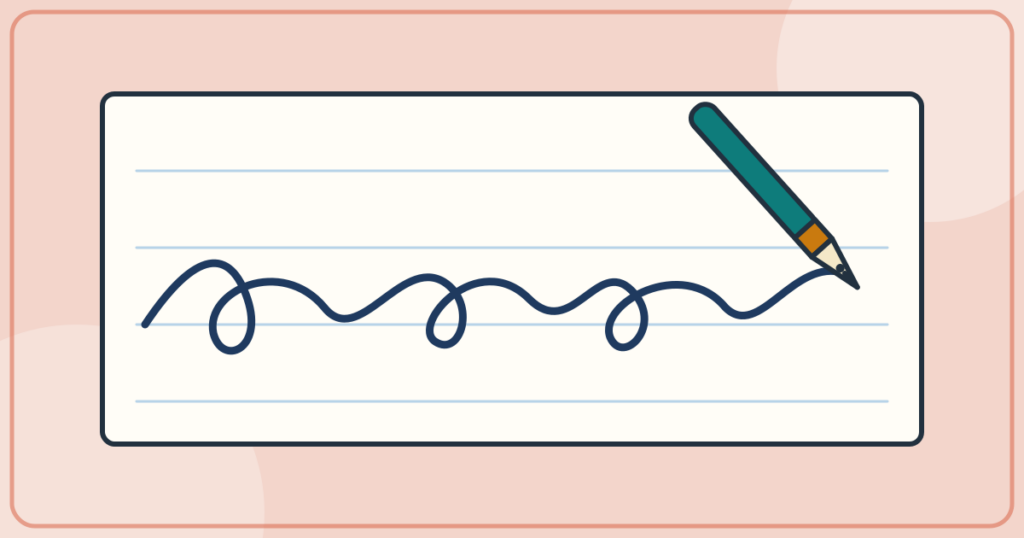
Improve Your Handwriting
Better handwriting takes time and patience. Eight simple habits make the practice easier to start and easier to keep.
Working on your handwriting is slow, tiring and easy to put off. That is why wanting it enough is the first real step. Once you are, these eight habits make the work lighter.
Set yourself up
If you are left-handed, choose pens with fast-drying ink. The ink then does not smear under your hand as it moves across the page.
Next, check your grip. The right grip is simply the one that is most comfortable for your hand. It eases the strain on your joints, lets you write smoothly and keeps your hand from tiring over longer stretches.
Find something worth copying
Look at accounts on social media that share attractive handwriting and try to mimic what you see. If you would like a classic model, learn the basics from an old penmanship manual. One well known nineteenth century book taught the subject in classrooms for years.
Practise with a purpose
Print free handwriting worksheets and work through them. Copying neat letter shapes over and over is dull, but it is how the hand learns.
Then turn practice into something you look forward to. Keep a diary, and treat the writing as a way to relax and ease your mind. Or write a letter to a friend or a member of your family. A real reader gives the effort a reason.
Keep it small
You need no special kit. A comfortable pen, a few printed sheets and a few minutes a day are enough.
Life Lessons
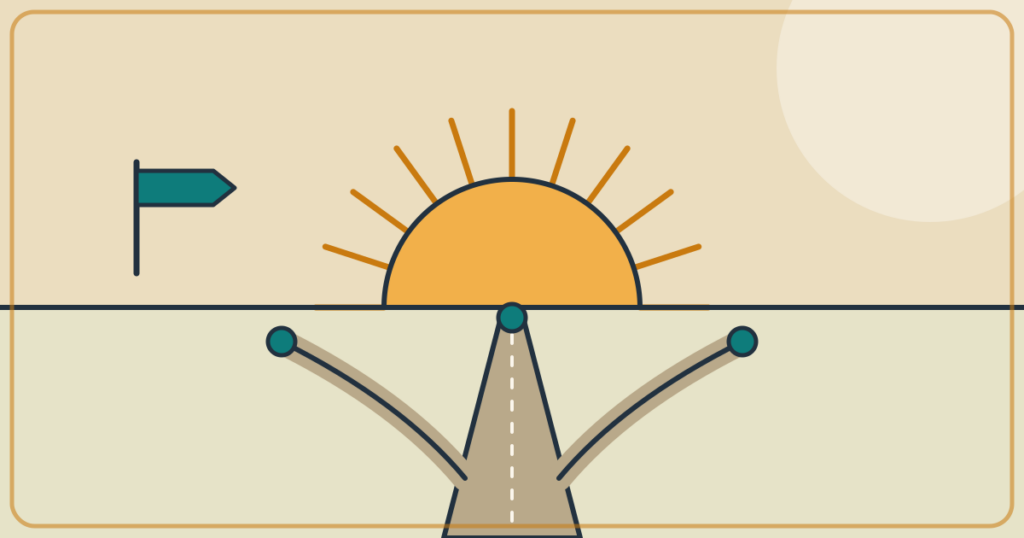
Plan Your Retirement As A Fresh Start
The standard retirement plan rarely fits people who have spent decades building something. Try five small steps and treat it as a new beginning.
For a senior executive, a business owner or an entrepreneur, retirement is less an ending than a hunt for a fresh adventure, a second career or a new passion. This page was written with women in mind, the first generation to join the workplace in such numbers, but every step applies to anyone. The usual retirement plan is a poor answer for people who have spent decades building something. Since we have changed everything else, it makes sense to change retirement too.
Change is never easy, and facing the end of a long career can feel like a mountain. So how do you find out what comes next? These steps get you started.
Start early
A firm starting point lifts much of the worry that comes with beginning something new. Use the time before you leave to allow yourself to try things, look around and test ideas. That freedom is what helps you discover what your new life might look like.
Take inventory
List your professional and personal strengths. Ask what has given you the deepest sense of accomplishment, what you are passionate about, what skills your career has given you, and what comes easily to you that most people find hard. Do not chase the right answer yet. The aim is to build a bank of ideas you can refine later.
Build your story
Use the inventory to shape your own brand story and plan. Write one statement about how you want to deal with the world. Whom do you want to help, and how? How will your strengths, passions and skills meet a real need? When a big idea is on paper, you can sketch a few plans that turn it into action.
Explore the options
Start from one place, or several, and work out how to test each idea. Some people keep several plans alive, others only one. Try things in small ways, for a day or two. One attempt is enough to earn the right to drop an idea. Do not commit to any single path until you have tried all your ideas.
Review and adjust
One round of testing settles nothing. Look back at your experiments and think about what you learned. What was most rewarding? What came easier? What proved harder, or more interesting? Leave room to reflect, run the test again and change course. There is no such thing as failure here, only learning.
The payoff
For many women, freedom is a feeling they have not had for a very long time. If you are wondering what retirement holds, do not be anxious. Be eager. Exploring and experimenting make for a rewarding outcome.
Work & Career
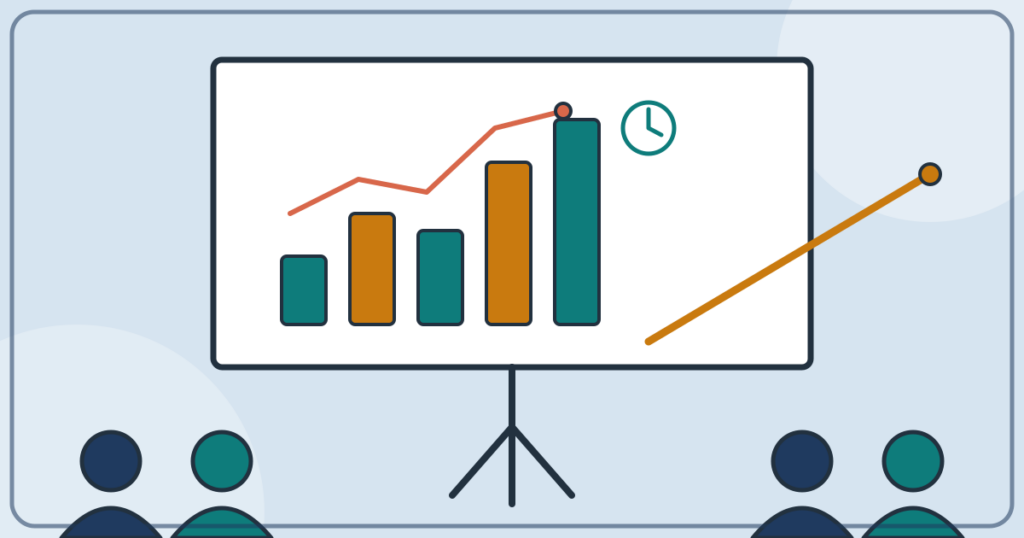
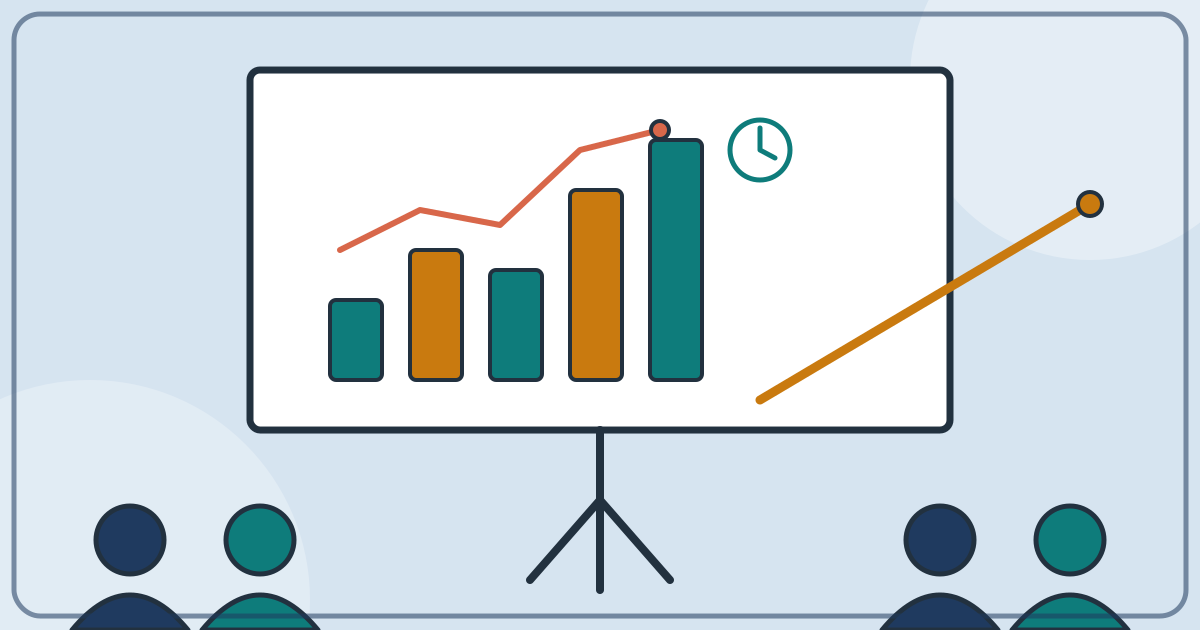
Be An Effective Presenter
Presentations run much of working life. Ten habits separate the ones people remember from the ones they endure.
Working life runs on presentations. Whether one lands or not depends less on the slides than on the person standing in front of them. Effective public speaking matters in business, sales, training and teaching, and in feeling at ease before a group. Here are the habits that help.
Know what the audience wants
Prepare around the needs of the people in the room. The subject and the content must matter to them. A single standard talk cannot serve every audience, so learn who will attend beforehand.
Make eye contact
Eye contact builds confidence and rapport. Keep the room well lit so you can see faces. Do not read from the slides or from cue cards. Look at the audience and smile. That is how they warm to you.
Keep to one purpose
Keep your core objective in mind and build everything around it. Wandering from it confuses people and loses their interest. The whole point is that they take away one message.
Start strong
If you grab attention in the first moments, you keep it until the end. A lively example is a good way in.
Respect time
Fix a duration before you begin. A long talk loses the room. Pick a time when attention is at its best, which is rarely just before or after lunch.
Tell a story
People lean in for stories. Weave one through the subject and the audience will want to know how it ends.
Use your body well
Instead of hiding behind the podium, clip a microphone to your collar and move slowly around the space. It signals confidence and makes your tone more interactive. Avoid negative gestures such as folded arms or hands held behind your back.
Back it up
Real-life examples and facts win interest. Support them with data so the claim feels trustworthy and is easy to remember. It also helps people grasp difficult concepts.
Organise the slides
Arrange them in order before you present. If a slide does not belong, delete it in advance. Skipping slides on stage makes you look unprepared and hurts your image.
Stay calm
You can explain a topic properly only when you are relaxed, so breathe. The audience enjoys the talk only if you do. The speaker Lenny Laskowski once joked that the world holds people with a message and no voice, and people with a voice and no message. Aim to belong to neither group.
Money Matters
Types Of Bonds
A bond is a loan you make to an organisation. Knowing the main kinds makes the risk and reward far easier to read.
A bond is a debt investment. You lend money to an organisation, usually a company or a government, and it borrows the funds for a set period at a fixed or variable rate of interest. Before you buy any, it helps to know which kind you are looking at. Here are the most common types.
Government and public sector bonds
These are issued and backed by the government or by public sector bodies. In plain terms, the state itself approaches investors and offers its bonds at fixed rates. They are the usual choice when you want a medium to long term holding with the lowest worry.
Corporate bonds
Companies issue these, and they are mostly open to the public. Many run for up to fifteen years. Because the borrower is a business, the risk of default is higher. That risk depends on the company’s backing, the volatility of the market, the industry it works in and its investment rating.
Corporate bonds are sorted by five criteria. The issuer may be a company, a bank, a public body or a local authority. The maturity may be short, medium, long or perpetual. The coupon may be zero, fixed or floating. The option may be a put or a call. And the redemption may be single or multiple.
Bonds from banks and financial institutions
These form a lively and large part of the bond market. They are well regulated and tend to carry good ratings, which is why so many investors like them.
Zero-coupon bonds
A zero-coupon bond pays no interest along the way. It is sold at a discount to its face value, and at maturity you receive the full face value. Your profit is the gap between the two. Nothing arrives in between.
Junk bonds
The name gives the game away. Companies without a stable financial position issue these, and they rank below investment grade. The risk is high, so the promised return is high as well.
Tax-saving bonds
Some governments issue bonds that come with a tax benefit on the interest, often with a lock-in period and interest paid at regular intervals. Rules and rates change, so check the current terms with a qualified adviser before you buy.
Reading them well
Ask three things of any bond. Who is borrowing? For how long? And how will you be paid? Answer those, and most of the jargon falls away.
Work & Career
What The Interview Tells You About Them
Two assessments run during an interview and only one of them is ever taught. The other is handed to you free, and most candidates are too nervous to collect it.
Every piece of interview advice points the same way. Prepare, dress well, sit straight, do not bluff. All of it is sound and all of it serves one question: how do you look to them.
Meanwhile a second assessment is running, and the material for it is being handed over free. For half an hour an organisation is behaving in front of you, under a little pressure, with no particular reason to perform beyond the ordinary. That is the only sample you get before committing years of your life to the place. Most candidates are too anxious to collect it.
Watch the moment after something goes wrong
Something usually does. A question lands badly. Somebody arrives late. A name is mispronounced. An answer comes out tangled and both sides hear it happen.
The moment after is worth more than everything said before it. A decent room steadies. Take your time. Let me put that differently. A poor room lets the silence stretch and watches you sit inside it. That is not a passing mood. That is how the place conducts itself when a person is struggling, and one day the person will be you, three months in, with something late.
Watch what happens when you do not know
Say plainly that you do not know something. You should be saying it anyway, since the alternative is worse. But notice the reply.
Some interviewers move straight on without a flicker, which tells you the place can live with the limits of the people inside it. Others hold the pause a beat too long, or exchange a look. A workplace where not knowing carries a small punishment is a workplace where nobody says early that a project is in trouble. You will discover that eventually. You can discover it now, at no cost.
Watch whether the questions have a purpose
Some questions are strange for a good reason. They are testing how you think when the ground is unfamiliar, and that is legitimate work.
Others are strange because nobody designed them. A question with no connection to the job, put with a straight face by somebody who has no idea what a good answer would sound like, is a small sign that hiring here is improvised. Hiring tends to be the most carefully designed process an organisation owns, because it is the one that gets examined from outside. If this is the improvised version, consider what the undesigned processes look like.
Watch whether the brief contradicts itself
Now and then a candidate is asked for something impossible. Be yourself, but not like that. Sound natural, but exactly like this. Name a figure, but do not be the first to name one.
Anybody can misspeak. The signal is what follows. If somebody in the room notices and untangles it, the place is able to correct itself in public. If the contradiction simply sits there and you are expected to resolve it silently and alone, you have learned how instructions arrive in that building, and you will be receiving them for as long as you stay.
Watch how the no is delivered
You may well not get the job. Most of the time you will not, and there is nothing remarkable about that.
How you are told is remarkable, and it is diagnostic. A short message inside a reasonable time costs almost nothing and is the floor, not the ceiling. Silence is a choice somebody made. So is leaving a candidate to work out the answer from the way they are walked to the door. An organisation that cannot bring itself to deliver an easy piece of bad news to a stranger has no practice at delivering a hard one to an employee.
Separate awkward from unkind
This is the part that keeps the whole exercise honest, so do not skip it. Most interviewers were never trained. Many are engineers or managers pulled out of their own work an hour earlier, more nervous than you assume and worse at this than they would like to be. Awkwardness is ordinary and it means almost nothing.
Unkindness is a different thing, and it is rarer than it feels from a chair where you are the one being judged. The line between them is whether the discomfort was aimed. A fumbled question is awkward. A question built so that every possible answer looks foolish is aimed. Grade the aimed ones and let the rest go.
Write it down the same evening
Here is the practical part, and it is the only instruction in this piece. Hope rewrites memory. Once an offer is sitting in front of you, everything you noticed goes soft, because by then you need it to have been fine.
So put down two or three lines the same evening, before you know the outcome, while you are still a stranger to the place. What did they do when something went wrong. What did they do when I did not know. If the offer arrives, read the note before answering. It was written by the only version of you who had nothing invested.
What holds up
The form will keep changing. Interviews have already moved from rooms to screens, and by the middle of the 2020s parts of the first round were being handled by software rather than people. Ten years from now the whole shape of it may be unrecognisable.
The question underneath survives all of that, because it was never really about interviews. It is about the only thing anybody can learn about a group of people in advance: how they behave when something goes slightly wrong, and whether their decency requires an audience.
Mind & Habits
Four Tells That A Fact Is Not One
Lists of surprising facts arrive every day and almost none of them are ever checked. Four signs that separate a finding from a decoration.
Somebody sends you a list. Nine surprising facts about the human body. Five clever ways to handle difficult people. You read it in under a minute, one or two items lodge, and you pass it along. Almost nobody checks anything. That is not carelessness. These lists are built so that checking never occurs to you, and they are good at it.
The useful skill is not knowing which claims are true, because nobody has time for that. It is recognising the shape of a claim that has not earned belief yet. Four signs do most of the work.
One: the number with no parent
Take the claim that being funny makes you eighty-eight percent more attractive. The figure is doing all of the persuading, and it persuades because precision feels like measurement. Somebody must have counted something to land on eighty-eight rather than ninety.
Ask where it came from and there is nothing there. No study, no sample, no year. A real finding travels with its parents: who ran it, on how many people, and what they were careful to say it does not prove. Remove those and the number stops being evidence and becomes decoration cut into the shape of evidence. When a figure arrives orphaned, treat it as worth exactly what it would be worth with no figure attached at all.
Two: the answer that is too tidy
Consider the old line that you get your height from your father and your weight from your mother. It is neat, it is easy to carry, and it is wrong. Height comes from both parents, through many genes working together, and from what you ate while you were still growing. Weight has some inherited component too, and it does not arrive from one parent either; much of it is food, habit and circumstance.
Notice that the tidiness is the reason the claim survives. Real bodies, real markets and real people are messy, so honest descriptions of them come out correspondingly untidy: mostly, it varies, several things at once. A claim that sorts the world into two clean halves has usually been tidied by somebody, and what got swept out during the tidying was the truth.
Three: the item in the list that is not a fact
Read one of these lists to the end and you will often find a line that is not a fact at all. Follow for more. Subscribe. Link below. It sits among the facts wearing the same clothes as the facts.
That line tells you what the list is for. The items were not gathered because they were true. They were gathered because they travel well, and the request is the reason anybody bothered gathering. This does not make every item false. It does tell you that nobody along the chain had any reason to verify one, and that is enough to change how you hold it.
Four: nothing explains why it would work
This is the strongest of the four and the cheapest to run. Put one question to any claim: how would that happen?
Some claims answer at once. Fast music lifting your pulse has an obvious route, since a body tends to fall in with a rhythm it can hear. Others go quiet. Shaking your head to get your energy back offers no route at all, and the silence is the information. A claim with a mechanism can be argued with, tested, narrowed and improved. A claim with no mechanism can only be repeated.
Suspending judgement is not the same as ruling something false. Plenty of true things sat unexplained for years before anybody explained them. It means holding the claim loosely rather than passing it on as settled.
Why bother, when most of it is harmless
It is harmless, mostly. Nobody is injured by believing that gum sharpens the mind or that a pillow is the reason a back aches. That is precisely why the habit forms without meeting any resistance.
The cost is not in any single claim. It is that a mind which has waved through nine easy ones has no practice at stopping the tenth, and the tenth will be about money, or a medicine, or somebody’s character, and it will arrive dressed exactly like the other nine. Run the four tells on the trivia, where being wrong costs nothing, and they will be available when something is actually at stake.
What will not change
The claims circulating ten years from now will be different claims, and they will arrive by some route that does not exist yet. That does not matter. None of these four tests asks what a claim is about. They ask what shape it is: whether the number has a parent, whether the answer is suspiciously neat, whether something is being sold alongside it, and whether anybody can say how it would work. Shapes outlast subjects.
Life Lessons
Inspiration Is Fetched, Not Struck
We talk about inspiration as weather, something that arrives or fails to. Look at where it actually comes from and every source on the list is one you can go to deliberately.
There are a great many things that can supply it. Watching somebody accomplish something considerable. Watching somebody come through adversity. A line from somebody who has thought harder about it than you have. The plain fact of being alive on a particular morning, which is easier to notice on some mornings than others.
The word makes it sound like weather. Look at the actual sources and something else becomes obvious: every one of them is a place you could go on purpose.
Possibility
Possibility means something achievable, or at least likely enough to attempt. And confirming that a thing is possible is itself the fuel, because it converts a vague wish into a task with a precedent.
Which tells you what to do when stuck. Do not look for encouragement. Look for a case. One person who has done the specific thing you are attempting is worth more than a month of general enthusiasm.
Somebody else managing it
Ask yourself plainly what inspires you, and think about the goals you actually hold. If you want to do well at something, read the accounts of people who did it.
The useful part is rarely the triumph at the end. It is the ordinary detail of how long it took and what it cost, which is the part that makes a difficult project look normal rather than exceptional. Read enough of them and you keep meeting the same figure: somebody with nothing at all at thirty-five or forty-five, who spent the next decade or two turning it round and ended up where they had meant to be. The lesson is not that it is never too late, which is a slogan. It is that the timescale you are silently assuming is probably too short.
Books
The power of literature needs no defending. When you want a thought of that kind, go to a writer you already trust. There may be a poem holding exactly what you would like to become, or a novel that assembles what you want without ever naming it.
And one piece of practical advice from the same source, better than it first appears. Write the lines out by hand and go back to them often. They turn into the thing you say to yourself when the work is hard, and a sentence read two hundred times arrives on its own, while one you have to go and look up does not arrive at all.
Experience, and the plain fact of the day
A life is made of memories and experiences, and the thought of collecting more of them keeps people going. We all want to experience things, large and small, and to reach the ones we have named.
The last source is the one that sounds like a platitude and is the only one always available. Being alive and reasonably well is itself the ground everything else stands on, and it is noticeable chiefly by its absence. Respect the life you have, and it will generally supply a reason to get on with the day.
Relationships
The Compliment You Did Not Say Out Loud
Most of us have a stock of kind things we never got round to saying, and a much shorter route for the unkind ones. The imbalance is a habit rather than a character.
Actions speak louder than words, and the saying is fair, because doing the thing takes courage and effort while saying it takes a moment. But words are not therefore weightless. They make and break relationships, and how a person expresses themselves can accelerate a career or quietly end one.
The poet Maya Angelou made the point that what lodges in somebody is not the deed or the sentence but the feeling they were left holding. And the feeling somebody is left holding is assembled largely out of the words used near them and the manner of their saying.
The imbalance
Everything moves quickly, thoughts and words included, and there is a gap between the two that shows up in one direction only.
The small compliment, the greeting with some warmth in it, is thought and then not said, because there was a rush on. Meanwhile the piece of criticism finds its way out easily, particularly on a day when we are having a bad one or are hurting about something unrelated.
So the unkind words clear the gap and the kind ones do not, and neither is a decision. That is the part worth noticing, because a habit can be altered and a character cannot be argued with.
The things we assume are known
How often do we stop and tell somebody what we appreciate about them? Usually not, on the reasoning that they must already know.
They generally do not. And even where they do, being told is a different event from knowing, in the same way that being paid is different from being owed.
Words carry more weight than we credit. The same sentence can be the thing that gives somebody the strength to keep going, or the careless one at the wrong moment that persuades them to stop.
Four that cost nothing
When something good happens, tell somebody. We are quick to pass on a bad experience and slow with the other kind, and the asymmetry is entirely habit.
Send a message to somebody you have lost touch with in the ordinary rush. Say you were thinking about them and what they mean to you.
Give somebody a compliment, and find a particular way to thank the people who do things that make your life easier, because those are precisely the people taken for granted.
And acknowledge ability and effort out loud where you see them. Somebody who has decided they are not good enough can be talked part of the way back. Be the person in whose company other people feel they are getting somewhere.
The one qualification
This only works while it is true. Praise handed out indiscriminately stops carrying information, and people can tell. Say the specific thing you actually noticed, and say nothing on the days you noticed nothing.
Tips & Tricks
Meditation Without The Cushion
The common reason people abandon this is the belief that it has to be done properly. The version that survives a working week asks for none of that.
More people take up mindfulness and meditation every year, and a good many abandon it inside a fortnight. The reason is rarely the practice. It is the belief that there is a correct way to do it, a posture, a length, a time of day, and that anything short of the correct way does not count.
The useful correction is that meditation need not have a formalised method at all.
Where it can happen
One person finds it while scrubbing each utensil in turn. Another finds it lying in bed. Another simply notices how the body feels, without doing anything about it.
What those have in common is not calm. It is attention resting on one ordinary thing for a stretch, without commentary. That is the whole of the mechanism, and it is available in a kitchen at half past nine at night.
The obstacle is not the schedule
The neuroscientist Richard Davidson, whose research on meditation is among the most cited in the field, has made a point that gets less attention than it deserves. The difficulty in a crowded life is not finding a free half hour. It is separating from the gadgets, which will fill any half hour that becomes free.
That reframes the problem usefully. Somebody who says they have no time for this usually has the time and has already given it to something else, without deciding to.
And the return is practical rather than mystical. People who keep it up report managing things better in spite of being busy, which is a modest claim and the right size of one.
What to be careful of
The genre around this makes large promises. One writer quoted on the subject said it provides a calm that no pharmaceutical company could duplicate, which is a good line and is not a finding. The evidence supports something quieter: modest, real effects on stress and attention for people who practise regularly, and not a replacement for treatment where treatment is needed.
Take the modest version. It is the one that survives a bad week, and the grand version is what people give up when the bad week comes.
The smallest possible start
Choose something you already do daily with your hands. Do it once, at its own speed, with your attention on it and nothing else running. That is a session. Nobody has to be told about it and it does not need a cushion.