Tag: Parents

Health & Body

The Fight Against Antibiotic Resistance

The Fight Against Antibiotic Resistance

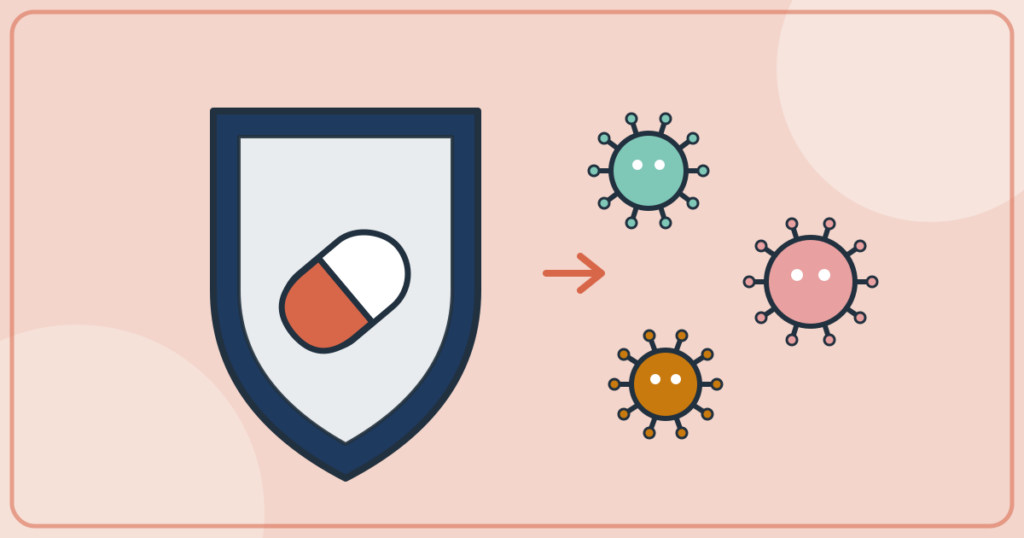
Antibiotics have saved countless lives, and bacteria are learning to survive them. Why it matters, and what researchers tried.

The Fight Against Antibiotic Resistance

When penicillin was discovered in 1928, it became one of the first antibiotics to defeat infectious disease. Ever since, antibiotics have been essential for preventing deaths that could have been avoided.

The troubling turn

All through the history of life, organisms have changed and adapted. Single celled bacteria do it faster than most, so fast that a majority are now resistant to a wide range of antibiotics. The United Nations rates the problem as a crisis, in the same class as the HIV epidemic.

What scientists tried

Researchers have taken up the challenge. One group at a university in the United States reported a possible weapon against resistant bacteria, published in the Journal of Antimicrobial Chemotherapy. Their answer lay in a specially built molecule, a peptide conjugated phosphorodiamidate morpholino oligomer, or PPMO for short. They believe it can block an enzyme that some bacteria make, one that carries the code for resistance along with several other genes.

The test

In the study the team paired the molecule with meropenem, an ultra broad spectrum antibiotic of the carbapenem family. Together they worked in mice infected with E. coli that carried the resistance enzyme. Testing on people was expected to begin in about three years, so treat the report as an early step and not a finished cure.

What you can do

Resistance grows every time an antibiotic is used where it was not needed. Take one only when a doctor prescribes it, and finish the course as directed.

Tips & Tricks

Talk To Difficult People Without Losing Your Calm

Talk To Difficult People Without Losing Your Calm

Some people cannot be reasoned with, yet you still have to talk to them. Five skills help you keep your dignity and your temper.

Talk To Difficult People Without Losing Your Calm

Most of us have tried to reason with someone who simply will not be reasoned with. It is frustrating, maddening and sometimes a little frightening. The five skills below help you stay steady, so that you walk away from the conversation with your dignity intact.

Remember that it is about them

When someone lectures you, hands out advice you never asked for, or blames and attacks, they are often describing themselves. Before you react, imagine the same words aimed at the speaker. Do they fit better there? You can even turn the question around and ask whether the person has lived through what they describe, or felt the way they say you should feel.

Ask to be heard without being advised

Sometimes you do want to share something, just not to receive a fix. Say so at the start. Tell the person you would like to tell a story or describe an experience, and that you are not looking for advice. Ask whether they can simply listen while you unload a little. That one sentence heads off a good deal of irritation.

Listen like you mean it

Work out what the person is saying and what they seem to feel underneath the words. Then say it back to them, so they know you understood. Acknowledging what someone has said removes much of the friction from a conversation. You do not have to agree. You only have to grasp where the other person stands.

Give them some room

Perhaps a colleague wants to talk through personal troubles yet again, and you have neither the time nor the energy, with your own work waiting. Answer kindly. Say that you would like to hear more, but that you must get back to your task.

Speak your own truth

Do not be afraid of your feelings, or of saying what is true for you as it arises. Many people get emotionally hijacked because they dread feeling something uncomfortable. They want to get along, so they bottle it up, and the pressure comes out later in a worse form.

Mind & Habits

The Blessing Of Higher Emotional Intelligence

The Blessing Of Higher Emotional Intelligence

Emotional intelligence is hard to measure but easy to recognise. Seven things people with a high level do differently.

The Blessing Of Higher Emotional Intelligence

Emotional intelligence, often shortened to EI, is the ability to understand and handle your own feelings and those of the people around you. It affects how we manage our behaviour, get through social situations and make personal decisions. People with a higher level of it read the world and its people well, and they adjust their emotions to the place and the moment. Here are seven things they tend to do differently.

They are driven

They see the problems in the world and in people, yet they do not lose heart. They look for new ways around the obstacles and want to improve things for everyone.

They are self aware

They know their strengths and their weak points, and how to work on the weak ones. They are comfortable being who they are and feel secure in it.

They are empathetic

They listen to other people’s troubles and feel real compassion, placing themselves in the other person’s position. They feel the pain without letting it swallow them, and they look for a solution. They do not stay in the dark place of negative feelings.

They are curious

Everything interests them. They keep learning, enjoy new experiences and try several ways of solving one problem to see where each leads. They share what they learn, because knowledge grows when it is passed on.

They handle change well

Most people fear change. They believe it brings something good, that a few things may go wrong for the greater good, and that they will get through whatever comes.

They strike a balance

They are neither all work nor all play. They know what must be done on time and what can wait, and they give themselves breaks. They keep a routine and stick to it.

They do not chase perfection

They know perfection is a myth. They do what feels right at the moment, taking their strengths and weak points into account, and get on with it.

Life Lessons

Choose The Right Role Model

Choose The Right Role Model

A good role model gives direction when you feel lost. Here is how to pick one, and why patience matters most.

Choose The Right Role Model

A role model is someone in your field or in your life whom you look up to for guidance or inspiration. You may never speak to them, yet they show you which way to go.

Why they matter

Role models count most for young people. When you face pressure from friends, money problems, an unsupportive home or a hard decision, a role model can offer input and advice where nobody else does. Someone struggling with an illness or a disability can gain a great deal from a person who has come through the same difficulties and can show how to cope.

Who can serve

Almost anyone can play the part. An older sibling, a relative, a teacher, a neighbour, a world leader or your own manager may be the person whose example shapes you most. Ask yourself whom you admire and why. The people you admire now are probably giving you your most useful lessons. Leaders at work matter here too, because a team with positive supervisors as role models gains from it, and so does the whole organisation.

What a good one does

Whatever their line of work, good role models share one trait: their example encourages those who follow to go further. They keep you motivated and lift your confidence.

How to pick

Start with four questions. What are your values, and what type of person do you want to be? What qualities do you need to live by those values? Who, near or far, shows those qualities consistently? What can you learn from how they live and what they have achieved? You can have separate role models for separate areas, such as business, social life and fitness. Write down your goals, find people who have reached what you want, and study them. That study becomes a map.

Keep your perspective

Most of us want success yesterday, and impatience pushes us to slack off or give up. Count the years your role model needed to get where they stand. That count shows how slow real progress is, and how much dedication it asks for.

Health & Body

Dog Owners Live Longer

Dog Owners Live Longer

A large study reports that people who share their home with a dog tend to live longer and face less heart disease. The reasons are ordinary and worth copying.

Dog Owners Live Longer

Anyone who has come home to a wagging tail already suspects that dogs are good for us. A study reported in a scientific journal now gives that hunch some numbers.

What the study found

Researchers looked at records for more than thirty lakh people between forty and eighty years of age. Those who kept a dog were about a third less likely to die during the follow-up period than people living alone without one. Their risk of heart and blood vessel disease was also lower, by roughly eleven percent. In plain terms, a household dog was linked to a healthier and longer life and to a smaller chance of a heart attack.

Why a dog might help

The first reason is movement. A dog has to be exercised, and that means the owner walks, in all weather, most days of the year. Regular walking is one of the best things a person can do for the heart, and here it arrives without any willpower, because the dog insists.

The second reason is company. Dogs are cheerful, and their owners meet more people on those walks. A wider circle of familiar faces adds to happiness, and happiness in turn is good for health.

The bond itself

Dogs are known for loyalty, and the old phrase about a dog being a person’s best friend has lasted for a reason. Their affection asks for nothing in return. Cat lovers may argue the point, but the study is about dogs, and it suggests that this steady, uncomplicated companionship is good for the body as well as the mood.

A fair note

A study of this kind shows a link, not a guarantee. A dog is also a long commitment of time and money, so it suits those ready to walk, feed and care for it for many years.

Mind & Habits

Build A Photographic Memory

Build A Photographic Memory

A sharper memory is a set of small habits, not a gift. Eight practical ways to train it, and one note on when a poor memory needs a doctor.

Build A Photographic Memory

The more moments you can recall, the fuller your life has been. Being able to bring back a great day in detail, or a fact you need at work, is worth a lot. The encouraging part is that this skill can be built. These habits show how.

Believe in your own memory

Most people decide early that their memory is poor. That belief does harm before any training starts. Approach the effort with a positive mind and treat it as a skill that improves with use.

Attach numbers to meaning

Numbers slip away faster than almost anything else, which is why birthdays and important dates get forgotten. Tie each number to something that matters to you and it gains a hook. A number that stands for a moment in your own life is far easier to keep.

Cut the distractions

Often the trouble is not forgetting but never taking the information in. A mind pulled in three directions stores nothing well. Give one task your full attention, then move to the next. Doing things singly feels slower, yet it saves time later because less needs to be relearned.

Picture it

To remember a situation or an object, build a vivid image of it in your head. The picture gives the fact something to cling to.

Group what you must carry

If you need to buy six things, sort them into three small groups instead of holding one long list. Short clusters are easier to hold than a single string.

Play games that train recall

The simplest is a tray of ten different objects. Look at it for thirty seconds, cover it, then write down everything you saw. Repeat it with a friend setting the tray. Puzzles such as Sudoku, crosswords and the Rubik’s cube add to this, and they also build concentration.

Move and calm down

Stress wears memory down, so reducing it helps. Regular exercise, yoga and meditation all lower stress and leave more room for recall.

When forgetfulness is a warning

Trouble with memory and focus can also accompany a low mood or anxiety. Time outdoors, gentle practices such as yoga or tai chi, and company from friends and family can lighten the load. If the low mood does not lift, speak to a doctor rather than trying to solve it alone.

Do It Yourself

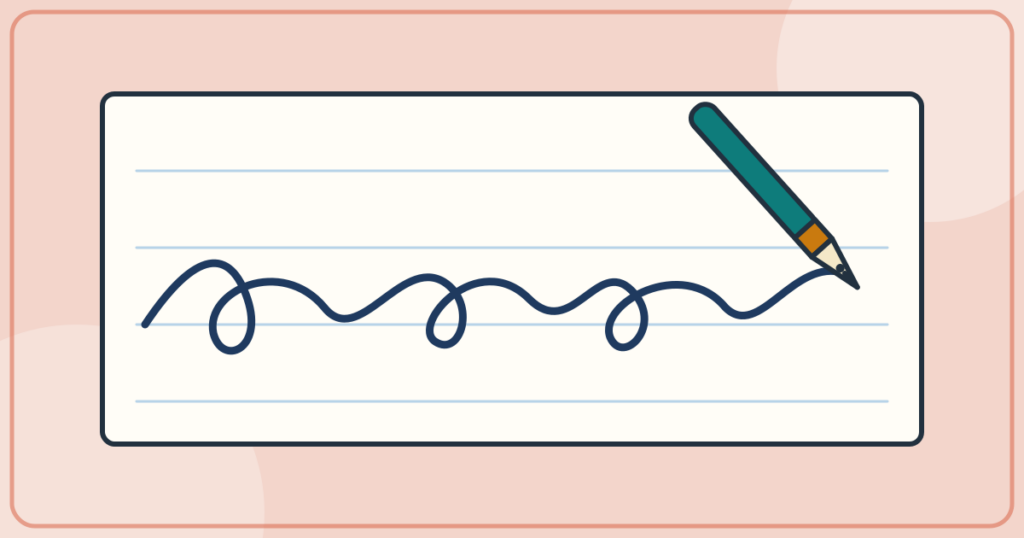
Improve Your Handwriting

Improve Your Handwriting

Better handwriting takes time and patience. Eight simple habits make the practice easier to start and easier to keep.

Improve Your Handwriting

Working on your handwriting is slow, tiring and easy to put off. That is why wanting it enough is the first real step. Once you are, these eight habits make the work lighter.

Set yourself up

If you are left-handed, choose pens with fast-drying ink. The ink then does not smear under your hand as it moves across the page.

Next, check your grip. The right grip is simply the one that is most comfortable for your hand. It eases the strain on your joints, lets you write smoothly and keeps your hand from tiring over longer stretches.

Find something worth copying

Look at accounts on social media that share attractive handwriting and try to mimic what you see. If you would like a classic model, learn the basics from an old penmanship manual. One well known nineteenth century book taught the subject in classrooms for years.

Practise with a purpose

Print free handwriting worksheets and work through them. Copying neat letter shapes over and over is dull, but it is how the hand learns.

Then turn practice into something you look forward to. Keep a diary, and treat the writing as a way to relax and ease your mind. Or write a letter to a friend or a member of your family. A real reader gives the effort a reason.

Keep it small

You need no special kit. A comfortable pen, a few printed sheets and a few minutes a day are enough.

Mind & Habits

Four Tells That A Fact Is Not One

Four Tells That A Fact Is Not One

Lists of surprising facts arrive every day and almost none of them are ever checked. Four signs that separate a finding from a decoration.

Four Tells That A Fact Is Not One

Somebody sends you a list. Nine surprising facts about the human body. Five clever ways to handle difficult people. You read it in under a minute, one or two items lodge, and you pass it along. Almost nobody checks anything. That is not carelessness. These lists are built so that checking never occurs to you, and they are good at it.

The useful skill is not knowing which claims are true, because nobody has time for that. It is recognising the shape of a claim that has not earned belief yet. Four signs do most of the work.

One: the number with no parent

Take the claim that being funny makes you eighty-eight percent more attractive. The figure is doing all of the persuading, and it persuades because precision feels like measurement. Somebody must have counted something to land on eighty-eight rather than ninety.

Ask where it came from and there is nothing there. No study, no sample, no year. A real finding travels with its parents: who ran it, on how many people, and what they were careful to say it does not prove. Remove those and the number stops being evidence and becomes decoration cut into the shape of evidence. When a figure arrives orphaned, treat it as worth exactly what it would be worth with no figure attached at all.

Two: the answer that is too tidy

Consider the old line that you get your height from your father and your weight from your mother. It is neat, it is easy to carry, and it is wrong. Height comes from both parents, through many genes working together, and from what you ate while you were still growing. Weight has some inherited component too, and it does not arrive from one parent either; much of it is food, habit and circumstance.

Notice that the tidiness is the reason the claim survives. Real bodies, real markets and real people are messy, so honest descriptions of them come out correspondingly untidy: mostly, it varies, several things at once. A claim that sorts the world into two clean halves has usually been tidied by somebody, and what got swept out during the tidying was the truth.

Three: the item in the list that is not a fact

Read one of these lists to the end and you will often find a line that is not a fact at all. Follow for more. Subscribe. Link below. It sits among the facts wearing the same clothes as the facts.

That line tells you what the list is for. The items were not gathered because they were true. They were gathered because they travel well, and the request is the reason anybody bothered gathering. This does not make every item false. It does tell you that nobody along the chain had any reason to verify one, and that is enough to change how you hold it.

Four: nothing explains why it would work

This is the strongest of the four and the cheapest to run. Put one question to any claim: how would that happen?

Some claims answer at once. Fast music lifting your pulse has an obvious route, since a body tends to fall in with a rhythm it can hear. Others go quiet. Shaking your head to get your energy back offers no route at all, and the silence is the information. A claim with a mechanism can be argued with, tested, narrowed and improved. A claim with no mechanism can only be repeated.

Suspending judgement is not the same as ruling something false. Plenty of true things sat unexplained for years before anybody explained them. It means holding the claim loosely rather than passing it on as settled.

Why bother, when most of it is harmless

It is harmless, mostly. Nobody is injured by believing that gum sharpens the mind or that a pillow is the reason a back aches. That is precisely why the habit forms without meeting any resistance.

The cost is not in any single claim. It is that a mind which has waved through nine easy ones has no practice at stopping the tenth, and the tenth will be about money, or a medicine, or somebody’s character, and it will arrive dressed exactly like the other nine. Run the four tells on the trivia, where being wrong costs nothing, and they will be available when something is actually at stake.

What will not change

The claims circulating ten years from now will be different claims, and they will arrive by some route that does not exist yet. That does not matter. None of these four tests asks what a claim is about. They ask what shape it is: whether the number has a parent, whether the answer is suspiciously neat, whether something is being sold alongside it, and whether anybody can say how it would work. Shapes outlast subjects.

Relationships

The Compliment You Did Not Say Out Loud

The Compliment You Did Not Say Out Loud

Most of us have a stock of kind things we never got round to saying, and a much shorter route for the unkind ones. The imbalance is a habit rather than a character.

The Compliment You Did Not Say Out Loud

Actions speak louder than words, and the saying is fair, because doing the thing takes courage and effort while saying it takes a moment. But words are not therefore weightless. They make and break relationships, and how a person expresses themselves can accelerate a career or quietly end one.

The poet Maya Angelou made the point that what lodges in somebody is not the deed or the sentence but the feeling they were left holding. And the feeling somebody is left holding is assembled largely out of the words used near them and the manner of their saying.

The imbalance

Everything moves quickly, thoughts and words included, and there is a gap between the two that shows up in one direction only.

The small compliment, the greeting with some warmth in it, is thought and then not said, because there was a rush on. Meanwhile the piece of criticism finds its way out easily, particularly on a day when we are having a bad one or are hurting about something unrelated.

So the unkind words clear the gap and the kind ones do not, and neither is a decision. That is the part worth noticing, because a habit can be altered and a character cannot be argued with.

The things we assume are known

How often do we stop and tell somebody what we appreciate about them? Usually not, on the reasoning that they must already know.

They generally do not. And even where they do, being told is a different event from knowing, in the same way that being paid is different from being owed.

Words carry more weight than we credit. The same sentence can be the thing that gives somebody the strength to keep going, or the careless one at the wrong moment that persuades them to stop.

Four that cost nothing

When something good happens, tell somebody. We are quick to pass on a bad experience and slow with the other kind, and the asymmetry is entirely habit.

Send a message to somebody you have lost touch with in the ordinary rush. Say you were thinking about them and what they mean to you.

Give somebody a compliment, and find a particular way to thank the people who do things that make your life easier, because those are precisely the people taken for granted.

And acknowledge ability and effort out loud where you see them. Somebody who has decided they are not good enough can be talked part of the way back. Be the person in whose company other people feel they are getting somewhere.

The one qualification

This only works while it is true. Praise handed out indiscriminately stops carrying information, and people can tell. Say the specific thing you actually noticed, and say nothing on the days you noticed nothing.

Tips & Tricks

Meditation Without The Cushion

Meditation Without The Cushion

The common reason people abandon this is the belief that it has to be done properly. The version that survives a working week asks for none of that.

Meditation Without The Cushion

More people take up mindfulness and meditation every year, and a good many abandon it inside a fortnight. The reason is rarely the practice. It is the belief that there is a correct way to do it, a posture, a length, a time of day, and that anything short of the correct way does not count.

The useful correction is that meditation need not have a formalised method at all.

Where it can happen

One person finds it while scrubbing each utensil in turn. Another finds it lying in bed. Another simply notices how the body feels, without doing anything about it.

What those have in common is not calm. It is attention resting on one ordinary thing for a stretch, without commentary. That is the whole of the mechanism, and it is available in a kitchen at half past nine at night.

The obstacle is not the schedule

The neuroscientist Richard Davidson, whose research on meditation is among the most cited in the field, has made a point that gets less attention than it deserves. The difficulty in a crowded life is not finding a free half hour. It is separating from the gadgets, which will fill any half hour that becomes free.

That reframes the problem usefully. Somebody who says they have no time for this usually has the time and has already given it to something else, without deciding to.

And the return is practical rather than mystical. People who keep it up report managing things better in spite of being busy, which is a modest claim and the right size of one.

What to be careful of

The genre around this makes large promises. One writer quoted on the subject said it provides a calm that no pharmaceutical company could duplicate, which is a good line and is not a finding. The evidence supports something quieter: modest, real effects on stress and attention for people who practise regularly, and not a replacement for treatment where treatment is needed.

Take the modest version. It is the one that survives a bad week, and the grand version is what people give up when the bad week comes.

The smallest possible start

Choose something you already do daily with your hands. Do it once, at its own speed, with your attention on it and nothing else running. That is a session. Nobody has to be told about it and it does not need a cushion.