Tag: Parents

Relationships

The Compliment You Did Not Say Out Loud

The Compliment You Did Not Say Out Loud

Most of us have a stock of kind things we never got round to saying, and a much shorter route for the unkind ones. The imbalance is a habit rather than a character.

The Compliment You Did Not Say Out Loud

Actions speak louder than words, and the saying is fair, because doing the thing takes courage and effort while saying it takes a moment. But words are not therefore weightless. They make and break relationships, and how a person expresses themselves can accelerate a career or quietly end one.

The poet Maya Angelou made the point that what lodges in somebody is not the deed or the sentence but the feeling they were left holding. And the feeling somebody is left holding is assembled largely out of the words used near them and the manner of their saying.

The imbalance

Everything moves quickly, thoughts and words included, and there is a gap between the two that shows up in one direction only.

The small compliment, the greeting with some warmth in it, is thought and then not said, because there was a rush on. Meanwhile the piece of criticism finds its way out easily, particularly on a day when we are having a bad one or are hurting about something unrelated.

So the unkind words clear the gap and the kind ones do not, and neither is a decision. That is the part worth noticing, because a habit can be altered and a character cannot be argued with.

The things we assume are known

How often do we stop and tell somebody what we appreciate about them? Usually not, on the reasoning that they must already know.

They generally do not. And even where they do, being told is a different event from knowing, in the same way that being paid is different from being owed.

Words carry more weight than we credit. The same sentence can be the thing that gives somebody the strength to keep going, or the careless one at the wrong moment that persuades them to stop.

Four that cost nothing

When something good happens, tell somebody. We are quick to pass on a bad experience and slow with the other kind, and the asymmetry is entirely habit.

Send a message to somebody you have lost touch with in the ordinary rush. Say you were thinking about them and what they mean to you.

Give somebody a compliment, and find a particular way to thank the people who do things that make your life easier, because those are precisely the people taken for granted.

And acknowledge ability and effort out loud where you see them. Somebody who has decided they are not good enough can be talked part of the way back. Be the person in whose company other people feel they are getting somewhere.

The one qualification

This only works while it is true. Praise handed out indiscriminately stops carrying information, and people can tell. Say the specific thing you actually noticed, and say nothing on the days you noticed nothing.
Tips & Tricks

Meditation Without The Cushion

Meditation Without The Cushion

The common reason people abandon this is the belief that it has to be done properly. The version that survives a working week asks for none of that.

Meditation Without The Cushion

More people take up mindfulness and meditation every year, and a good many abandon it inside a fortnight. The reason is rarely the practice. It is the belief that there is a correct way to do it, a posture, a length, a time of day, and that anything short of the correct way does not count.

The useful correction is that meditation need not have a formalised method at all.

Where it can happen

One person finds it while scrubbing each utensil in turn. Another finds it lying in bed. Another simply notices how the body feels, without doing anything about it.

What those have in common is not calm. It is attention resting on one ordinary thing for a stretch, without commentary. That is the whole of the mechanism, and it is available in a kitchen at half past nine at night.

The obstacle is not the schedule

The neuroscientist Richard Davidson, whose research on meditation is among the most cited in the field, has made a point that gets less attention than it deserves. The difficulty in a crowded life is not finding a free half hour. It is separating from the gadgets, which will fill any half hour that becomes free.

That reframes the problem usefully. Somebody who says they have no time for this usually has the time and has already given it to something else, without deciding to.

And the return is practical rather than mystical. People who keep it up report managing things better in spite of being busy, which is a modest claim and the right size of one.

What to be careful of

The genre around this makes large promises. One writer quoted on the subject said it provides a calm that no pharmaceutical company could duplicate, which is a good line and is not a finding. The evidence supports something quieter: modest, real effects on stress and attention for people who practise regularly, and not a replacement for treatment where treatment is needed.

Take the modest version. It is the one that survives a bad week, and the grand version is what people give up when the bad week comes.

The smallest possible start

Choose something you already do daily with your hands. Do it once, at its own speed, with your attention on it and nothing else running. That is a session. Nobody has to be told about it and it does not need a cushion.

Health & Body

What Happens In The First Hour Of A Walk

What Happens In The First Hour Of A Walk

A minute by minute account of what a single walk sets off inside you, and not one part of it requires a conscious thought.

What Happens In The First Hour Of A Walk

Walking is the least impressive item on any list of exercise, and what a single one sets off is a chain of events that runs for the whole hour and then keeps going. Here is the sequence, roughly as it arrives.

The first five minutes

Before you have noticed anything, the opening steps have already told your cells to put out the compounds that will fuel the walk. The heart lifts from something near seventy beats each minute towards a hundred, which pushes more blood around and warms the muscle. Stiff joints begin to ease, because they start producing the fluid that lets them run smoothly.

Five to ten

The heart climbs further and the rate of burn goes with it, several times what it was while you sat. The body wants more fuel than is immediately to hand, so it begins drawing on stored carbohydrate and stored fat. Pressure rises a little, and that is answered by compounds which widen the vessels, so that oxygen arrives faster where the work is being done.

Ten to twenty

Temperature keeps climbing and perspiration starts, because the small vessels under the skin open up to shed heat. A brisker pace pushes the burn higher again and the breathing gets deeper. Epinephrine and glucagon, two hormones, come up to move more fuel towards the working muscle.

Twenty to forty-five

This is the stretch people remember afterwards. You feel invigorated and, at the same time, you begin to unwind, as held tension goes and endorphins arrive. Fat is being burned harder now, and insulin falls.

Forty-five to sixty

Muscles may tire as the stored carbohydrate runs down. Cooling off, the heart slows and so does the breathing. You are burning less than at the peak and still more than you were before you set out, and that raised rate carries on for up to an hour after you have stopped and sat down.

Two honest notes

These figures are averages and the spread between individuals is wide. Age, weight, current fitness, pace and even the weather move all of them, so read the numbers as the shape of the thing rather than as a measurement of you.

And the arithmetic is not really the point. The point is that the entire sequence ran without one conscious instruction from you. You decided to put shoes on. Everything after that was handled by a body that has been rehearsing the routine for a very long time.

Relationships

Friendship Is Mostly About Staying

Friendship Is Mostly About Staying

Friends matter and we forget to say so. Three ordinary habits keep a friendship in good repair, and the middle one is the one people misread as neglect.

Friendship Is Mostly About Staying

We rarely tell our friends what they are worth to us. Not out of indifference, simply because nothing prompts it. Three habits keep a friendship warm, and none of them takes much.

Turn up, and stay turned up

When somebody you care about is upset and you have already tried several times to find the right words, stop hunting for them and put an arm round them instead. A hug carries weight precisely when language has run out.

What sits underneath that is the whole of it. Being a friend means being present for all of the thing, not for the good part of it. Anybody can offer a warm sentence and move along. The friend is the one still there afterwards, and who lets you see that they are glad to be.

One qualification, because advice of this kind is usually given as though everybody were the same. Not everyone wants to be held, and a person in real distress may want distance rather than contact. Read the person in front of you. The instruction is to be present. How that looks is theirs to decide, not yours.

Let the gaps be gaps

Be understanding about your friend’s life and the commitments in it. Two people can both be busy, move in quite different circles, and go weeks or a couple of months without meeting or exchanging more than a line.

That is not a friendship in decline. It is a friendship between adults. What holds it together is not how often you speak but a settled assumption on both sides: that you are available to one another, and that if something goes wrong either of you can lean on the other without an apology for the silence.

Worth saying plainly, because a long gap is so easily misread. The friend who has not called is usually not withdrawing. They are usually just tired. Treating the gap as a message is how perfectly good friendships get quietly downgraded by two people who each concluded that the other had lost interest.

Accept the flaws, in both directions

Decide that you can take your friend as they actually are, awkward parts included, because you are carrying a set of your own. A friendship that lasts is one where that decision has been made rather than postponed.

And the clause people leave off: it has to work the other way as well. They should accept you, with your own oddities and failings, exactly as you are. Acceptance running one way only is not acceptance. It is being tolerated, and it is much easier to feel than to name, which is why it is worth naming.

What all three have in common

None of these asks you to be impressive. Turning up, allowing silence, accepting the awkward parts: every one of them is undramatic, and every one of them is a decision rather than a feeling. That is the encouraging part. A friendship in good repair is not the product of unusual warmth. It is the product of somebody having decided, and gone on deciding, to stay.

Health & Body

The Case For A Table Tennis Table At Home

The Case For A Table Tennis Table At Home

The most played racket sport in the world asks for very little space, very little kit and no particular age, which is most of why it works.

The Case For A Table Tennis Table At Home

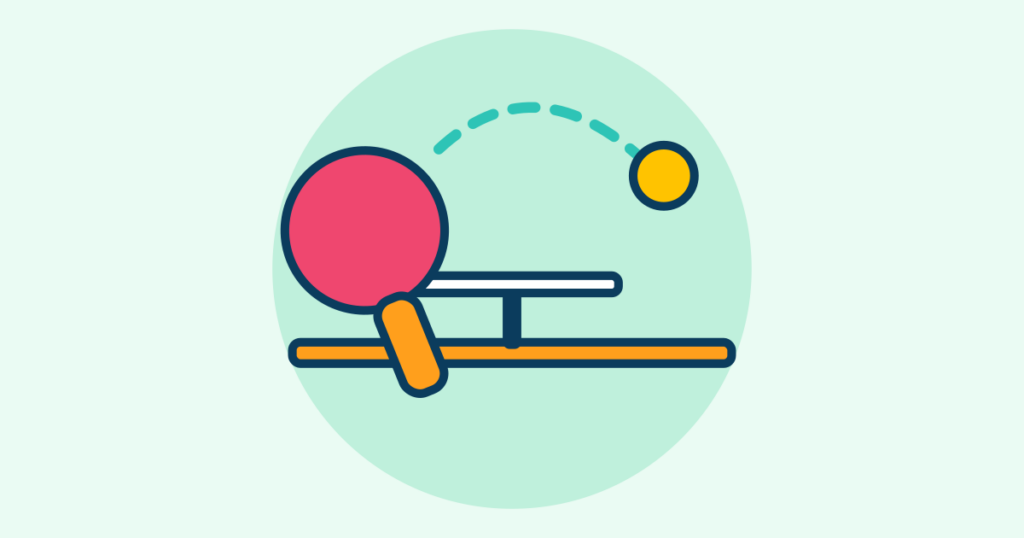
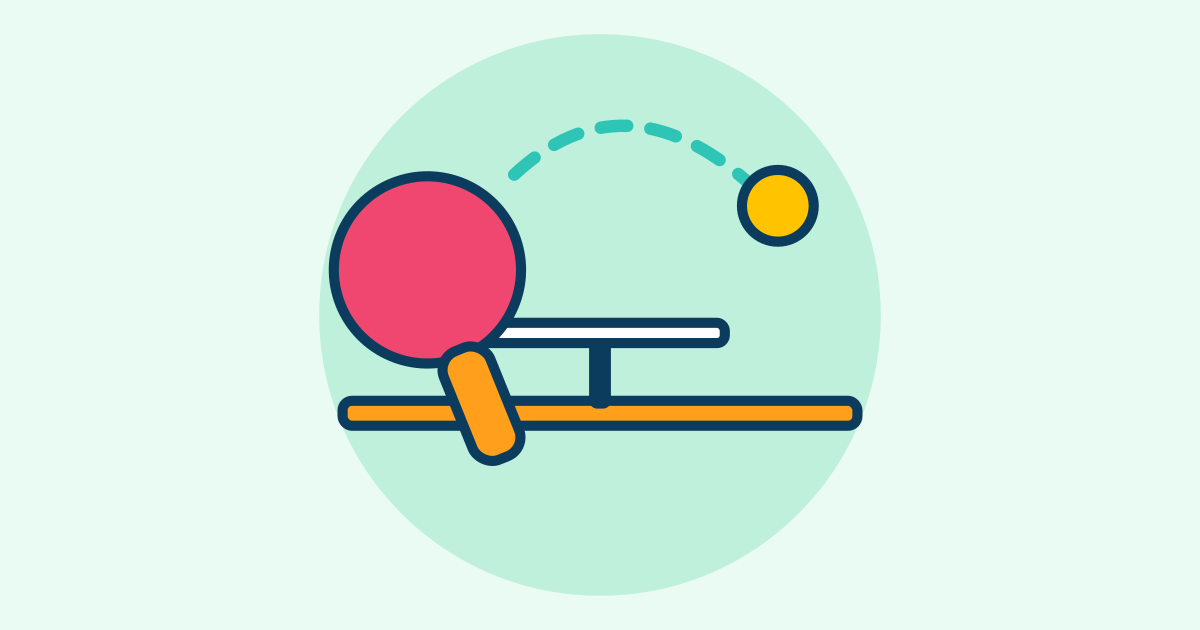
Of all the racket sports, table tennis is the one played by the most people worldwide, and the reason is not that it makes the best television. It is that almost anybody can play, at almost any age, in a room they already own.

It is enjoyable, which is not a small argument

There is no better argument than this one. The game is entertaining in a way you do not get elsewhere, and the pace of it produces a genuine lift while you are playing, which is worth having regularly rather than once.

Take that seriously rather than skipping past it. Most exercise fails because people stop doing it. A game you actually want to play is doing something no disciplined routine can do, which is to keep happening.

It turns the house into somewhere people come

A table at home makes the place more fun, and it makes it a house your friends are willing to travel to. It also means more hours spent with the family in the same room, doing something together rather than in parallel.

That is the quiet benefit and probably the largest. A table in a room is a standing invitation. It needs no arrangement, no booking and no particular occasion, and two people who would otherwise have been on separate screens end up talking across it.

It demands complete attention

The game is fast and it requires total concentration on the ball along with fine coordination between hand and eye. Playing regularly sharpens alertness and the ability to hold focus.

The honest version of that claim is narrower than it usually appears. What clearly improves is your reaction and tracking in the game itself, and there is no good evidence that this transfers to concentration at a desk. What does transfer is the twenty minutes during which nothing else could possibly hold your attention, which for most people is rarer than it ought to be.

What it asks of you

Very little. Space for the table, two bats, a ball, and one other person. No particular fitness to begin with and no upper age at which it stops working. Among the things that get recommended for health and family life, almost nothing else has a barrier this low.

Relationships

Five Things To Teach A Child Before Ten

Five Things To Teach A Child Before Ten

Parenting is challenging and it is not complicated. Five things worth getting across early, and the one that carries all of them.

Five Things To Teach A Child Before Ten

The job is demanding at times, certainly. It is not complicated. Your role is fairly simple and that description essentially covers it. In that spirit, here are a few plain but necessary things worth teaching a child before the tenth birthday.

Kindness counts as an achievement

Doing well at other things, high marks among them, is genuinely good. What matters more is how you treat people, and that list includes yourself. Being loving and kind is the achievement, not the thing you do in the time left over after the achievements.

That last clause is worth saying to a child deliberately, because everything else in their week has a score attached and this does not.

Look after the body you have

Keep it clean. Feed it enough, and not more than enough. Keep it strong and in good health. The body treats you well, so think of everything it permits: running, skipping, curling up against someone, holding on to them, and pudding.

Note the framing. Not a set of rules about food, and not anything about how a body should look. Gratitude for a body that works, which is a much better place for a young person to start.

Sharing includes what you know

It is good to share toys. It is also good to share ideas, and to show other children how to do things you have already worked out, such as tying a shoelace or throwing a frisbee.

The second half is the more valuable one and it is usually left out. A child who teaches another child discovers two things at once: that they know something, and that knowing it is worth more when somebody else has it too.

No is allowed

If there is a particular toy you do not want to share because it means something to you, perhaps a present from a grandparent, then it is perfectly all right to say that you would rather not. You do not have to say yes to everybody every time. Be kind in how you say no.

This one matters more than its size suggests. A child taught only to share, and never that refusing is permitted, learns that their own boundary is negotiable by anybody who asks firmly enough. The lesson is not selfishness. It is that no is a complete answer and can be given warmly.

Respect runs in both directions

Every rule in this house exists because we love you, because keeping you safe matters more to us than being liked, and because we would like the life ahead of you to be as good as a life gets.

And the instruction the page attaches to that is the one holding the whole list together: lead by instance. Treat yourself, and treat everybody else, with respect. A child takes almost nothing from being told these five things and almost everything from watching whether you do them.

Relationships

Some Things Cannot Be Gathered Up Again

Some Things Cannot Be Gathered Up Again

An old story about a rumour, a judge and a handful of paper, and the arithmetic underneath it that has only got worse since the story was written.

Some Things Cannot Be Gathered Up Again

There is an old tale worth retelling, and then there is the reason it has lasted.

The story

An elderly man put it about that his neighbour was a thief. The younger man was arrested on the strength of it. Some days later he was cleared, and he walked home through the same streets carrying the humiliation of having been taken away in front of them. He then took the older man to court for accusing him falsely.

In the courtroom the old man offered the defence such people always offer. They were only remarks. Nobody was hurt.

The judge did not pass sentence. Instead he told the old man to write down every remark he had made, on paper, and to cut the paper into pieces, and to scatter the pieces on the way home. Come back tomorrow, he said, for the sentence.

When the man returned, the judge issued one instruction ahead of any sentence. Go out, he said, and collect every scrap you scattered on your way home.

The old man said what anybody would say. That is impossible. The wind has taken them and I would not know where to begin.

And the judge said that this is exactly what a few careless remarks do to a person’s good name. They go too far and into too many hands to be called back. The old man understood what he had done and asked to be forgiven.

Why it holds

The moral attached to the tale is plain enough. Do not accuse anybody of anything before you know whether it is true, because your words can destroy a reputation that was never at fault.

What makes the story more than a pleasant lesson is the asymmetry it describes. An accusation is interesting, so it is repeated. A correction is dull, so it is not. The two pieces of information travel at completely different speeds through the same set of people, which means a retraction almost never reaches the whole audience that heard the original.

And there is a second effect layered on that. People remember that they heard something about a person far longer than they remember what it was or whether it turned out to be true. A name acquires a faint cloud. Nobody can say why.

What it costs to be careful

Very little, which is the point. Before repeating something about somebody, ask where it came from and whether the person telling you actually knows. If the answer is that somebody else said so, you have not learned anything, you have only been handed something to carry.

The judge in the story could have fined the old man. Making him try to gather the paper was better, because a fine ends and the understanding does not.

Relationships

Difficult, Or Simply Formed Elsewhere

Difficult, Or Simply Formed Elsewhere

When somebody will not come round, the quickest available explanation is that they are being unreasonable. It is also the explanation that ends the conversation.

Difficult, Or Simply Formed Elsewhere

Each person carries a manner of moving through life that belongs to them alone. That is easiest to take seriously once you notice that every human being stands in a distinct position, and nobody else is standing quite where they stand.

We grow up in different places, shaped by a range of influences nobody chose. The preferences, values and beliefs we hold are bound up closely with where we came from, and the impulse to make our own experience particular is instinctive, because doing so is what lets us cope when we have to face things alone. The result is that each of us carries a perspective that is genuinely ours and not quite anybody else’s.

What that means in a difficult room

Interacting peacefully and usefully with people from every walk of life is first a matter of understanding where they are coming from. Once you have some of that, you can adjust your expectations, which stops you making assumptions about them that were never warranted.

Because in the middle of a disagreement, the assumption arrives on its own. They are being difficult. They are being unreasonable. They are just stubborn. We become frustrated when somebody close by does not share our opinion, or will not support what we are trying to do.

It is far more likely that the person in front of you simply holds a different notion of what matters in a life. Stubbornness and a different set of priorities look identical from the outside and require completely different responses.

The move that opens it

When there is a barrier between you and somebody else, think of questions you could ask that would give you a fuller picture of their point of view. Not rhetorical ones. Actual ones, to which you do not know the answer.

What you often discover is that the difference in perspective dividing you is not really about the matter under discussion. It is attached to an insecurity or some personal difficulty that shapes how they see everything, and the argument you are having is a proxy. Asking what they are protecting will get you further than establishing who is correct.

Two honest limits

The first: you will never fully grasp the complexity of another person, and you do not need to. You can go a very long way on the simple habit of reaching towards people in a spirit of sympathetic comprehension, and stopping there is not a failure.

The second, and this one matters more. Accepting that somebody was formed elsewhere is not the same as accepting whatever they do. Understanding why a person behaves badly explains the behaviour, it does not licence it, and there is a version of tolerance that quietly becomes an excuse for putting up with harm. Respect the right of every person to determine their own course. That right ends where it starts costing somebody else theirs.

Relationships

The Ones Doing The Teaching Are Smaller

The Ones Doing The Teaching Are Smaller

Grown-ups approach children with a list of what to pass on. The traffic runs both ways, and the direction we notice least is the one worth noticing.

The Ones Doing The Teaching Are Smaller

Go to a child expecting to be taught something, and the odd effect lands on you rather than on them. You become more present. Most of us arrive the other way round, carrying a list of what we intend to pass on about a life they joined only a few years ago.

We do hold information worth handing over. They also arrived holding something we have spent decades wearing away.

They have not yet decided what things are for

A child does not avoid a person on the basis of appearance, and does not regard a pair of shoes as having only one function. Psychologists have a name for the adult version of this, functional fixedness: once you know what an object is for, it becomes difficult to see it as anything else. Children are markedly less subject to it, for the simple reason that they have not finished learning what anything is for.

A saucepan and its lid can hold one of them for thirty unbroken minutes. Watch that happen, then try to recall the last time anything held you that way without a screen being involved.

They have not learned to manage the face

They are utterly unselfconscious in what they show. Delight, fury, and boredom all arrive undisguised. The management of expression is one of the first things we teach, usually without meaning to, and it is genuinely useful, and something goes out of the room when it is complete.

They live right inside the hour they are in, looking at everything with the openness that comes of not yet knowing, and out of that comes a plain excitement about the world which adults reach only with difficulty. Nearly every path of self-improvement anybody has ever set out is, in one form or another, an attempt to find the way back to it.

The dance of leading and following

We still have to be the loving guide. That part does not go away and should not. But being with children teaches you to move between leading and following and back again without treating the change as a defeat.

Adjusting as the flow shifts, from wearing shoes on your head one minute to making sure everybody has eaten the next. When you let a child set the direction of the play, they pull you somewhere you would not have gone, into not knowing what happens next, which is the thing adults arrange their entire week to avoid.

The honest limit

None of this makes children wise. They are not. They have simply not narrowed yet, and the narrowing is exactly what makes an adult useful, capable of keeping a household running and a promise kept. The argument is not to be a child again. It is that the narrowing went further than it needed to, and thirty minutes on the floor with a saucepan is a cheap way to find out how far.

Health & Body

What Laughter Actually Does

What Laughter Actually Does

One of the famous claims made for laughter stands up well under testing. Several of the others were never really tested at all, and it is worth knowing which is which.

What Laughter Actually Does

Laughter therapy, sometimes called humour therapy, is the deliberate use of humour to improve how a person feels. Hospitals run programmes. The claims attached to it have grown enormous, and that is a pity, because the modest true thing underneath is genuinely interesting and gets buried under the rest.

The claim that holds

Robin Dunbar and colleagues ran a series of studies in which people watched either comedy or neutral material and then had their pain threshold measured. Threshold rose after genuine, helpless, breathless laughter, and it did not rise after material that people found pleasant but did not actually laugh at.

That distinction is the whole finding. The active ingredient appears to be the physical exertion of laughing, the repeated forced exhalation, which is the kind of effort that triggers endorphin release much as other exertion does. Polite social laughter does not involve that exertion, and it does not produce the effect.

This also explains why laughter is so relentlessly social. Laughing is many times more likely in company than alone, and the pain threshold that rises is a rough measure of endorphin activity, which is the same system implicated in social bonding across primates. Shared helpless laughter is closer to grooming than to medicine.

The claims that do not hold

Ten to fifteen minutes of laughter burns forty calories. This traces to a single small laboratory study of energy expenditure while people watched comedy. Forty calories is a few almonds. It is a charming fact and it is not a plan.

Laughing releases endorphins that outdo an equivalent dose of morphine. Nobody ever measured any such thing. The sentence sets a hormone against a drug in units that do not exist, and it has survived for decades purely because it startles.

It protects against heart disease, builds immunity, and lowers the blood sugar spike after a meal. Each of these rests on a small study measuring a marker, not on any study showing fewer heart attacks or fewer illnesses. A marker moving is where research starts, not where advice starts.

What to do with all that

Nothing medical. If something is wrong, the person to talk to is a doctor, and no amount of comedy substitutes for that.

What the evidence does support is smaller and easier. Laughing properly, with other people, for long enough to lose your breath, makes the next hour more bearable and the people you did it with feel closer. That is not a miracle cure. It is a decent reason to spend an evening with the friends who make you laugh like that, which very few of us schedule and most of us miss.