Tag: Young Adults

Wonders & Trivia

Rise Of The Machines

Rise Of The Machines

Automation is not coming for jobs so much as for tasks, and which tasks it takes is less obvious than the headlines suggest.

Rise Of The Machines

Every generation gets its version of this story, and every version has been both right and wrong. Right that the work changes. Wrong about which work, and wrong about how fast.

Tasks go before jobs do

A job is a bundle of tasks. Automation rarely takes the whole bundle. It takes the repetitive, well-defined pieces and leaves the rest, so the job survives in altered form and the person doing it needs different skills than they did five years earlier.

Bank tellers are the standard example. Cash machines were supposed to end the role. Branch transactions got cheaper, banks opened more branches, and tellers moved from counting notes to selling and advising. The count went up before it went down.

The surprise is which work is safe

The intuition is that manual work is vulnerable and thinking work is safe. It has largely run the other way. Structured analytical tasks turned out to be far easier to automate than physical ones performed in unpredictable surroundings.

Writing a routine report is more automatable than repairing a leaking pipe under a sink. The plumber has to see, judge, reach and improvise in a space no two of which are alike. That remains genuinely hard.

What actually determines exposure

Not the collar colour. Ask instead how predictable the task is, how tolerant it is of error, and how much of it depends on reading a situation rather than following a procedure. High predictability and high error tolerance means high exposure, whatever the job title.

The part worth acting on

The reliable defence has never been picking a safe field. It has been staying the kind of person who learns the next tool rather than defending the last one.

That was true when spreadsheets arrived, and it is true now. The people displaced are rarely the ones the technology replaced. They are the ones who decided it would not affect them.


Wonders & Trivia

Talking To Yourself Is Good For You

Talking To Yourself Is Good For You

It looks eccentric and it turns out to be one of the cheapest tools available for thinking clearly under pressure.

Talking To Yourself Is Good For You

There is no proper word for it, which tells you how little we discuss it. Most people talk to themselves and most people are slightly embarrassed about it.

The research is not embarrassed at all. Self-directed speech shows up as useful across problem solving, emotional control and simple task performance.

Saying it out loud slows the mind down

Thought moves faster than speech, which sounds like an advantage and often is not. Speed is how you skip steps. Putting a problem into spoken words forces the sequence into order, and the gap in your reasoning becomes audible in a way it never was internally.

This is why explaining a problem to a colleague so often solves it before they have said anything. You did not need their answer. You needed to say it in sentences.

The pronoun matters more than you would expect

One consistent finding is that the word you choose changes the effect. Talking to yourself as I keeps you inside the feeling. Using your own name, or you, creates a small distance, and from that distance people reason more calmly and judge risk better.

It feels absurd the first time. It is also the version that works.

It helps you find things

Saying the name of what you are looking for genuinely improves how quickly you find it. Naming the target sharpens what your visual system is filtering for, which is why people mutter keys, keys, keys while searching and are not being ridiculous.

Where it stops being useful

Rehearsing the same worry aloud repeatedly is not this. That is rumination wearing the same clothes, and it deepens the groove rather than resolving anything.

The useful version moves forward. What am I actually trying to do here. What is the next step. Anything circling is worth interrupting, said aloud or not.

Health & Body

How Your Breathing Actually Works

How Your Breathing Actually Works

A system you run twenty thousand times a day without instruction, and almost never think about until something interferes.

How Your Breathing Actually Works

Breathing is the one vital process you can take manual control of, which makes it unusual and useful. Most people know roughly nothing about how it operates.

The diaphragm does the work, not the chest

Air is not sucked in by the lungs. A sheet of muscle beneath them contracts and flattens, the chest cavity enlarges, pressure inside drops below the pressure outside, and air moves in to equalise.

Breathing out is mostly passive. The muscle relaxes, the elastic tissue recoils, and air leaves.

Where the exchange happens

The windpipe branches roughly twenty-three times, ending in several hundred million tiny sacs called alveoli. Their combined surface area is somewhere near that of a tennis court, folded into your chest.

Each is wrapped in capillaries one cell thick, and gas simply diffuses across that boundary. Oxygen in, carbon dioxide out, no pumping involved.

Carbon dioxide, not oxygen, sets the pace

This surprises people. The urge to breathe is triggered mainly by rising carbon dioxide rather than falling oxygen. Hold your breath and the discomfort you feel is the build-up, not the shortage.

It is also why breathing too fast when anxious makes things worse. You blow off carbon dioxide, blood chemistry shifts, and you get the tingling and light-headedness that feel like a worsening emergency.

The practical part

Slow breathing out, longer than breathing in, engages the calming branch of the nervous system fairly reliably. This is the mechanism behind most breathing exercises, stripped of the packaging.

Nothing exotic required. A slightly longer exhale, for a couple of minutes, works because of how the plumbing is built.

Wonders & Trivia

Is It Safe To Stand Near A Microwave?

Is It Safe To Stand Near A Microwave?

Most people step back when they press start. The instinct is understandable and the physics does not really support it.

Is It Safe To Stand Near A Microwave?

Almost everyone does it. Press start, take a step back, come forward when it beeps. Nobody taught us this. It just feels sensible.

The physics is less dramatic than the instinct.

It is not that kind of radiation

The word radiation is doing all the frightening work here, and it covers two very different things. Ionising radiation, such as X-rays and gamma rays, carries enough energy to knock electrons off atoms and damage DNA. Microwaves are non-ionising. They sit near radio waves on the spectrum and they simply make water molecules vibrate, which is heat.

A microwave oven cannot make your food radioactive, and it cannot do to you what an X-ray does.

The door is the actual engineering

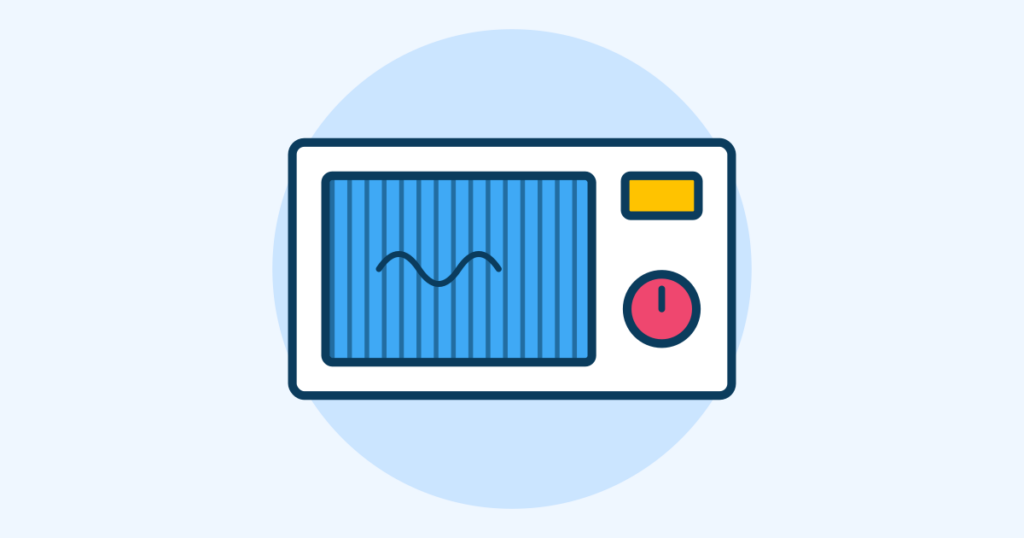
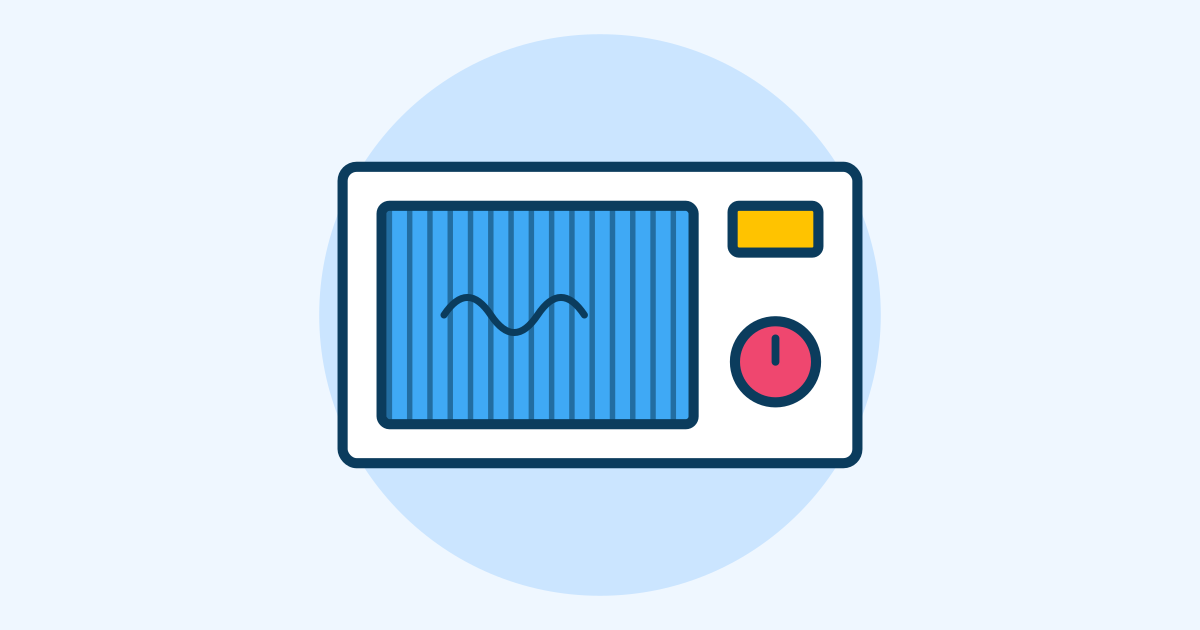
The metal mesh in the window is a Faraday shield. The holes are far smaller than the wavelength being used, so the waves cannot pass while visible light can, which is why you can watch your food and not be cooked by it.

Leakage is tightly regulated and the permitted amount falls off very quickly with distance. Stepping back a foot cuts your exposure by roughly three quarters, which is a large reduction of an already small number.

When to actually worry

The door is the thing to watch. A bent door, a damaged latch, a hinge that no longer closes flush, or a mesh with a hole in it. Those defeat the shield, and that is a genuine reason to stop using the oven rather than to stand further away.

Running it empty is also worth avoiding. With nothing to absorb the energy it reflects back into the magnetron and shortens its life.

So, the step back

Harmless, and unnecessary on an oven in good condition. Keep the habit if you like. Just check the door seal occasionally, because that is the part that actually matters.

Work & Career

Work Ethics You Should Live By

Work Ethics You Should Live By

Not the poster on the wall. The handful of ordinary rules that decide whether people can rely on you.

Work Ethics You Should Live By

Corporate values statements are mostly interchangeable. The working version is shorter, unwritten, and observable in what a person actually does on an average Tuesday.

Say what is true, including when it is inconvenient

The estimate you believe rather than the one that will be welcomed. The status update that reflects reality. This is expensive occasionally and it is the entire basis of being trusted with anything important.

People who round their reports towards good news get found out, and afterwards nothing they say is taken at face value.

Do the work you are paid for

Unfashionably plain. A day’s work for a day’s pay, whether or not anyone is checking. Remote work made this visible in a way it was not before, and it turns out to be a fairly clean test of character.

Keep other people’s information properly

Client data, colleagues’ salaries, what someone told you in confidence. The rules exist and matter, and beyond the rules there is a simpler standard. Would the person who told you be comfortable knowing where it went.

Do not take what is not yours

Credit included, and credit is the one most often taken casually. Presenting a team’s work in the first person, or leaving out the colleague who solved it, is a small theft that people remember for years.

Leave things in order

How someone hands over is one of the clearest signals available. Documentation written, loose ends closed, successor briefed properly. Nobody is watching by then and there is nothing to gain, which is exactly why it is informative.

Why it pays

Not because virtue is rewarded. Because careers run on reputation, reputation is built from hundreds of small observed choices, and none of them feel important at the time.

Wonders & Trivia

Why We Are So Easily Influenced

Why We Are So Easily Influenced

We like to think we judge each argument on its merits. The research says we mostly judge the person making it, and we prefer people who resemble us.

Why We Are So Easily Influenced

Ask anyone how they form an opinion and you will hear something about weighing the evidence. Watch what actually happens and a different pattern shows up. We are far more persuaded by people who resemble us than by people who are right.

Similarity does the persuading

Studies keep finding the same thing. The same argument lands harder when it comes from someone who shares your background, your accent, your line of work, even your first name. Nothing about the argument changed. Only the messenger did.

It is not stupidity. For most of human history the people around you were the only reliable source of anything, and copying them was a sound survival strategy. The instinct is old and it is still running.

Confidence reads as competence

The second lever is certainty. A person who states something flatly is believed more readily than a person who states it accurately with caveats. This is why the most confident voice in a meeting often carries the room, and why the careful one who says it depends is heard as weak.

Worth knowing in both directions. It explains who you are believing, and it explains why your own well-hedged point keeps losing to someone with half your information.

Repetition works even when you know it is repetition

Something heard often enough starts to feel true. The effect survives knowing about it, which is the uncomfortable part. Familiarity is easy to mistake for evidence because both arrive as a feeling of ease rather than a conclusion.

What to do with this

The practical move is a small delay. When you notice yourself agreeing quickly, ask what the actual claim is, separately from who said it and how surely they said it.

You will not do this often. But agreement that arrives instantly is usually the copying instinct, not the reasoning one, and that is exactly the moment worth checking.

Work & Career

Getting Ready For A New Job

Getting Ready For A New Job

The first weeks set an impression that takes a year to revise. Most of what decides it happens before you walk in.

Getting Ready For A New Job

Preparation for a new job usually stops at the outfit. It is the least consequential item on a fairly short list.

Learn the dress code before you buy anything

Since it comes up first, deal with it quickly. Find out what the place actually wears rather than guessing upward. Overdressed is a smaller error than underdressed but it is still an error, and both are avoidable by asking one question.

Know what you were hired to fix

Every role exists because something was not happening. Sometimes it is stated in the description, often it is not. Ask directly at the offer stage. What does good look like at six months.

Arriving with that answer changes what you pay attention to in week one.

The first month is for questions

There is a window where asking anything is free, and it closes faster than people expect. Use it hard. Write down what you are told, because you will be told it once.

The temptation is to demonstrate value immediately by proposing changes. Almost every proposal made in week two is a suggestion the team already tried in a year you were not there for.

Map the informal structure

The org chart shows reporting lines. It does not show who is actually consulted before decisions, who has been there longest, or whose objection quietly stops things.

That map takes a month to draw and it explains most of what would otherwise be baffling.

Deliver one small visible thing early

Not a transformation. Something modest, finished, useful, inside the first six weeks. It buys the patience you will need for the larger work, and it is remembered far out of proportion to its size.

Work & Career

Being Professional At Work

Being Professional At Work

The rules are mostly unwritten, which is why people who miss them rarely find out until it has already cost them.

Being Professional At Work

Nobody hands you the list. Professional behaviour is learned by observation, and people who did not have it modelled early are judged against a standard nobody stated.

Time is the loudest signal

Arriving on time to meetings, and ending them on time, communicates more than most people realise. Habitual lateness is read as a statement about whose time matters, whatever the actual reason.

Same for deadlines. A thing delivered when promised, even imperfectly, builds more trust than a better version delivered late without warning.

Read the volume of the room

Every workplace has a register. How direct people are, how much disagreement is normal in a meeting, whether humour is welcome and of what kind.

Newcomers who match it fit quickly. The mistake is assuming your last workplace’s register is the universal one.

Written communication is where reputation forms

Most colleagues experience you mainly through messages. Replying within a reasonable window, writing clearly, saying what you need rather than hinting at it, closing the loop when something is done.

None of it is difficult. All of it is noticed, mostly in its absence.

Be the same person to everyone

The clearest professionalism signal there is. How someone treats the person who cannot help them is read carefully by everyone who sees it, and remembered longer than any presentation.

Own the mistake first

Raising your own error before it is discovered costs a bad ten minutes and buys years of credibility. Being found out costs the reverse, and the difference between the two paths is usually a single decision made in the first hour.

Mind & Habits

Fixed Versus Growth Thinking

Fixed Versus Growth Thinking

Two beliefs about where ability comes from. They produce very different behaviour in front of something difficult.

Fixed Versus Growth Thinking

Ask someone whether intelligence is largely fixed or largely built and the answer predicts a surprising amount about how they will behave when something gets hard.

The two positions

One holds that ability is a quantity you have. Effort is then evidence of not having enough of it, because talented people find things easy.

The other holds that ability is mostly built. Effort is then simply the mechanism, and difficulty is the sensation of it working.

Neither is a personality. Most people hold one in some areas and the other elsewhere, which is worth noticing about yourself.

Where it shows

Not on easy tasks, where both look identical. It shows at the first real obstacle.

The fixed view reads a setback as information about the ceiling, so withdrawing is the rational response. The built view reads the same setback as information about the method, so adjusting is the rational response.

Same event, opposite conclusion, and over years the two accumulate into very different capability.

Praise pushes it either way

This is the practical part, especially with children and junior colleagues. Praising the person, you are so clever, attaches their identity to an outcome, which makes the next failure threatening.

Praising the approach, that was a good way to break the problem down, attaches it to something repeatable. The second holds up when things get difficult and the first does not.

The honest caveat

Belief is not unlimited. Effort will not make anyone anything, and the idea has been oversold in places where it turned into blaming people for structural problems.

The narrow claim is the defensible one. Within your actual range, what you believe about effort largely determines how much of that range you ever use.

Mind & Habits

Stop Being A People Pleaser

Stop Being A People Pleaser

It looks like kindness and it usually is not. Kindness is a choice, and pleasing is a reflex to avoid discomfort.

Stop Being A People Pleaser

People-pleasing is easily mistaken for a virtue, including by the person doing it. Agreeable, accommodating, always helpful. Hard to criticise from the outside.

The tell is what happens inside. Genuine generosity leaves you fine. Pleasing leaves resentment, and resentment is the signal that something was given which was not actually available.

It is fear management

The mechanism is avoidance of a specific discomfort. Someone being disappointed in you. Saying yes removes that instantly, which is the reward, and the cost arrives later when you have to do the thing.

Understood that way it stops looking like generosity and starts looking like what it is, which is a bill paid on credit.

Nobody knows what you actually think

This is the expensive part. If you agree with everyone, your agreement carries no information. People stop being able to read you, and the relationships get shallower rather than warmer, which is the opposite of what was intended.

Buy yourself an hour

The practical first move is not learning to say no. It is learning not to answer immediately. Let me check and come back to you is a complete response, and the hour is usually enough for the real answer to surface.

Most yes commitments are given in the first three seconds, and almost none of them survive an hour of thought.

Disappointing people is survivable

The thing being avoided turns out to be much smaller than it feels. Say no clearly and without excessive apology, and most people accept it, adjust and think no less of you.

The catastrophe rehearsed in advance almost never arrives, and finding that out once is worth more than any amount of resolve.