Tag: Seniors

Mind & Habits

Mindfulness For The Very Busy
Mindfulness For The Very Busy

Mindfulness does not need spare time. It can be woven into a queue, a cup of tea, a walk, a meal or the work in front of you.
Mindfulness For The Very Busy

Mindfulness is nothing more than the ability to stay present and awake to each moment, whatever is going on around us. Yet in modern life most of us rush through the day with barely enough time to dress, eat and get to work. Who really has time to pause and enjoy the flowers along the way? What we miss is that mindfulness does not need much time at all. It can be practised anytime, anywhere, and it can lift the whole quality of life.

You have probably heard of the benefits already, but in brief: better well-being, better performance in all parts of life, more happiness and aliveness, more enjoyment of the day, less stress as you rush about, more awareness of how busy you are, and better relationships and work. Many people also find their sleep improves. With all that on offer, why not practise it? If the honest answer is that you are too busy, read on. Here are ways to weave mindfulness into what you already do.

Meditate in a queue

Standing in a queue, you are doing nothing anyway, sometimes for several minutes. Make good use of it. Close your eyes and follow your breathing, or, if that feels awkward in public, rest your gaze on a wall or anything else that is not distracting, and breathe. It turns time that would be wasted into time that restores you.

Meditate on your cup of tea

Turn your daily cup of tea or coffee into a small meditation, and it tastes even better. Listen to the kettle as it boils. Pay attention to each step of making the drink. Then drink it mindfully. You will enjoy it more, and you will be more present too.

Walk mindfully

Walking can be one of the most relaxing activities there is, but it is easily spoiled by thinking too much. As you walk, notice the world around you, and feel the movement in your legs, as people do in the practice of walking meditation.

Eat with attention

Eating mindfully is one of the best things we can do for body and mind. It makes us more aware of our food, more grateful for it and for the body that digests it, and more likely to eat well. Take your time over meals and keep your attention on the food.

Exercise body and mind together

Often, while the body exercises, the mind is busy brooding. Exercise can train both if we stay focused on what we are doing. Yoga and gentle flowing practices are excellent for this, and so are walking and running.

When working, work

Let us be honest: most of us do not give work our full attention. We think about being somewhere else. Dreaming about not working while at work only makes us miserable. When the whole mind is on the task, we actually start to enjoy it. When writing, write. When listening to a complaint, listen. Even a chore becomes a calmer, more pleasant experience.

Rest the mind along with the body

How often have you gone to bed worrying about tomorrow? That is not real rest. When the body lies down, let the mind lie down too. Start at the top of your head. Notice any tension, and imagine breathing fresh air into it until it eases. Then move to your forehead, eyes, nose, mouth and neck, step by step, all the way down to your feet. It is deeply relaxing, and one of the best ways to refresh the mind.
Mind & Habits

Find Your Voice And Speak Up

Find Your Voice And Speak Up

Staying silent to keep the peace can quietly harm you. Speaking up, clearly and kindly, brings authenticity, better relationships and peace within.

Find Your Voice And Speak Up

Are you the person who sits in the background and rarely says much? When someone says something that upsets you, do you let it pass without a word? If so, you may be doing yourself more harm than good. It is right not to belittle other people’s thoughts. But it is just as important, for your own sake, to share some of yours.

People today seem extra careful about every word they say. Everyone tries to avoid offending anyone. Yet all of us want to be understood and listened to, to be seen as worthwhile for who we are. If you have something meaningful to say but are scared to speak up, remember this: frightening as it seems at first, speaking up brings rich rewards and real breakthroughs. You become more authentic, your relationships grow stronger, and you feel better about yourself. A good rule to hold on to: speak clearly, if you speak at all, and shape every word with care before you let it go. If you are still afraid, here are some things to remember.

Silence can be a form of self-harm

Have you spent much of your life trying to silence yourself, to become quieter, smaller, less sensitive? Perhaps because you did not want to be too much for people, wanted to make a good impression and fit in. For much of your life you may have given up a part of yourself, your need to be heard, so as not to step on anyone’s toes. That silence has a cost, and you have been the one paying it. When you give yourself permission to say openly what matters to you, a quiet peace grows inside, even if you meet rejection or disapproval. Giving voice to your heart helps you let go and grow into a better person.

Your voice has power

We all want the same deep things: to be valued and loved, to be happy and fulfilled, to feel secure and hopeful about the future. What makes each of us different is the way we pursue them, and your voice is one of the main ways you do that.

Three reasons to say what you think

  • Words left unsaid breed anxiety. You replay the moment again and again, acting out different endings in your head.
  • Sharing your thoughts can inspire others. They may follow your lead and speak up when the situation calls for it.
  • Standing up for what you believe encourages others to do the same. None of us is alike, so let others learn from you, and learn from them in return.
Tips & Tricks

Keep A Time Diary

Keep A Time Diary

Writing down how you actually spend your day is one of the most powerful ways to discover how to use your time better.

Keep A Time Diary

Keeping a diary of exactly how you spend your time through the day is one of the most powerful ways to discover how to use it better. It sounds almost too simple to matter. Yet a time diary can be far more useful than you would expect. Here is what it does for you.

It shows you patterns

A time diary lets you see the patterns and trends, good and bad, in how you spend your hours. Things that feel random from the inside often turn out to follow a clear rhythm once they are written down.

It shows what affects your productivity

You begin to see which activities make the biggest difference to how much you get done. For example, you may notice how strongly a good night’s sleep affects your motivation the next day.

It makes you think twice

When you know you will have to write it down, you start to second-guess yourself before spending time on things that matter little. The diary becomes a gentle conscience.

It tests your priorities

Perhaps most usefully, it shows whether the way you spend your time matches what you say matters to you. If you consider family important, but the diary shows every evening spent in front of the television, the gap is right there in black and white.

How to keep one

Once you can see exactly how your time goes, it becomes much easier to change it, because the changes you need are right in front of you. Keep the tracking as simple as possible, so that it does not become a chore of its own. For one week, carry a small notepad and note down:

  • what you are doing,
  • when you start and stop each activity,
  • any observations you have along the way.

At the end of the week, read it through. Most people are surprised by what they find. That surprise is where better use of time begins.

Relationships

Why Connecting With People Feels Hard

Why Connecting With People Feels Hard

Connecting with others is not a gift reserved for a lucky few. It is a skill, and knowing what blocks it is the first step towards building it.

Why Connecting With People Feels Hard

Many people believe that the ability to connect with others is a natural trait that only a lucky few are born with, and that it cannot be taught. It is an easy belief to fall into, and it is mistaken. Connecting well is largely a matter of emotional intelligence, and it is within your control.

Life’s biggest lessons, opportunities and gifts are found in our connections with others. Since social connection is such a basic human need, you might expect it to come easily. It often does not. Against our own interest, we get weighed down by shyness, self-consciousness, cynicism, pride, competitiveness, jealousy and arrogance. Clear that baggage away and you can connect with almost anyone, even people still carrying their own. Here are a few common reasons we avoid others, with ways to make the social side of life easier.

Awkwardness gets the better of you

It is nothing to be ashamed of if you privately admit that social situations make you uneasy. Unsociable behaviour that comes from awkwardness can be overcome with practice. Try a little visualisation or meditation. Learning basic mindfulness can help you manage many of the stresses you feel in company. Your body is more within your command than you may believe.

Socialising drains your energy

If being with people always seems to empty your reserves, it may simply be that you are more introverted by nature. Pay attention to what your body is asking for. If it needs solitude, give it solitude. If you sense that something deeper is wrong, if the tiredness feels more like low mood, consider speaking to a doctor.

You fear rejection

We may all be different in personality, but we are all wired to need some human contact. Fear of rejection often has deep roots, sometimes in an old experience of being left or let down, and it can quietly keep us from reaching out to others.

Small things to practise

  • Start by talking about yourself with the people closest to you. Research suggests that sharing about ourselves, whether in conversation or online, triggers the same pleasure in the brain as food or money.
  • Think about how you made the friends you already have. The same approach works for bigger connections and wider social settings.
  • Do not dismiss small talk as meaningless. Good small talk is often the doorway to real connection and, in time, deeper relationships.
Mind & Habits

Who Is Writing Your Story?

Who Is Writing Your Story?

What you notice becomes what is real to you. If you do not take charge of your own perception, someone else will happily shape it for you.

Who Is Writing Your Story?

Try a small experiment. Look around wherever you are, familiar room or new place. Pick one object, perhaps something you had never really noticed, and give it your full attention. If you truly focus, it seems to grow brighter and more real than it was a moment ago, when it was only part of the background noise of your life. Now try to imagine the room from the point of view of that object. Some people manage this easily, and others need real concentration. Depending on how well you can hold your focus, you may feel a slight shift, an odd little jump, as if you were suddenly seeing the world from somewhere else.

That small shift carries a big lesson. Perception is not fixed. It can be steered. And it matters who does the steering, because if you are not conscious of your own perception, someone else will build it for you.

The eye can be tricked

Things are not always what they appear to be. Marketers and magicians depend on this. They arrange things so that you see exactly what they want you to see. Artists do the same. That is perfectly fine when it is the point, when we let our world be shaped for a while for the fun of it. But drifting through life while others shape all your perceptions is a recipe for a very unfulfilling life.

Change the perception, change the life

Each of us gets tangled in the stories we tell about ourselves, and most of us end up believing we are those stories. Trouble begins when a story starts running itself, and the life it produces is not one we would have chosen.

So consider the story you are living at present. Whose pen wrote it? Did you deliberately choose the reality you live in today, or was it mostly shaped by your parents, friends, partner, school or the media? If you do not like the story, change the way you see it. Picture how you would write the next chapter. Better still, sit down and actually write it. Aim your attention at building a fresh reality, with yourself at the helm. Take back the role of screenwriter and director, instead of only playing a part someone else wrote.

It begins with a decision

Everything starts with one choice: decide, now, to take charge of how you see your own life. If you do not, there are plenty of people whose whole aim is to shape that view for you. Do you trust them to have your best interests at heart?

Relationships

Keeping Your Head With An Aggressive Person

Keeping Your Head With An Aggressive Person

Sooner or later we all meet someone aggressive. Four calm steps keep a heated moment from turning into lasting damage.

Keeping Your Head With An Aggressive Person

At some point, every one of us has to deal with an aggressive person. Aggression usually rises when someone feels they must protect their interests, or to win something for themselves, frequently at someone else’s expense. Understanding that helps: the anger in front of you is often about a need or a fear, not about you. When you meet such a person, keep these steps in mind.

Stay cool

Answering anger with anger simply makes matters worse. Your anger feeds theirs, and the exchange climbs higher with every sentence. Staying steady is the first and most important step.

Step away and calm down

Take a deep breath. Step back from the argument for a moment and do something else, even something as small as fetching a glass of water. That short pause can release the tension that is building up. Consider how much regret the words spoken in anger might bring you later.

Bring the focus back

When emotion takes over, people easily forget the real issue and even of how the argument began. Steer the conversation back to what matters most and to the facts. That helps the other person return to thinking and reasoning. Phrases such as “All that really matters is…” or “In a few years we will laugh about this” can lower the temperature.

Name what is happening, gently

Do not carry on as though nothing is wrong. At the same time, avoid sentences that start with an accusing “you”. Try something closer to this: “There is no need to stress, we will sort it out. I am sorry. Can I say something I think is important? I understand this is stressful and upsetting.” Doing this early makes the other person more aware of how they are behaving, and that often makes them more open to hearing what you have to say.

Aggression is loud, but calm is stronger than it looks. Breathe, pause, refocus and speak kindly, and most storms pass without damage.

Mind & Habits

Meeting Panic With A Mindful Mind

Meeting Panic With A Mindful Mind

Fighting stress only feeds it. Five mindful habits help you stay calm, and even smile, when a situation tips into panic.

Meeting Panic With A Mindful Mind

Busy city life teaches us many lessons. Many of us cannot simply move somewhere quiet and close to nature, so we learn to make peace and find happiness amid the noise. Despite the difficulty, if you can learn to stay mindful through arguments, emergencies and moments that throw you or the people around you into panic, you can reach the calm state of mind that lets you see through the chaos and respond in the best way. Here are a few ideas that help you keep going with a smile, even in stressful situations.

Stop fighting the stress

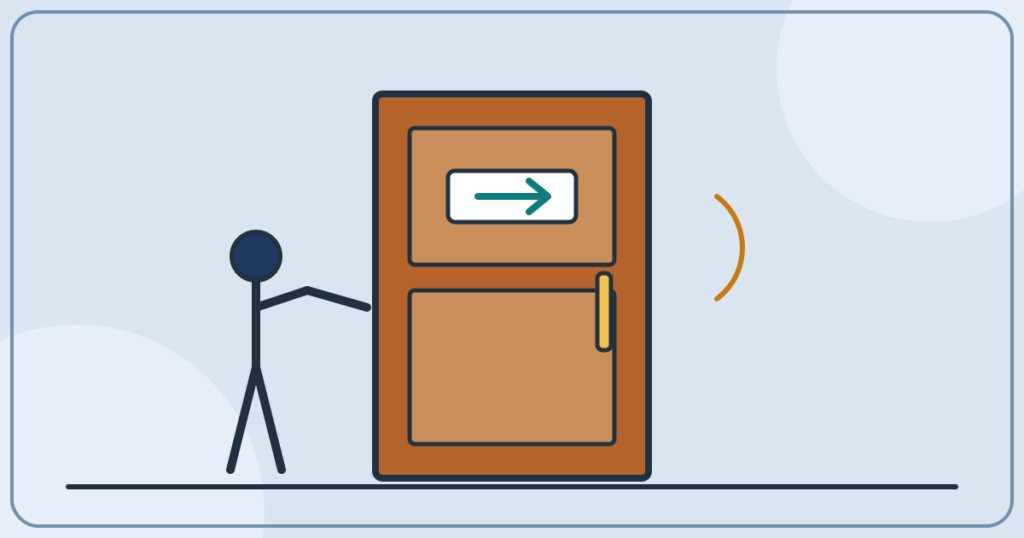
Trying to get rid of stress only increases it. It is like pulling hard on a door marked “push”. However hard you pull, it will not open, and if you pull hard enough the handle may come off in your hand. Stress comes from doing too much. You cannot “do” your way to less stress. Reducing stress asks you to stop doing, and that is exactly what mindfulness offers.

Empty your mind

Emptying the mind brings real relief. Why? Because every one of our problems exists only there. Empty it, and for that moment the problems are gone. Of course, life still has to be handled, but handling it with a calm mind is far easier and more pleasant than doing it with an overactive, stressed one. Life can be met with a smile. Very little is as serious as it seems.

Face your fears

We are all afraid of something, and strength is found inside fear, not apart from it. Courage is impossible if you are not afraid. If you listen to fear and obey it, it rules you. If you take a stand and act in spite of it, that is true courage. Anyone can be the hero of their own story. It depends on how we respond to our fears. So move towards what you would like to become, be the person you would be proud of, and treat your fears as an adventure.

Answer the voice that says you cannot

Even when we act despite our fear, a small voice inside may still pull us back: “You cannot do it anyway.” Answer it with confidence: “Yes, I can. I will. And one day it will be done.” Then go and do what you set out to do, because you can.

Remember that attitude decides

Life flows as it will, and most of the time we cannot choose our circumstances. What we can choose is our response, our attitude towards them. If you feel low about something that does not really matter, remember that you can choose to smile, and to be at peace whatever is happening around you.

Hold your plans lightly

Making plans and carrying them out is good. Becoming their servant is not. When something does not go to plan, do not fall apart. It is not the end of the world. Plans often give way, because they are guidelines, not fixed paths through life. Do the best with what life gives you. You can create remarkable things once you let go of rigid plans and wishes and work with what you already have. It is already enough.

Mind & Habits

Moving Past The Fears That Hold You Back

Moving Past The Fears That Hold You Back

Fear shapes many of our decisions, a habit inherited from a long evolutionary past. Five strategies help you work around the fear and resistance that stall a dream.

Moving Past The Fears That Hold You Back

Fear plays a part in almost all of our decisions. That is not a weakness of character. It is biology, inherited from a long evolutionary past. For thousands of years, being driven by fear kept human beings alive. Today the same instinct often keeps us from the very things we want. These strategies can help you get past the fear and resistance that hold you back.

Begin today

The old saying that the present is the best time grows truer with every passing year. Any moment can be the starting point for the change you are hoping for. Knowing that you are finally on the path feels exhilarating, and that feeling carries you further forward. Begin now, with one small step towards your goal.

Make a workable plan

Break your goal into manageable steps. A dream that feels unrealistic is often just a dream you are trying to swallow in one bite. Even goals that look unrealistic can be reached in small steps. Set aside a quiet hour, sit down and write a step-by-step plan for your dream. If it still looks unworkable, break each step down further.

Stay flexible

Even when a project is entirely your own choice, it can sometimes feel as though you are being forced into it. That is when procrastination creeps in. It is your counterwill at work: the instinctive resistance we all feel to being told what to do, even when the one giving orders is ourselves. To get around it, leave room to manoeuvre in your plan. Someone who longs to write a book, say, can let themselves choose the time of day, the place, or the order of the chapters.

Be proactive and resourceful

Looking after your life and your dreams well means anticipating what you will need. Learn about the challenges you are likely to meet along the way, then build a structure that helps you overcome them. If money is a challenge, for example, do not push it aside. Deal with it early. That may take some creativity and persistence.

Let go of fixed notions

Stressing over your progress, or worrying about what others think, pulls your attention away from what you love. Life can only be lived one moment at a time. Live each moment fully and true to your heart, and you cannot truly fail, whatever the result, because the life itself is one you love.

Life Lessons

Following Your Dreams With Both Feet

Following Your Dreams With Both Feet

Dreams are meant to be followed, not dropped because they look impossible today. Six ideas help you pursue them steadily and wisely.

Following Your Dreams With Both Feet

Dreams are meant to be followed and pursued. Do not give up on yours before you have even tried, just because they seem impossible right now. Life without dreams is a grey thing. Search for yours, and make a promise to yourself to fulfil them.

Know what you want

Following your dreams is simply impossible if you do not know what they are. Perhaps you always wanted to start your own business but never had the courage. Perhaps you wanted to be an artist but could never leave your present job. The answer to how to follow a dream always begins with being certain of what you want.

Take a risk

Often we know exactly what we want to do, yet we still do not do it. If you really want to succeed, you must be willing to risk failure. Every great dream carries some risk, and the people who achieve their dreams are the ones willing to accept it. Life often gives another chance to those ready to take it up and make something worthwhile of it, whatever the outcome.

Keep your options open

When you do what you love, you enjoy the result as well. But if you are doing something only for the end result, you will hate the process. If your dream really is about a particular result, keep looking for other ways of getting there.

Stay consistent

To achieve your dreams you must keep going steadily, even through setbacks. Push yourself to complete your planned steps even on days when you do not feel like doing anything. That is how habits are built. Many people quit too early, frequently right before the turning point where success begins. Unless you are sure it is time to try another dream, stay steady with the one in front of you.

Balance career and family

Remember that you cannot do it all. It helps to divide life into three areas for setting goals: career, family and weekends, and to pursue your dreams in all three. You may be tempted to keep adding more areas, but one rule of thumb holds that each extra area cuts your chance of success by about a quarter. Never give up on your dreams, but decide what truly matters and act on it. Let the rest go.

Live this one life fully

Your dreams can carry you through even the worst days. When you are struggling, they are your reason to keep going, the reason you wake up and try again. They make life worth living. The life you have now is the one you get, so make the most of it. Make mistakes and learn from them. Then, instead of brooding over what might have been, go ahead and follow your dreams. They give you meaning and purpose, and they drive you towards the future you choose.

Mind & Habits

Start The New, And The Old Falls Away

Start The New, And The Old Falls Away

You never really stop doing anything. You simply start something new, and the old falls away on its own, the way nature lets a fallen tree return to the soil.

Start The New, And The Old Falls Away

Nobody truly stops an old habit or path. We begin something new, and the old simply drops away by itself.

Think of a tree that dies. Nobody has to work at making it decay. It simply breaks down and merges back into everything around it, its materials taken up again by other plants. That process of death, decay and renewal is a natural part of the world. Where life no longer moves through something, decay follows.

Apply that idea to our own lives and it brings a useful insight. It can release a great deal of anxiety about the things we are still “trying to get away from”.

Focus on the new, not on escaping the old

If you put your attention on the new thing, rather than on how to escape the old one, you naturally begin to move in that direction, and the old “job” falls away by itself. If you start looking for chances to do something you enjoy more, the moment one appears it becomes a bridge from here to there. The move from one to the other becomes possible, and often quite easy.

Many of us hold on to what is past out of fear of what lies ahead. At root, we lack faith in life, and in ourselves too. The remedy is to face that lack of trust, and to notice that when we follow our heart and what truly inspires us, support tends to appear along the way. Three keys help you begin the new and release the old.

1. Slow down

We have filled our lives with distractions: advertisements, social media, chatting, endless messages. Life was simpler when most people lived close to the land, but that life is gone and we must adapt. We need a practice of slowing down, taking time to breathe and simply being calm, even when old worries keep returning. In a quiet mind we understand life a little better each day.

2. Look actively for chances to change

Calm insight is only half of it. We still live in the practical world, and we must use what we learn to stay ready and alert for the openings that bring our lives closer to what we want. In the end this is about staying aware and present through the day. Do not let that awareness slip away. Stay mindful.

3. Act when the moment comes

Opportunities come and go all the time. When one arrives, it usually asks for action, or it fades away. That is your moment to act. Commit to seeing it through, not merely starting but finishing, so that what you create is whole, carries your own gifts, and is offered to the people around you.