Tag: Seniors

Tips & Tricks

Why It Pays To Make Lists

Why It Pays To Make Lists

A simple list can be the key to meeting every deadline in a busy life. Four quiet benefits make list making a habit worth keeping.

Why It Pays To Make Lists

When life gets very busy, a humble list can be the key to meeting every deadline. The clipping that inspired this post was written with busy women in mind, juggling home and work, but the benefits apply to anyone with too much to do and too little time. Here are a few good reasons to become a list maker.

It gives you more time

Surprising as it sounds, a list can give you time. With a packed schedule there is very little free time left. Yet the minutes spent writing a list save many more later, because you stop wasting effort wondering what comes next. Over a day, those savings can add up to hours.

It fights forgetfulness

If you tend to forget things, lists are your best defence. You will not miss an important deadline or event. It takes a moment to check your list, and that moment makes sure nothing slips through.

It keeps you organised

Whether you work from home or in an office, to-do lists help you keep a separate list for each area of life: personal, studies and work. Having one for every area makes it easier to get all the tasks done while still keeping your personal life intact.

It helps you excel at work

If you want to make a good impression on your manager, start with to-do lists. Becoming known as someone who never drops a project at the last minute, and who always gets every task done, will certainly help you stand out at work. This may be the best reason of all to keep a list.

A list is a small thing. Kept faithfully, it becomes a quiet assistant that gives back time, memory, order and reputation.

Tips & Tricks

What Learning An Instrument Teaches You

What Learning An Instrument Teaches You

Playing a musical instrument brings a deep sense of achievement. It also quietly improves memory, calm, coordination, friendships, discipline and even maths.

What Learning An Instrument Teaches You

Music is a powerful force that brings joy to anyone who hears it. Learning to play an instrument gives a strong feeling of accomplishment, and the experience is deeply rewarding, that improves other areas of life as well. If you never had the chance to learn, it is not too late. It needs a bit of effort, and plenty of patience and perseverance. Here are some benefits that may surprise you and deepen your appreciation for music.

It strengthens memory

This is one of the most wonderful benefits. Research has repeatedly found that listening to music and playing it can both boost memory, because they stimulate the brain. Since this activity keeps the mind alert and active, it is never too late to start, and it helps keep your memory sharp.

It eases stress

Playing regularly can actually lower your stress levels. What better way to relax than playing a favourite tune, the kind that sets your feet tapping, or a gentle melody? Even listening to a favourite song helps.

It improves coordination

Playing needs good hand and eye coordination. You read the notes, and your brain has to turn them, without your noticing, into precise movements. You add a rhythm, and you even pay attention to your breathing, so that the music comes out beautifully.

It widens your social life

Music connects you with all kinds of people, and playing an instrument will certainly enrich your social life.

It teaches discipline

Learning can be hard at times, but do not give up, because the rewards are many. Discipline is one of the most important qualities a musician has. You must become more organised, practise every day even when you do not feel like it, and set priorities so that there is enough time to perfect the skill.

It makes you responsible

Learning an instrument takes patience, because it demands a lot of time and effort. You will rehearse a great deal and work on difficult passages again and again before you finally play them correctly.

It sharpens maths

To play, you learn to count notes and rhythms, which improves your maths skills. Music theory has many mathematical sides too. Research also suggests that young people who play music or study the arts often outperform their peers in maths and score better grades, and music students tend to receive more academic honours and awards.

Pick up the instrument you have always wanted to play. The music is the reward you hear. The patience, focus and discipline are the rewards you keep.

Relationships

The Hidden Strengths Of A Sensitive Person

The Hidden Strengths Of A Sensitive Person

In a world that seems to prize toughness, sensitive people quietly fill it with compassion. Their sensitivity brings three strengths worth valuing.

The Hidden Strengths Of A Sensitive Person

We live in a world that often pretends dominance is better than sensitivity. Sensitive people go the other way. They try to fill the world around them with compassion, both for their own good and for the good of others, and that alone is a huge benefit. If you are one of them, or live alongside one, here are some other strengths that sensitivity quietly brings.

People are drawn to you

Good people tend to gravitate towards a sensitive person. So do people who are not so good, and, believe it or not, some of them become better simply by spending time around you. One of the greatest gifts of being highly sensitive is that you can become the centre of a circle where good things happen. In your company, others often find their own creativity waking up. They may also feel more comfortable and free to show their true selves, because they sense that you will not judge them harshly.

You feel good things deeply

Sensitive people feel everything deeply, and that includes the good. When something good happens, even something small, they experience the happiness and gratitude at a deep level. A kind compliment, or a warm conversation with a friend or family member, can completely make their day. They love deeply, and they also feel the love of others deeply. That is a wonderful way to live.

You are creative

Sensitive people are strongly affected on the inside by what happens outside them. That is often described as a weakness, but the same openness gives them access to a deep source of creativity inside. Being sensitive gives a person a front row seat to the inner show: the creativity, intuition and clarity that live inside every one of us.

Feeling deeply cuts both ways, and hard moments will be felt sharply too. But the same trait that makes a person easily moved also makes them a magnet for good people and a well of creative ideas. There is nothing in it to apologise for.

Life Lessons

What Helping Others Gives Back

What Helping Others Gives Back

When you help someone, they are not the only one who gains. Doing good quietly gives back joy, self-knowledge, connection, confidence and belonging.

What Helping Others Gives Back

We all know that helping people is good. It makes life a little better for the people we help. What we forget is that the person receiving the kindness is not the only one who benefits. Giving brings plenty of rewards to the giver too. Here are a few of them.

Doing good feels good

It sounds obvious, yet sometimes the smallest wave is what finally carries you to the shore. This reason may look small, but it may be one of the biggest on the list. Whatever you do, whether tiny or life changing, the memory of having done it, and the feeling, drive and passion for others that comes with it, is deeply life enriching. Everyone should try it at least once.

You may find out who you are

It has been wisely said that you find yourself by losing yourself in serving others. Even small acts, like doing the shopping or the cleaning for a person unable to manage it, can draw your body, mind and spirit out of isolation and into laughter, gratitude and quiet reflection. Somewhere along the way, your true self comes into view.

It builds strong connections

Helping is not a transaction where you do a good turn and then each of you walks off. Once you have made a real difference to another person, a bond forms between you. Working together builds trust, and that trust draws the two of you closer from both sides.

It lifts your self-esteem

Consider offering a few hours to a cause close to your heart. Volunteers tend to show stronger self-esteem and better well-being in general. The explanation experts give is simple: the more socially connected we feel, the better we feel about ourselves. The benefit also depends on consistency: the more regularly you volunteer, the more confident you become.

You become part of something bigger

Serving an organisation or institution in person is different from sending a cheque to charity, although a cheque is sometimes a fine way to help too. Hands-on service gives you an identity, a circle of people you belong to, and the sense that your effort counts for something.

So the next time you lend a hand, notice what comes back. Kindness rarely travels in only one direction.

Mind & Habits

Five Small Practices For A Peaceful Mind

Five Small Practices For A Peaceful Mind

Life's challenges help us grow, yet daily worries pull us off balance. Five simple practices bring the mind back to peace, again and again.

Five Small Practices For A Peaceful Mind

Life’s challenges are what help us grow. In many ways they are our greatest gifts. Even so, daily worries can sweep us away. Even while we try hard to live mindfully, we sometimes slip back into old habits. That is entirely normal, and no cause for alarm. It is exactly why peace is not a one-time achievement but a commitment and a practice for the whole of life. Keep these five ideas close when times get hard.

1. Use your senses

When the mind is crowded, turning to your senses helps enormously. Feel your fingertips on the keys as you type. Feel each foot land as you walk. Notice the smell of the air. Each time you return your attention to this moment, you pull it away from worry and back to what is actually real, here and now.

2. Slow down

Many of us love to rush. We dash from one place to the next and hurry through every job. When the body is scattered, the mind scatters with it. Slowing your pace quietens the mind, and there is deep serenity in unhurried, gentle movement. Rushing is rarely needed. The work will get done either way, so let us bring peace into the doing as well.

3. Calm your breathing

Under stress, breathing easily becomes too shallow, or even too deep, and that can lead to hyperventilation. When it happens, the best thing is to slow your breathing down. Rather than gulping huge breaths, softer and lighter ones can really calm you. Just make sure your belly expands as you breathe in. Monks in meditation do not take giant breaths. You can barely see them breathing at all, much as our own breathing slows when we sleep.

4. Relax your muscles

Muscles tighten quietly, often without our knowing. Simply noticing that tightness, and then deliberately loosening each muscle, makes a real difference. Check through your body every so often, from head to toe, and release whatever tension you find.

5. Make peace the priority

Nothing matters more than peace. With peace, everything else in life becomes easier, and even the hardest challenges are not quite so hard. Pain cannot always be avoided, but suffering is a choice. Worry and misery are never required, because any situation can be met with peace. Our own lives, and the lives of those around us, become far more pleasant once we master this skill.

As the Buddha put it, the secret of health for both mind and body is not to mourn the past or worry about the future, but to live the present moment wisely and earnestly.

Life Lessons

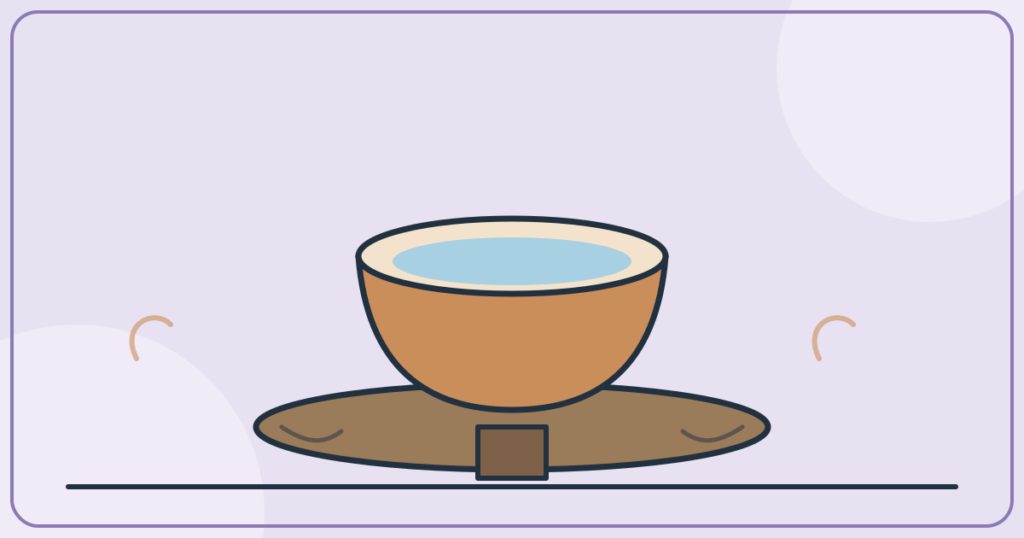
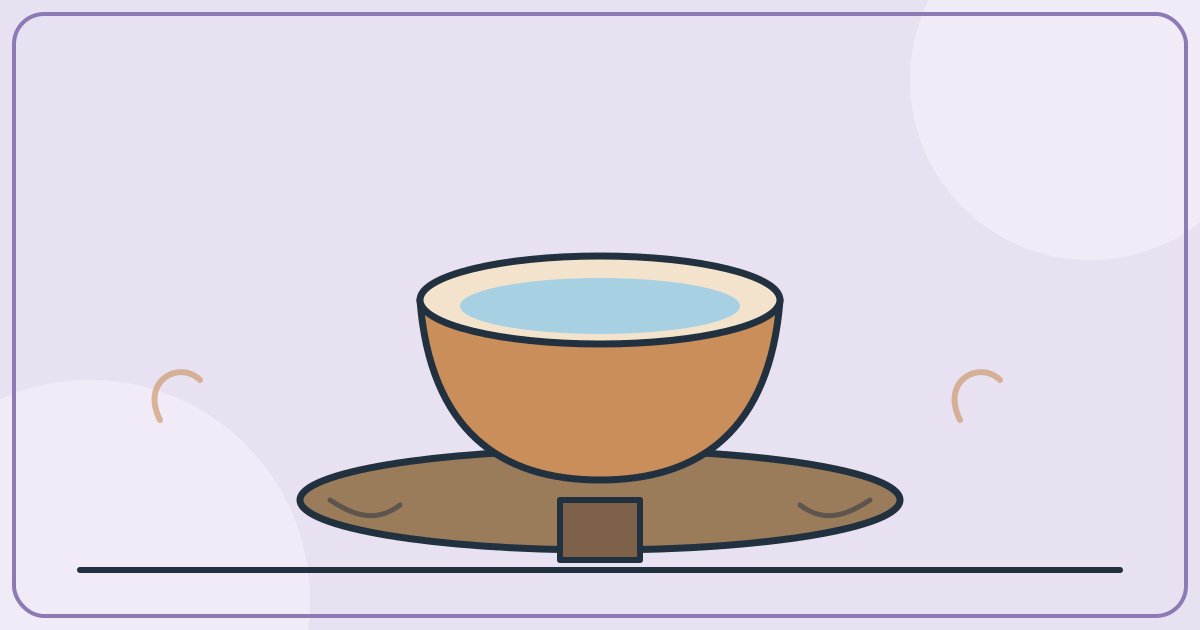
The Empty Space Inside The Bowl

The Empty Space Inside The Bowl

A bowl is useful because of the empty space it holds, not the clay around it. Our lives work the same way, and shaping that space is what free will means.

The Empty Space Inside The Bowl

Take a lump of clay and feel it in your hands. Now set it on a potter’s wheel and let it spin. What takes shape? A bowl. Look a little closer, though, and you notice something strange. The bowl is not really defined by the clay. It is defined by the empty space the clay encloses.

The useful part is the part that is not there

It is that empty space which holds the water, and holding water is the whole purpose of a bowl. The physical form of the bowl simply reflects the space it creates. How the bowl will be used, and what final form it takes, is decided in the moment the potter’s hands shape it on the wheel.

So the clay gives the bowl its walls, yet the bowl is more than a clay shell. Its very definition must include the empty space inside. Indeed, the space matters more to a bowl than the material it is made of.

What this says about us

The process of shaping that space is a fine picture of free will. Free will is our power to give expression to the true nature of the space within us. It lives in the moment of shaping: the whim of the instant, the place that comes before a dream, the second when the hands decide which way to press.

None of us starts with a blank wheel. Our first empty space is formed by others and by what we are given:

  • our parents
  • our teachers
  • the culture we grow up in
  • our own bodies
  • the habits and tendencies of our minds

And yet, with all those early influences, every one of us keeps a remarkable amount of freedom to shape that space in our own way.

The next time you hold a cup or a bowl, notice the emptiness that makes it useful. Then ask what shape you are giving to your own.

Mind & Habits

When You Live At Half Speed

When You Live At Half Speed

Passivity is a learned habit of living at half speed. It makes every glass look half empty, and it is undone by small, steady acts rather than one big push.

When You Live At Half Speed

Passivity is not laziness in the ordinary sense. It is a compulsion, often a learned one, to move through life at half speed. Over time it leaves a person seeing every glass as half empty. Once that view settles in, plans and goals get only half a heart, and half a heart rarely finishes anything. The good news is that a learned tendency can be unlearned. Here is how to begin.

Look honestly at your own behaviour

Start with a few plain questions, and answer them truthfully. What makes you hold back and act in such a passive way? Is it that nobody around you offers encouragement? And the hardest question of all: does the way you behave right now help you, in any way at all, to reach the goals you say you want? Most of the time the answer is no, and seeing that clearly is the first push.

Then act on what you find

Awareness alone changes nothing. Set yourself small goals that can be reached in a short time, and go after them. Use your will power to carry each one through to the end, because a finished small task does more for you than a grand plan left halfway. Every small win you collect builds the motivation that passivity has been draining away.

Do not lose heart too quickly

Getting discouraged early is one of the biggest traps. Some things simply take longer than others, and watching slow progress can be disheartening. Slow is not the same as failing. Expect some tasks to drag, and keep going anyway.

Learn to be assertive

Speaking up for what you want and following through will feel awkward at first, and it does take time to learn. Practise a little every day. After a while it becomes comfortable, and you will find yourself far more motivated to complete what you start.

Keep a journal

Write down the changes you notice in how you behave, and the difference each one makes to your life. On a low day, those pages remind you how far you have already come. That is the real purpose of the journal: to be a source of encouragement you can open whenever you need it.

Half speed is a habit, and habits answer to repetition. Ask the honest questions, take the small steps, be patient with the slow ones, and write it all down.

Relationships

Why People Break Their Promises

Why People Break Their Promises

It is easy to judge someone who lets us down. Often a broken promise comes not from bad intent but from insecurity, wishful thinking or a struggle to say no.

Why People Break Their Promises

Judging others for what they do or leave undone comes very easily, and to forget about our own behaviour. Human beings are wonderfully complicated, so much so that we can act in mixed and contradictory ways without even noticing. Promises show this clearly.

Not every broken promise is malice

Some people do break their word openly and on purpose; there is no doubt about that. But many others behave this way because of deeper issues they are not fully aware of. Understanding those reasons will not make a broken promise hurt less, but it can help you respond more fairly, and notice the same habits in yourself.

Insecurity

Sometimes people break promises because they feel insecure. Think of a parent who cannot bear to refuse a child and says yes to everything that is asked. Promises made to avoid disappointing someone in the moment are hard to keep later.

The glow of the moment

Most often, we get carried away in warm, happy moments when promises feel lovely and cost nothing to make. The very promises that seem so important at the time can easily slip through the cracks afterwards, once ordinary life resumes.

Self-deception

Some people are carried along by their own wishful thinking. They truly believe they can do everything they promise. Others are simply not good at being realistic, and get swept up by the excitement of the moment. Either way, they promise things they cannot deliver.

Not knowing how to say no

Some people break promises because they do not know how to be assertive. When a partner, child or friend asks them to commit to something, they cannot bring themselves to refuse. If you have never learned to set boundaries, you may end up taking responsibility for something you already know you cannot do.

Look a little deeper

In the end, people who break promises do not always mean harm. They may be dealing with difficult personal issues that they still need to work on. And if you recognise yourself in any of these patterns, the cure is simple, if not easy: promise less, think before you agree, and learn to say a kind, honest no.

Life Lessons

Five Signs That Change Is Coming

Big changes in life often announce themselves before they arrive. Here are five quiet signals that you may be on the edge of a turning point.

Five Signs That Change Is Coming

Sometimes you are on the edge of a real change in life without realising it. The signs are there, but they are easy to miss or to dismiss as bad luck. Recognising them helps you stop fighting the turning point and start preparing for it. Here are five clues that change is on its way.

Patterns keep appearing

Something keeps coming back into your life. It might be advice a friend once gave you that now turns up again in other forms, from other people, in something you read. It might be a dream that plays on repeat. When the same message keeps finding you, it may be worth listening to.

You feel uneasy

Are you having trouble sleeping? Feelings of anxiety and restlessness are starting to creep in, and you find yourself asking why you feel this way. Often this unease is the mind sensing that something needs to shift before you can name what it is.

Everything seems to go wrong

You are struggling in areas of life you thought were going quite well: work, money, relationships and more. Life seems to land one blow after another. Hard as it is, a run like this often clears the ground for something new.

Something does not feel right

Beyond the mess on the surface, you feel deep down that something is off. It does not sit well with you, yet you cannot quite put your finger on it. That quiet sense of mismatch is worth taking seriously rather than pushing away.

The truth comes out

Then comes the moment of truth. A revelation shows you what you had overlooked, or what was right in front of you all along. It is an eye-opener, and it often makes sense of all the signs that came before.

What to do with the signs

None of these signals is a reason to panic. Taken together, they are an invitation to pause, look honestly at your life, and ask what is ready to change. Change handled with open eyes is far easier than change that catches you by surprise.

Life Lessons

Three Ways To Stay Calm When Life Hiccups

Three Ways To Stay Calm When Life Hiccups

Every life has its bumps. Three steps, beginning with calming yourself, help you meet a hard moment with a clear head.

Three Ways To Stay Calm When Life Hiccups

Every life has its hiccups, the setbacks big and small that arrive without warning. Here are three ways to deal with them calmly. The first, and the foundation for the rest, is to steady yourself.

Breathe first

Small trouble or large, it is hard to handle well when you are tense. So before you plunge into a pressing situation, give yourself a few moments to breathe and to find your centre again. A few slow breaths cost nothing and change the quality of everything that follows. Keep in mind the old saying that a person cannot conquer anything until they have first conquered themselves. The first thing to bring under control in a crisis is your own mind.

Choose optimism

Most of us, when we face a personal problem or a work challenge ahead, ask ourselves what the worst possible outcome is and how we can avoid it. Try changing the question. Face each new situation with a different question: what is the best result I could hope for, and how do I bring it about?

The shift sounds small, but it changes where your energy goes. Instead of bracing for disaster, you start working towards something good. Your circumstances may be beyond your control, yet how you look at them is always yours to choose, and that is often enough to change the result.

Use logic

Once you are calm and have set negative thinking aside, you can begin to tackle the challenge itself. Break the problem down step by step, using pen and paper if that helps. Writing it out matters more than it seems. A worry that swirls around in your head feels larger than it is. Once your difficulties sit in front of you in black and white, they become something you can work on.

From there you can plan specific steps: some to meet your immediate needs, and some to move you towards a lasting solution.

In short

Calm yourself, expect the best, and think it through on paper. Hard times still come, but you meet them with a steady mind instead of a racing one.