Tag: Seniors

Mind & Habits

Willpower Is A Battery, Not A Whip
Willpower Is A Battery, Not A Whip

By nine at night the resolution you made at breakfast has melted. That is not weakness. Willpower runs down like a battery, and there are simple ways to keep it charged.
Willpower Is A Battery, Not A Whip

At breakfast you promise yourself: no sweets today, an early night, no phone after dinner. By nine o’clock you are on your second dessert, scrolling in bed. You call yourself weak. You are not. You simply ran your willpower down to empty and did nothing to recharge it.

What is really going on

Willpower is how we steer our energy and actions on purpose, through intention. At its heart is the ability to resist what tempts us now for the sake of what we want later. It lets long-term satisfaction win over instant gratification.

It is also precious. How we spend it, or squander it, decides how much we achieve and how good life feels along the way. So the first lesson is simple: value it, and do not spend it carelessly.

Wisdom in action

Recharge it. Willpower is sustained by rest and renewal. If you want it to hold, you need ways to restore your energy: proper sleep, decent food, meditation, leisure, and some time spent simply doing nothing. Treat these as fuel, not as indulgence.

Change two words. There is a real difference between telling yourself “I cannot” and “I do not”. “I do not eat sweets after dinner” has been found to work better than “I cannot eat sweets”, both for sticking to a plan and for breaking a bad habit. Every “I cannot” reminds you of a limit and tells your mind you are being forced. “I do not” is a choice you have already made. It also helps to encourage yourself with a short, kind affirmation when your self-control is running low.

Say “later”, not “never”. Postponing something you should not have can be surprisingly effective. Those who say “not now, maybe later” are far less troubled by the temptation than those who try to banish it forever. Later, the urge has often passed.

Return to what matters. When you slip, do not punish yourself. Stop, refocus on what is most important to you, and find your way back to it. A short look at how you spent each day keeps you honest.

Try this today

Pick one habit you are trying to break. Each time the urge comes, say quietly, “I do not do that,” or “Not now, later.” Tonight, give yourself one real hour of rest before sleep, and see how tomorrow’s willpower holds.


Life Lessons

The Frog Who Would Not Believe The Ocean

The Frog Who Would Not Believe The Ocean

Someone tells you about a world far bigger than yours, and your first reaction is to doubt them. An old fable about two frogs asks which of them you are.

The Frog Who Would Not Believe The Ocean

A colleague returns from a year abroad and describes a way of working you have never seen. A young relative talks about a career that did not exist when you were their age. Before they finish, a voice inside you says: that cannot be right. It sounds like good sense. Sometimes it is only the walls of a well.

The story

A frog from the ocean once jumped into a well and got talking with the frog who lived there. “Where do you come from?” asked the well frog. “From the ocean,” came the reply.

“Is it bigger than this well?” The question was polite, but there was suspicion in his eyes and doubt in his mind. How could anything be bigger than the well he lived in?

The ocean frog laughed. “It is very hard to say. There is nothing to measure it by.”

“Then I will give you a measure,” said the well frog. He leapt a quarter of the way across the well. “Is it this big?” The ocean frog laughed and said no. He leapt halfway across. “This big?” Again, no. Then he leapt the full width of the well. “Now you cannot say no.”

“I am sorry,” said the ocean frog. “I do not want to offend you, and you may feel hurt. But the answer is still no.”

“Get out of here, you liar,” said the well frog. “Nothing can be bigger than this well.”

What is really going on

It is easy to laugh at the well frog, but it is fairer to feel for him. That well is all he has ever known. He has never seen the ocean, so how could he picture it? To him the truth sounds like a trick: “You must be planning to fool me. I cannot believe anything so absurd.”

Wisdom in action

Each of us lives in some well: a job, a town, a habit of thought, a circle of friends who see things the same way. That is natural. The problem begins when we start measuring every new idea against the width of our own walls, and calling anything that does not fit a lie.

The story also asks something of the ocean frog. When you meet someone who cannot see past their well, mockery achieves nothing. Patience and compassion are the only tools that work, and even they may not be enough. Many people simply do not want to leave their own well.

Try this today

Notice the next time you dismiss something because it is outside your experience. Instead of “that cannot be true”, ask one honest question: “How did you come to know that?” Then listen as if the ocean might be real.

Life Lessons

The Dancer Who Laughed

The Dancer Who Laughed

Three seekers asked the Buddha the same question and got the same discouraging answer. Only one of them was free the moment he heard it.

The Dancer Who Laughed

You have worked hard for something, a qualification, a promotion, a skill. You ask someone who knows how much longer it will take, and the answer is crushing: years more. How you take that answer may matter more than the answer itself.

The story

As the Buddha made his way up a mountain, he came across three people. One man sat meditating under a tree. Another sat meditating out in the open ground. A third man was dancing. All three were seeking enlightenment.

The first man asked the Buddha when he would be enlightened. The Buddha replied that it would take at least a thousand years. The man went on meditating under his tree.

Further along, the Buddha passed the man in the open. By now the sun had burnt patches of his skin. He asked the same question, and received the same reply: at least another thousand years. On hearing it, he said, “I have to suffer so much to be enlightened,” and went on meditating in the burning sun.

Then the Buddha reached the man who was dancing. He too asked how long it would take. Once again the answer came: another thousand years. The man laughed, and carried on dancing. At that very moment, he was enlightened.

What is really going on

Nothing about the answer changed. Each man heard the same thousand years. What differed was what they did with it.

The first accepted it and kept going, still treating the goal as something far away. The second turned it into a story about his own suffering, as though the pain itself were the price of arrival. The third let go of the waiting entirely. The answer could not disappoint him, because he was not doing the dance in order to arrive somewhere. He was simply dancing.

Wisdom in action

Many of us live like the first two seekers. We put our contentment on hold until the target is reached, or we wear our struggle as proof that we deserve the prize. The dancer shows another way: give yourself fully to what you are doing, and meet bad news with a light heart rather than a heavy one.

This is not a case against effort. The dancer was on the same path as the others. He simply did not need the destination in order to be at peace on the way.

Try this today

Pick one long goal you are working towards. Ask yourself honestly which of the three seekers you resemble. Then do today’s part of the work as the dancer would, for its own sake, not for the day it ends.

Life Lessons

Empathy Changes More Than You Think

Empathy Changes More Than You Think

A sharp remark pops up in the group chat and your thumbs are already typing a reply. One breath of empathy can change how that evening, and that relationship, goes.

Empathy Changes More Than You Think

It is late in the evening. Someone in the family group chat posts a remark that feels aimed at you. Your face is warm, your thumbs are already moving, and the perfect sharp reply is half typed. One tap and it is sent.

What is really going on

It is hard to always take the higher ground and give people the benefit of the doubt, especially when life moves this fast. Technology has made our lives easier and more connected. It has also given us a constant window into one another’s lives, and that has warped our sense of what is normal. It brings confusion and worry. We judge others all the time, and we feel judged all the time. Everyone else’s grass looks greener.

Much of what we see through that window is best ignored. What helps is to slow down, take a breath and think before reacting. Be a little more accepting, and do not take everything personally.

Strong and fragile

The human spirit is strong and fragile at the same moment. Your words can steady someone or knock them over, and theirs can do the same to you. Life already brings enough challenges. There is no need to manufacture more. Aim for harmony where you can.

Wisdom in action

Many of us believe we cannot make much difference. The big problems seem too large for one person, or we simply do not want the bother. Yet empathy works at a smaller scale, and small is where it shifts things. Showing understanding to one person can change the course of their day, and sometimes much more.

So when a sharp remark arrives, try something other than a sharp reply. Defuse the moment. Choose kindness. Lead with warmth rather than with a point to prove.

There is one condition. We can only do this when we feel secure in ourselves. Someone who doubts their own worth reads every comment as an attack. Negativity, doubt and judgment do not only drag the other person down. They also do real harm to our own lives when we stay stuck in them.

Try this today

The next time a message stings, wait before replying. Ask yourself what might be going on in the sender’s day. Then write the reply you would want to receive if you were the one having a bad evening.

Work & Career

Your Priorities, Or Someone Else’s?

Your Priorities, Or Someone Else’s?

By Friday your week has been spent entirely on other people's requests. Clear priorities are how you take the wheel back.

Your Priorities, Or Someone Else's?

Monday began with a plan. Then came an urgent request from a colleague, a relative who needed help, a meeting that ran over and a dozen messages that each wanted an answer now. By Friday you have been busy every hour, and you have not touched a single thing that matters to you.

What is really going on

Without clear priorities, each small shift in circumstances nudges you further away from your goals, until one day you cannot see them at all. Worse, other people step in and decide for you which tasks and goals deserve your time. Along the way, valuable opportunities slip past unnoticed.

What clear priorities give you

They help you reach your goals. When you are clear about what you want and where you are going, you can focus on it. You recognise opportunities the moment they appear, take advantage of them, and move closer to the goal you set for yourself.

They make you more effective. With your priorities clear, you stop pouring precious time and energy into tasks that give you very little back. Keeping track of your goals shows you the most direct path, so you do not waste effort on things that bring nothing, or that quietly pull you away from where you are heading.

They give you back control. There will always be things we cannot control. Even so, clear priorities let us take the reins of our own lives again. Over time they build what psychologists call an internal locus of control, the steady sense that your actions shape your outcomes. People with it become more proactive and less reactive.

Wisdom in action

This is not about refusing every request. It is about knowing, before the requests arrive, what your own work is. Then each new demand can be measured against something, instead of simply filling the space.

A request that serves your priorities is welcome. One that does not can wait, be handed on, or be declined politely. Without the list, every request looks equally urgent, and the loudest one wins.

Try this today

Write down your three priorities for this week, in order. Keep the note where you can see it. Before you say yes to the next request, look at the note and ask one question: does this move one of these three forward?

Life Lessons

When Misfortune Comes Knocking

When Misfortune Comes Knocking

A setback lands and you tell everyone you are fine. You are not, and that is all right. Three simple ways to carry a hard time without letting it carry you.

When Misfortune Comes Knocking

The news arrives on an ordinary afternoon: a loss, a rejection, a plan that has fallen through. By evening you have told three people that you are absolutely fine. Inside, you are not. You hold it together in public and lie awake at night going over it again.

What is really going on

Good fortune and misfortune are both part of every life. Nobody is spared the second one. Accepting this is not giving up; it is simply seeing clearly. The night is often at its darkest just before the sun comes up.

What we can change is how we meet the hard days. A few simple shifts in attitude can help you handle trouble and deal with stress in a healthy way.

Wisdom in action

Talk to someone. Other people rarely see your situation as bleakly as you do. Because they are not caught up in the emotion of it, they can look at it more objectively, and they often see light where you can only see dark. Go to someone close to you, tell them what happened, and let their response comfort you a little.

Accept your negative feelings. Sadness, frustration and disappointment arrive naturally with any misfortune, and it is fine to feel them. Acting as though you are not upset does not work, and it is not good for your health. The pain buried inside needs to be felt. Acknowledge what you are feeling and give yourself time to recover. Some setbacks need only a short pause. Some wounds take much longer to heal. Be patient with the healing, whichever kind it is.

Be happy, and share it. Laughter is the best therapy you can give yourself, and it costs nothing. Let yourself laugh, and let some of the heavy feeling go with it. Better still, make someone else laugh. When you are the reason for a smile on another person’s face, that smile comes back to soothe you too.

The order matters

Notice that laughter comes last. It is not a mask to put on over pain you have not felt. It comes after you have shared the burden and allowed yourself to feel it. Then the laughter is real, and real laughter heals.

Try this today

If something is weighing on you, call one person you trust and tell them the honest version, not the brave one. Then, before the day ends, do one small thing that makes somebody else smile.

Mind & Habits

The Same Fact In A Different Frame

The Same Fact In A Different Frame

Two tubs on a shelf say the same thing in different words, and most of us pick the one that sounds better. That is the framing effect, and it shapes far bigger choices than yoghurt.

The Same Fact In A Different Frame

You are at the supermarket. Two tubs of frozen yoghurt sit side by side. One label says it is 80 percent fat free. The other says it contains 20 percent fat. Almost without thinking, your hand goes to the first one.

Look again. Both labels say exactly the same thing. The meaning is identical. Only the frame is different, and the frame is what moved your hand.

What is really going on

In an ideal world, a decision would depend only on the facts that matter in the situation, not on the way those facts are described. When we let irrelevant details steer us, we become more likely to make mistakes and to reach conclusions that do not follow logically.

The framing effect is a mental shortcut, a bias, that does exactly this. We choose between options according to whether they are presented in terms of a gain or a loss. Instead of weighing the situation objectively, we give more weight to whatever was shown to us in the more attractive light.

It grows with age

A study at the University of West Virginia found that this bias tends to deepen as we move through life. It shows up more among older people than among young adults and teenagers. The likely reason is that, as we get older, we analyse less when making decisions and lean more on information that is easy to reach, whether or not it is relevant to the choice in front of us.

That is worth sitting with. Experience makes us quicker, but quick is not the same as careful.

Wisdom in action

The yoghurt does not matter much. The same bias, though, is at work when a salesperson describes an offer, when a report presents a result, or when a friend tells only one side of a story. Each time, the words chosen are doing some of your thinking for you.

The remedy is not suspicion of everything. It is a small habit of slowing down and asking what the plain facts are once the wrapping is removed.

Try this today

The next time a choice sounds clearly better, restate it in the opposite frame. If something is described as a 90 percent success, say to yourself that it fails one time in ten. If your preference survives the flip, it rests on the facts. If it collapses, the frame was deciding for you.

Work & Career

Win People Over Like The Sun

Win People Over Like The Sun

You need someone to say yes: a teenager, a colleague, your boss. Pushing harder rarely works. An old fable about the wind and the sun shows what does.

Win People Over Like The Sun

You need a yes. Perhaps it is a teenager who will not tidy their room, a colleague you hope will sit in on a meeting for you, or a boss you are about to ask for an increment. You prepare your case, you push, and the other person digs in. The harder you press, the firmer the no.

The wind and the sun

An old fable explains why. The wind and the sun once argued about which of them was stronger, and agreed that the winner would be whoever could make a passing traveller remove his coat. The wind went first, gusting harder and harder, and the man only pulled his coat tighter. Then the sun shone gently, and within minutes the man took the coat off himself.

The lesson is simple. You cannot force someone to do what they do not want to do. The art of persuasion is to help them want what you want, so that they buy into the idea and choose your way, often without noticing they were persuaded at all. Some people manage this effortlessly. Others lean on their rank or title, which is the wind, not the sun. And because influence is situational, what works with one person on one day may fail with another.

Wisdom in action

Start with yourself. Good persuaders tend to have healthy self-esteem and emotional intelligence. They believe they will succeed, they stay motivated, and they believe in their ideas.

Then turn to the other person. Understand how they think. Empathy and active listening matter most here, because if you listen, people will usually tell you exactly what they are thinking. Listening also builds rapport, and people respond to someone who takes the trouble to become a friend, not only an influencer.

Say your piece briefly and clearly. Do your homework, know your listener and your subject, and be sure of what you actually want to achieve.

Praise generously. When you dismiss people and their ideas out of hand, they feel pushed aside and start nursing a hurt ego instead of hearing you. Praise what you genuinely like about them or their idea, and you become easier to agree with.

Finally, a valid argument is not enough on its own. To stop the other person turning defensive, work together rather than trying to satisfy only yourself. Do not jump ahead of their ideas. If you see an error in their thinking, raise it and change their mind with care. That is the only way to avoid needless conflict.

What blocks a yes

Watch for the usual traps: believing you are already good at this and never improving, not putting in the effort the outcome deserves, sounding desperate, making assumptions about your listener and arriving unprepared, and losing sight of the whole conversation while you fight over small points.

Try this today

Before your next request, ask the other person one question and listen fully to the answer. Then make your case using what you heard. Be the sun, not the wind.

Life Lessons

The Scorpion And The Old Man

The Scorpion And The Old Man

An old man keeps trying to rescue a drowning scorpion, even as it stings him. His reply to a mocking passer-by is a lesson in staying true to yourself.

The Scorpion And The Old Man

One morning, an old man finished his quiet sitting by the river and opened his eyes. Just then he noticed a scorpion struggling helplessly in the water.

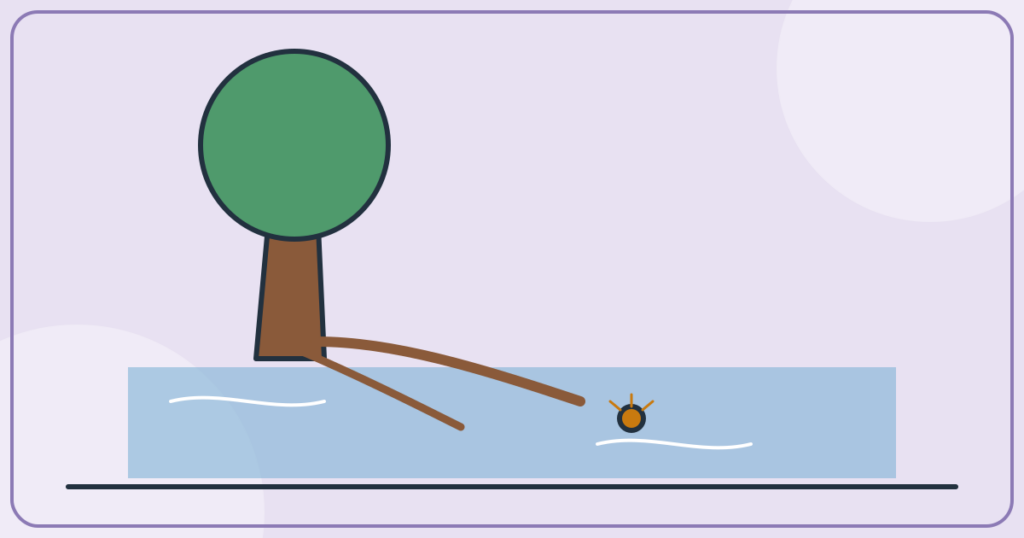
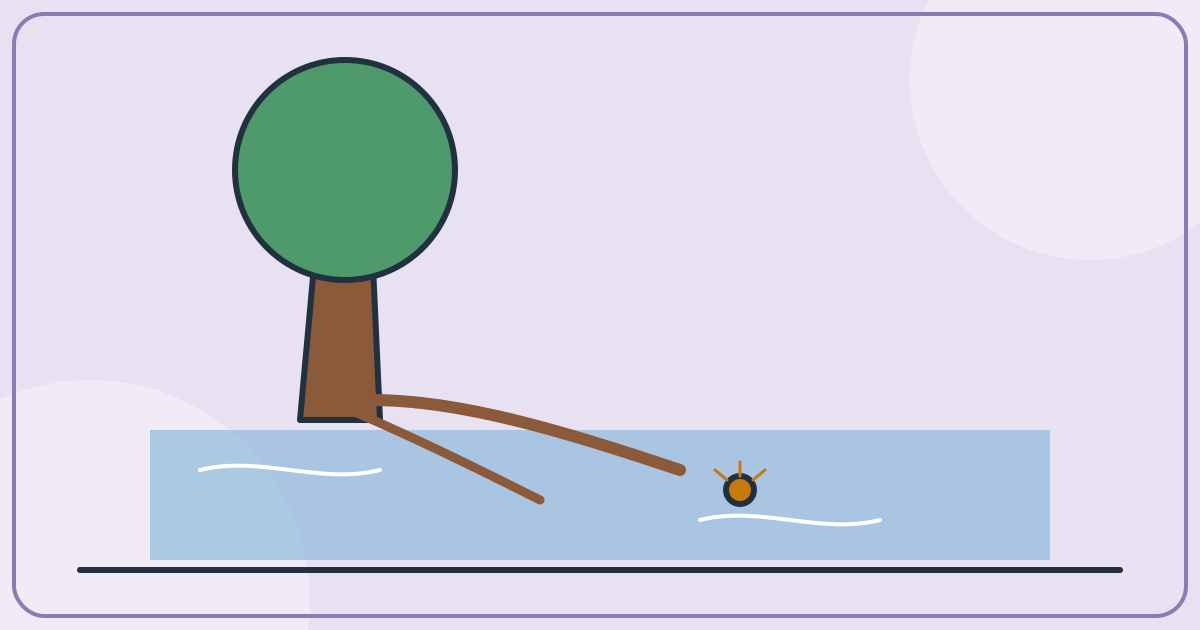
As the current carried the scorpion closer to the tree beside him, the old man stretched himself out along one of the long roots that reached into the river. He leaned forward and tried to lift the drowning creature to safety.

The first sting

The moment his fingers touched it, the scorpion stung him. He pulled his hand back by reflex. But a minute later, once he had steadied himself, he lay down along the root once more and reached out again to save it.

This time the sting was so fierce that his hand swelled up and bled, and his face twisted with pain.

The passer-by

At that moment, a man walking by saw the old man stretched across the roots, wrestling with the scorpion. He shouted, “Have you lost your senses, old man? Only a fool would risk his life for such an ugly, nasty creature. Do you not realise you could die trying to save that ungrateful thing?”

The reply

The old man turned his head, looked the stranger in the eye, and replied calmly, “My friend, the scorpion stings because that is its nature. Its nature does not change mine, and mine is to save.”

What it means for us

We all meet people who hurt us, sometimes again and again. It is natural to want to strike back, or to become hard ourselves. The old man reminds us that how others behave does not have to decide who we are. That does not mean letting ourselves be harmed without limit; there is wisdom in protecting yourself too. But our kindness, our patience and our values belong to us. They are not a payment that others must earn.

Life Lessons

The Balloon Room

The Balloon Room

Fifty people race to find a balloon with their own name on it, and all of them fail. Then the speaker changes one rule, and everyone succeeds.

The Balloon Room

A group of fifty people were attending a seminar. Partway through, the speaker suddenly stopped and announced a group activity.

He handed each person a balloon and asked them to write their own name on it with a marker pen. Then all the balloons were collected and taken into another room.

Five minutes of chaos

The participants were let into that room and given a simple task: find the balloon with your own name on it, within five minutes. At once, everyone began searching frantically. People bumped into each other, pushed others aside and scrambled through the pile. The room descended into complete chaos.

When the five minutes were up, not a single person had found their own balloon.

One small change

The speaker then changed the instruction. This time, each person was to pick up any balloon at random, read the name on it and hand it to that person.

Within a couple of minutes, every single person was holding their own balloon.

The lesson

The speaker explained: “This is exactly what happens in our lives. Everyone is rushing about, searching desperately for happiness, without knowing where to find it. But our own happiness is tied up in the happiness of others. Help other people find theirs, and you will find yours.”

It is a simple idea, and easy to forget. The next time happiness feels hard to find, try handing someone else a balloon.