Tag: Young Adults

Mind & Habits

The Quiet Power Of A Routine

The Quiet Power Of A Routine

A routine sounds like the enemy of a spontaneous life. In practice, it is what gives you control of your day and time to enjoy it.

The Quiet Power Of A Routine

A routine means doing the same things again and again, so to many young people it sounds like a way to drain all the spontaneity out of life. Yet a steady routine gives you real control over how your life unfolds, which makes it well worth the time and effort it asks of you. Here is what it gives back.

It makes you efficient

When you repeat the same patterns and tasks day after day, you get better at them. Soon they become second nature and you no longer need to think about doing them. You get more done with less effort, and your productivity rises.

It gives your life structure

Success needs structure. A routine lays a solid foundation for organising your day. When you know exactly how the day will run, you know how to spread your energy across it instead of spending it all by noon.

It gives you time to relax

Most of us live busier lives each year, and simply sitting back has become a rare luxury. A good routine arranges your day so efficiently that a slot for rest fits in. That is the beauty of it: knowing there is relaxation built into the day is a strong reward for sticking with the plan, and it keeps you motivated.

It strengthens your self-determination

Daily routines do become habits, but not overnight. It takes willpower and self-discipline to make sure, for example, that you rise at six every morning, go for a run of about three miles, and then prepare a fresh, healthy breakfast.

Keep at it, and you will find yourself getting more done than ever. That change does not come from one heroic day. It comes from the quiet power of the same good day, repeated.

Relationships

Lessons Only Family Can Teach

They embarrass you, they argue with you, and they shaped you more than anyone else. Here is what your family quietly taught you.

Lessons Only Family Can Teach

Your family made you who you are today: a little odd, a little anxious, and quite wonderful. There are days when their embarrassing stories and their drama make you want to move far away and start again under a new name. Even then, they come first. So it is worth pausing to thank them for the lessons no one else could have taught.

How to learn from example

Your family teaches you that even the people closest to you get things wrong. It happens to all of us, and often. By watching those closest to us make mistakes, we learn how to avoid the same ones in our own lives.

Friendship starts at home

Your first friends were your brothers, sisters and cousins, and those early bonds shape every relationship you form later. With them you learned about trust, about responsibility, and about some very sharp teasing. They taught you how to build a life without making a complete mess of it by treating people badly. Above all, they showed you the way to forgive, and how to let a hurt go.

What really matters

Every member of your family would come to your rescue if you needed them. In the end, family matters more than anything else you have, so naturally they are the ones who show you what is valuable and what is not. With every passing year, you appreciate more of what they bring to your life.

Who you are, and owning it

Under all the silliness there is love. You may be a bit strange, but strange can be strong. Knowing your family is behind you makes it far easier to be yourself and to accept every part of your personality.

No family is perfect, and these lessons rarely arrive gently. But they arrive early, and they stay for life.

Health & Body

Four Ways To Build Mental Stamina

Four Ways To Build Mental Stamina

Intelligence helps, but staying power of the mind decides how far you go. Four everyday habits keep that stamina high.

Four Ways To Build Mental Stamina

Being clever helps if you want to succeed, but it is not enough. Commitment and mental toughness are the parts you cannot do without. The good news is that the mind’s stamina can be built, much like the body’s, through a few ordinary habits.

Sleep enough

The brain needs rest. Sleep is its private time, when it repairs and rebuilds its neural connections and clears away the clutter of the day. Cut your sleep short and you take that repair time away. The result shows up as weaker stamina and a duller edge.

Eat for your brain

Good nutrition is central to mental stamina. The brain uses a great deal of energy and needs a steady supply of nutrients to work well, and it cannot do so if your meals fall short. A diet that supports the brain includes enough protein and iron. Keep processed sugar to a minimum. The article also suggests a daily multivitamin; if you are unsure whether you need one, ask your doctor.

Exercise daily

Rest and movement are both important for the brain. That is why the common advice is to exercise for at least 30 minutes every day. Exercise strengthens muscles, and it also keeps the brain working at its best. A brisk walk of just five minutes is enough to rouse a sluggish mind. If you have the choice, exercise outside: time outdoors does more for the brain than the same workout inside the house.

Play games that demand focus

Concentration sharpens the mind. Games such as chess or Chinese checkers build brain stamina, and so do Scrabble, Monopoly and card games, because they call for strategy, analysis and the patience to see a long game through.

No single habit here is dramatic. Together, sleep, food, movement and focused play make a mind that holds steady for longer when the work gets hard.

Life Lessons

What Confucius Still Teaches Us

What Confucius Still Teaches Us

He lived about two and a half thousand years ago, yet ten of his short sayings still read like advice written for this morning.

What Confucius Still Teaches Us

Confucius lived from 551 to 479 BC and is widely regarded as the most influential philosopher the East has produced. His teachings were mainly about morality, both in how a person conducts a private life and in how a society is governed. Ten of the sayings handed down in his name are worth slow reading.

On effort and direction

Your pace is not the issue. What matters is that you keep moving. A slow walker who never stops still arrives.

When a goal starts to look out of reach, do not shrink the goal. Change the steps you are taking towards it.

Chasing small advantages can keep you from great things. The person busy collecting minor wins rarely has the patience for the large work that changes a life.

And wherever you choose to go, go there with your whole heart. Half an effort carries half a person.

On people

Choose friends who are better than you in some way. Company that stretches you helps you grow; company that only flatters you keeps you where you are.

If people are speaking ill of you behind your back, notice where they are standing. They are behind you.

If you hate someone, they have already defeated you, because they now occupy your mind and steer your mood.

On the self

When anger rises, think first of what follows from it. A moment of pause can save a long regret.

The superior person looks for answers within. The small person looks for them in others, and blames others when they are not found.

Teach only those who are ready to learn, and readiness begins when someone realises how much they do not know. Advice poured into a mind that believes it is already full simply runs off.

None of these lines needs a scholar to explain it. Each one asks only to be practised, one day at a time, which is perhaps why they have lasted so long.

Mind & Habits

Fifteen Things To Let Go Of

Fifteen Things To Let Go Of

Happiness is often less about adding something new and more about putting things down. Here are fifteen habits worth stopping.

Fifteen Things To Let Go Of

We usually look for happiness by adding things: a new goal, a new possession, a new plan. Often the quicker path is to stop doing the things that quietly steal our happiness. Here are fifteen worth letting go of. Read them slowly, and notice which ones land.

Things we do to ourselves

  • Stop ignoring your own needs.
  • Stop comparing yourself with others.
  • Stop resisting your fear. Face it instead.
  • Stop feeling bad about making a mistake.
  • Stop aiming for perfection.
  • Stop putting off your dream.
  • Stop feeling bad about being alone.

Things we hand over to others

  • Stop putting your happiness in other people’s hands.
  • Stop living by other people’s expectations or society’s standards.
  • Stop trying to make others happy while forgetting yourself.
  • Stop assuming that what makes others happy will make you happy.

Things we do with our attention and time

  • Stop trying to control every part of your life.
  • Stop working so hard for the future that you forget the present.
  • Stop neglecting the small things in your life.
  • Stop focusing on what hurts you.

Starting small

Fifteen is a long list, and trying to drop everything at once would become another source of pressure. Pick one that feels true for you this week and simply notice it each time it happens. Awareness is usually the first loosening of an old habit. When that one has eased, choose the next.

Tips & Tricks

How To Become An Early Riser

How To Become An Early Riser

Waking up early makes the day more productive. A few practical techniques help you become the morning person you keep promising to be.

How To Become An Early Riser

Waking up early makes your day more productive. Many of us know this and still keep hitting the snooze button. If you would like to become an early riser, there are a few things worth knowing before you set that often-ignored alarm clock.

Go to sleep earlier

Late nights in front of a screen may have become a habit. Go to bed earlier, even if you do not think you will fall asleep, and read in bed. If you are really tired, you may fall asleep much sooner than you expect.

Put the alarm clock far from your bed

An alarm within arm’s reach gets silenced or snoozed. Do not ever snooze. If the alarm is across the room, you have to get out of bed to switch it off, and by then you are up. Now you only have to stay up. Try a few options and keep whatever suits you. Light, sound, smell or temperature might all wake you more pleasantly than your old alarm. Try something new.

Leave the bedroom as soon as you switch off the alarm

Do not give yourself time to argue your way back into bed. Simply make yourself walk out of the room.

Do not bargain with yourself

Let your mind argue you back under the covers, and early rising will never happen. Remove the return to bed from your list of choices.

Have a good reason

Plan something important to do early in the morning. Having a purpose for the early hours will motivate you to wake up.

Make waking early a reward

Give yourself something to look forward to. A good reward might be making a hot cup of tea or coffee and reading a book. Find something that is genuinely pleasurable for you.

Rising early is less about willpower in the moment and more about the arrangements you make the night before. Set them up well, and the morning takes care of itself.

Mind & Habits

Less Thinking, More Doing

Less Thinking, More Doing

Everybody wants advice, but few want to do the work. Halve the time you spend deliberating, spend it acting, and see how far ahead you get.

Less Thinking, More Doing

Advice is popular. Effort is not. Suppose you cut your deliberating time in half and put the saved hours into actually chasing what you want. How much further along would you be? So here is a challenge worth taking up: think less, do more. If you are in, these steps will help you build the habit of action.

Begin with the end in mind

Set aside your assumptions and the expectations of society, friends and family. Ask yourself what you actually want from life, and what you hope people will remember you for. Stay honest with yourself and stop worrying about others, because this life belongs to you alone. Picture what success might look like a year or two from now, then trace the steps backwards from that picture to where you stand today.

Slow and steady wins the race

However much you might want things to be quick and easy, life does not work that way. Charge into this adventure all guns blazing and you will probably find yourself completely overwhelmed. If you really want this, start training your patience, because you will need it.

Break the big goal into small ones

A target so huge that it shimmers out of reach like a desert mirage is deeply discouraging, because no amount of progress seems to show. Instead of fifty kilos, aim at the first five. If your dream is a play to stand beside the classics, start by putting everything into act one.

Celebrate every small victory

Small goals are good for your self-esteem, because they give a steady stream of positive feedback that leaves you happy, encouraged and productive. Twenty small celebrations are far more fun than one.

Learn from those who went before

You are not the first. Others have already done, or are now doing, exactly what you hope to do. Study their writing to see what worked, and spare yourself needless trouble. There is no need to invent from scratch what can simply be adapted. Thinking is not the enemy when it is purposeful: hours spent finding a more effective way are well invested, and so is time reserved for your larger plans.

Keep your eye on the prize

Inspiration fades quickly, and the urge to give up will grow. Hold your course by recalling why the goal mattered to you at the start. Routine wears away our sense of what matters most. Guard against it.

Life Lessons

Why Goodness Takes You Far

Why Goodness Takes You Far

Being a good person has nothing to do with status or background. It is about how you treat others, and it brings self-respect, clarity and real strength.

Why Goodness Takes You Far

Ask people to describe a good person and the same words keep coming up: kind, helpful, caring, understanding, patient, loving. We usually recognise goodness by what people do, by their thoughtful deeds. Goodness has nothing to do with faith, rank, race, colour, politics or culture. It rests entirely on how you treat the people around you.

A path to fill with meaning

Each of us arrives with something worthwhile to do. Life lays a road between our first day and our last, and filling it with meaning is our task. Sometimes setbacks seem to win, and we take them personally. Rather than reading every bad turn as a verdict on your character, hold on to one fact: you are a good person.

Whatever others say, do not reshape yourself to please anyone. Without knowing it, you may mean a great deal to someone. They may be shaped by your example so deeply that their only wish is to be as good as you are.

Why it is worth being good

  • The plainest reason: wrongdoing is simply wrong. Acting badly is a way of disrespecting yourself, and without self-respect happiness is hard to find.
  • Goodness sharpens your sense of what is truly worth something. Good people can tell good from bad. Sound values mean prizing what deserves to be prized, and ignoring what does not.
  • A good person is the strongest kind of person there is.
  • People turn to you for comfort and counsel, and friends bring you their news, happy or sad.
  • In the end, people are grateful you exist, because their lives would be poorer without you.

Three ways to do good

Smile. It is the easiest, simplest way to spread happiness and good feeling.

Be human, not a superhero. Take risks, make mistakes and accept them as lessons. That is the only way progress happens, and where the truly good things come from.

Do what you love. Follow your dreams and passions. This brings out the best in you, which means you will be doing good for yourself and for those around you.

Tips & Tricks

Three Ways To Stay Focused

Three Ways To Stay Focused

Focus improves your work, your listening and your problem solving. Three simple habits sharpen it.

Three Ways To Stay Focused

Staying focused can improve your professional life, help you listen to people better and help you solve problems faster. Focus is not a fixed gift that some people have and others lack. It responds to how we arrange our day and how we train our minds. These three habits will sharpen it.

Do the creative work first

Most of us start the day with mindless tasks and slowly build up to the hardest ones. That pattern drains your energy and weakens your focus before the important work even begins. To focus well, reverse the order. Put the work that demands imagination or hard concentration at the start of your morning, and move on to the easier work afterwards.

Plan your time deliberately

Most people focus best either in the morning or late at night, and studies suggest that around 90 percent of people do their best thinking outside the office. Notice when and where your own mind works best, and protect those hours for the work that matters most.

Train your mind like a muscle

Build concentration by silencing every distraction and pouring your whole attention into one job. Begin modestly, perhaps five minutes a day, and gradually build up to longer stretches. If your mind wanders, simply bring it back to the task in front of you. Like any muscle, focus grows stronger with regular, patient use.

Put together, these habits make a quiet but powerful difference. Hardest work first, at your best hours, with a mind that has been trained to stay put.

Mind & Habits

Step Back And See The Big Picture

Step Back And See The Big Picture

Small irritations crowd out what makes life precious. Stepping back, and finding the calm centre within, restores perspective when everything is in a whirl.

Step Back And See The Big Picture

Step back and look at the big picture. When you do, you begin to see all the good possibilities that life offers.

Rise above the frustrations and annoyances that always demand far more attention than they deserve. Remind yourself that you have something unique and valuable to offer the world. Take a moment to feel how good life can be, and commit yourself to spreading that goodness through your thoughts, your words and your actions.

A view from fifty years ahead

The world is full of manufactured urgency, and in the rush we easily forget what makes life worth so much. Give yourself the gift of perspective. Picture yourself half a century from today, remembering this exact day and hour. Seen from there, which chances and openings stand out that today you are walking straight past?

Move away from the clamour and turn towards what is truly beautiful and solid in life. Hold the wider view, and let it shape how you spend each small moment.

The calm at the centre

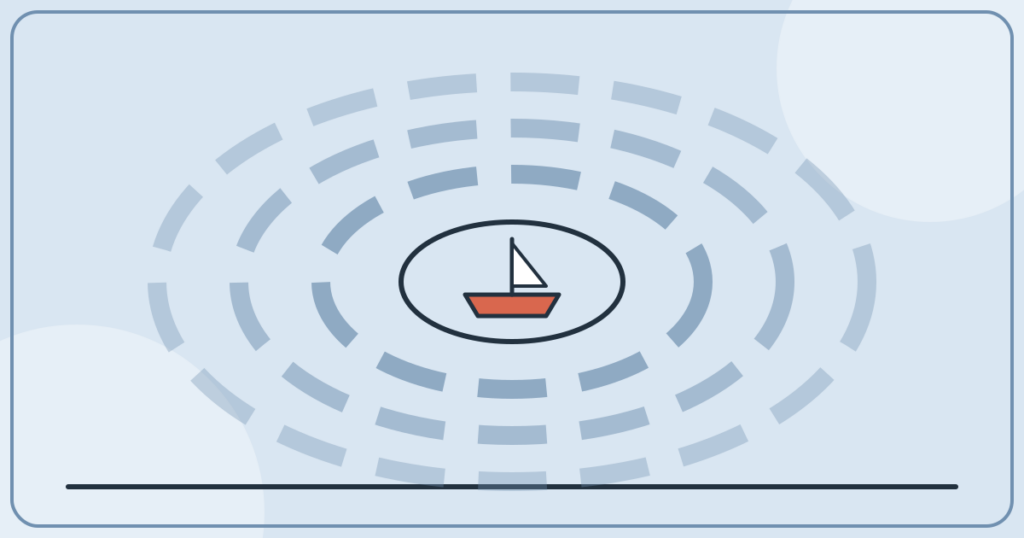
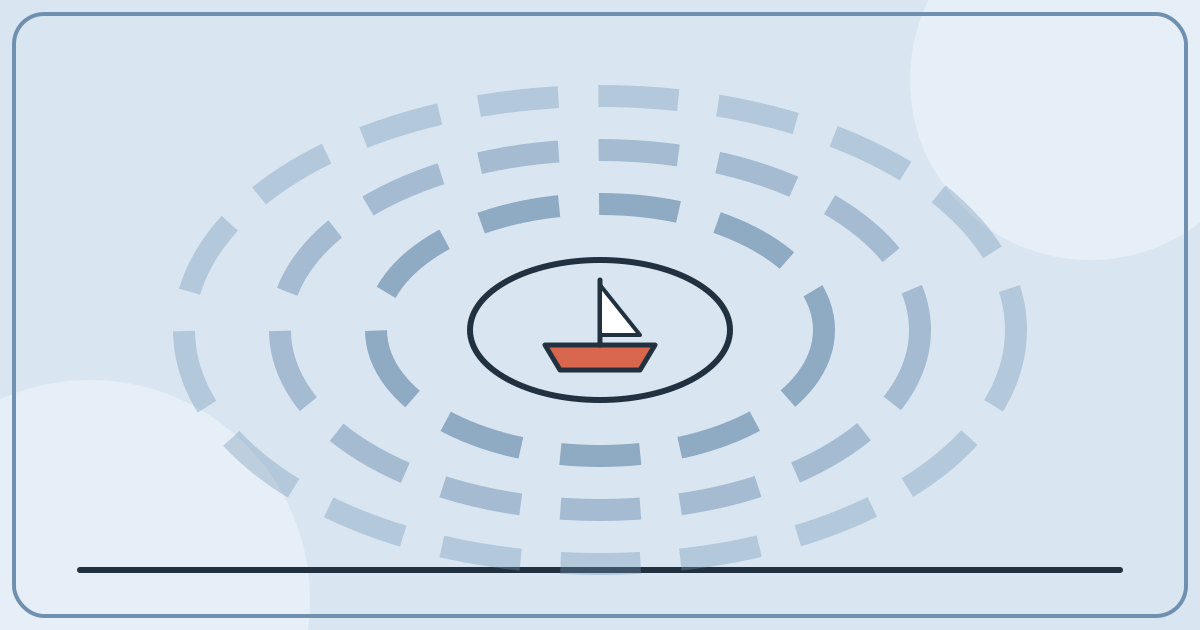
The same page offered a short reflection that belongs beside this one. An experienced captain caught in a tropical cyclone knows that a ship kept at the outer edge gets tossed back and forth. Steer into the eye, though, and the ship finds a pocket of calm. There he waits for the storm to pass, and then the ship can continue its journey.

In the same way, when everything around you is changing in an intense way, the best place to seek shelter is not outside but deep within yourself. Inside, you can reconnect with who you are and draw on steadiness and strength. Then come back out, and do whatever it is you need to do.

Both lessons point the same way. When life feels crowded or chaotic, the answer is rarely to push harder at the edges. Step back for the wider view, or step inward to the still centre. From either place, you see more clearly and act more wisely.